


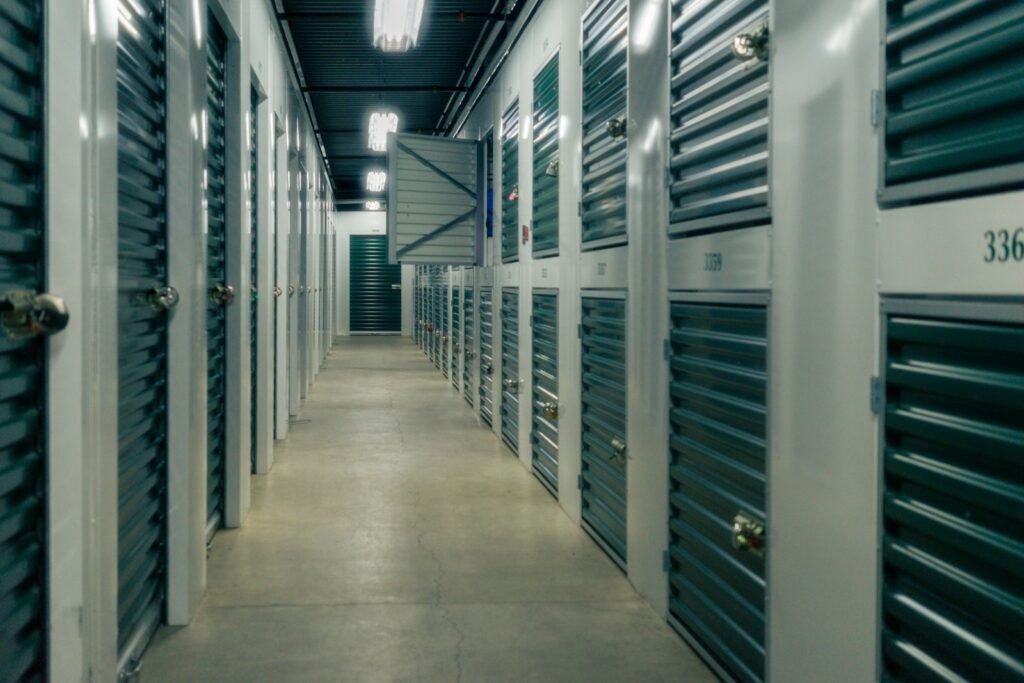
The share of U.S. households paying a monthly bill for a self-storage unit hit 11.1% in 2022 and has since climbed to 12.6% as of 2024, according to the Self Storage Association’s 2025 Demand Study. Roughly translated, that’s 1 in 9 American households, at minimum, renting what amounts to a second address purely to hold onto belongings that don’t fit — or don’t get used — in the home they already pay for. In 2024 alone, the study counted 16,681,383 renter households, up from 10 million just two decades earlier.


The Line Has Only Moved in One Direction Since 2013
The SSA’s historical tracking shows self-storage penetration sitting at 9.0% in 2005, then climbing steadily through 10.6% in 2020 and 11.1% in 2022 to 12.6% in 2024 — “the rate of household consumer self storage usage has risen, peaking in 2024,” in the study’s own language. That’s not a pandemic blip. It’s a nearly two-decade climb that has outpaced U.S. household growth itself: total U.S. households grew from 112.1 million to 132.4 million between 2005 and 2024, roughly 18%, while self-storage renter households grew from 10 million to 16.68 million, close to 67%, over the same stretch.
The Industry Built Warehouses to Keep Up
Supply expanded right alongside demand. Yardi Matrix, which tracks the industry’s largest operators and its development pipeline, maintains operational profiles on more than 32,000 completed U.S. self-storage facilities — a count that excludes the smaller, independently owned lots that line most American commercial strips. Every one of those buildings represents someone deciding it was cheaper, or at least easier, to rent square footage off-site than to get rid of what was inside a garage, closet, or spare room.

The Monthly Bill Rarely Feels Like a Decision
A standard 10-by-10 unit, roughly enough for the contents of a small one-bedroom apartment, runs $90 to $290 a month depending on market and climate control, averaging around $160, according to rental data compiled by ConsumerAffairs. At the middle of that range, a household pays roughly $1,920 a year, year after year, for access to items most renters visit a handful of times annually, if that. Unlike a mortgage or a car payment, a storage unit carries no end date and builds no equity — the money spent in year one buys exactly the same thing as the money spent in year ten.
What Actually Lands in These Units
Industry surveys and facility operators consistently describe the same categories filling storage units nationwide: furniture from a move that was never fully unpacked, seasonal decor, off-season clothing, exercise equipment, and boxes labeled vaguely enough that even the renter has forgotten what’s inside. None of that is inherently irrational — moves, downsizes, deaths in the family, and cross-country relocations all create legitimate short-term storage need. The problem the penetration numbers point to is duration: a unit rented for a three-month move that quietly turns into a three-year standing charge is where the “barely use it” bill compounds.
The Math Rarely Gets Run Until It’s Overdue
Few renters sit down and multiply their monthly storage bill by the number of years they’ve held the unit. At $160 a month, five years of storage costs $9,600 — often more than the resale value of everything inside. That gap between what’s stored and what it costs to store it is the real story behind the SSA’s numbers: household penetration didn’t rise because Americans suddenly acquired more valuable possessions. It rose because paying monthly to defer a decision became normal enough that, as of the latest count, more than one in eight households do it — and the bill renews automatically whether or not anyone opens the unit that month.
What Breaks the Cycle
The households who eventually cancel a storage unit almost always describe the same trigger: a rate increase notice, a lease renewal, or simply adding up a year of statements and seeing the total in one place. Doing that math on purpose, rather than waiting for the facility to force the issue, is the only real intervention available. A unit that’s cost $150 a month for three years has already cost $5,400 — often enough to replace, rather than store, whatever’s inside, and a useful gut check before the next auto-renewal goes through unnoticed.