


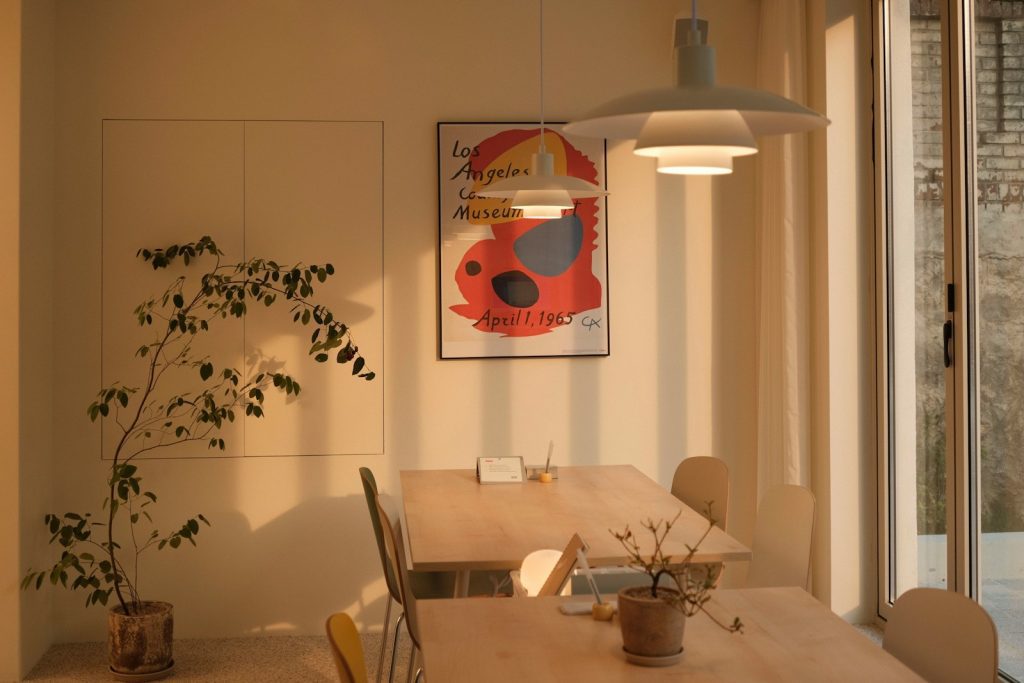
Your dining room should feel inviting, not like a tight squeeze every time you pull out a chair. Designers consistently point to a handful of specific items that visually and physically shrink the space, even when the room’s footprint is decent. By spotting these culprits and swapping them for smarter alternatives, you can make the room feel more open, comfortable, and genuinely ready for guests.
1) Oversized dining tables dominating the room

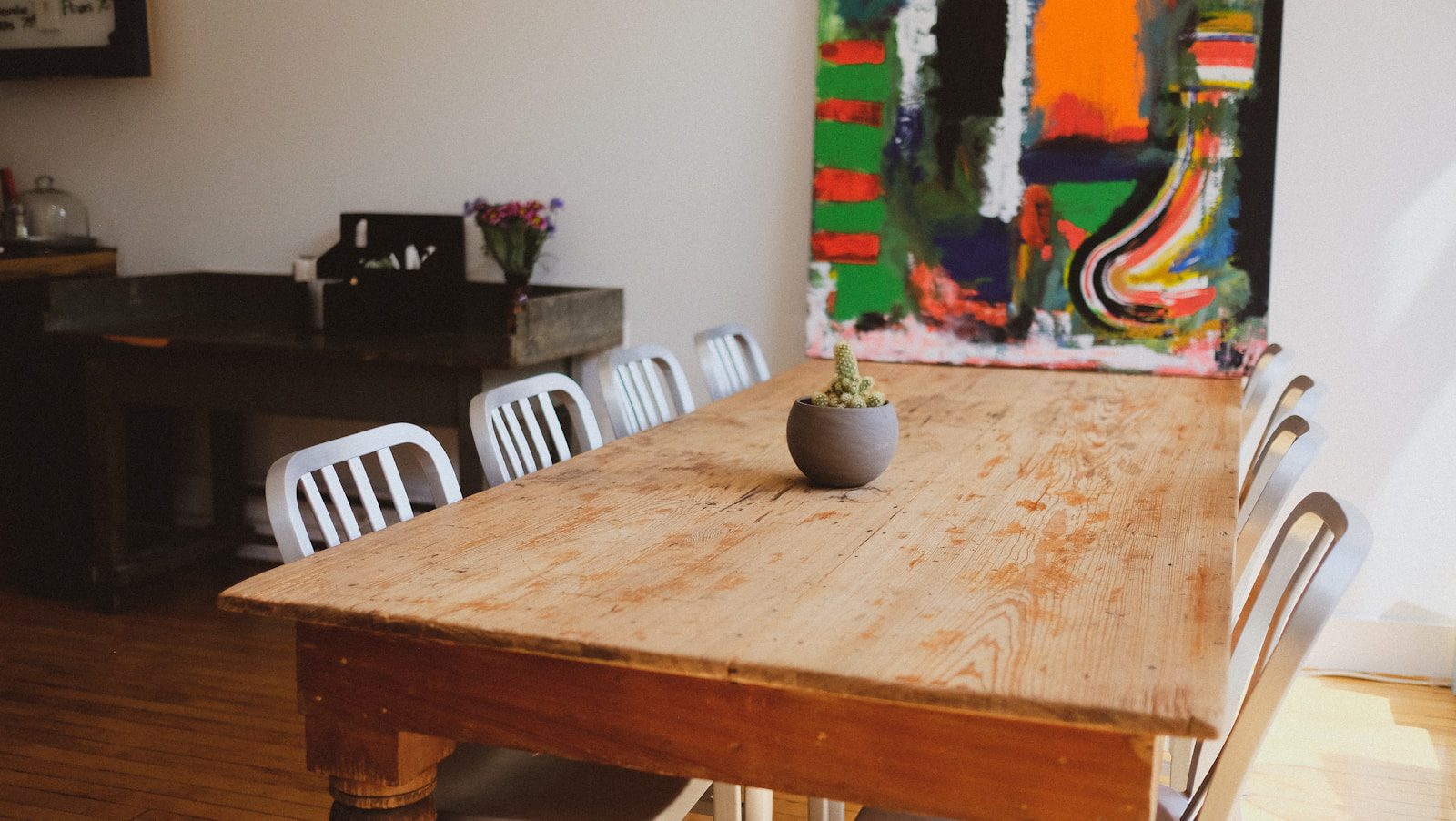
Oversized dining tables dominate floor space, leaving too little breathing room around the perimeter. Designers who analyze what makes a dining room look cramped note that when a table nearly touches the walls, the eye reads the entire room as smaller, and circulation becomes awkward. Guidance on cramped dining layouts stresses that scale is as important as style, especially in modest rooms.
When the tabletop is too wide or too long, chairs cannot slide back comfortably, and guests end up shuffling sideways to reach their seats. That strain changes how people use the room, often discouraging everyday meals or work sessions there. Choosing a narrower rectangle, a round pedestal, or a table with leaves you can collapse keeps the focus on conversation instead of collision avoidance.
2) Bulky storage pieces and sideboards that crowd the walls
Bulky storage pieces, such as deep sideboards and towering hutches, quickly make a dining room feel overstuffed. Designers who outline things to keep out of your dining room often single out heavy case goods that jut into walkways or block natural light. Even when these pieces are technically against the wall, their depth eats into the usable footprint and narrows the room visually.
When every wall is lined with cabinetry, there is no negative space to let the eye rest, so the room reads as smaller and busier. Editing down to one slim console, a shallow credenza, or wall-mounted shelves preserves storage without sacrificing comfort. For homeowners, that shift can free up space for an extra chair, a high chair, or simply easier movement during busy dinners.
3) Heavy window treatments and dark finishes that ignore “feel bigger” advice
Heavy window treatments and dark finishes absorb light, which is the opposite of what designers recommend when explaining how to make a small dining room feel larger. Advice on making a compact dining area feel bigger emphasizes maximizing natural light, using airy fabrics, and keeping surfaces reflective. When you instead choose dense drapery, dark paint, and heavy wood tones, the boundaries of the room close in.
Thick curtains that puddle on the floor and dark, high-sheen cherry wood finishes can be especially overpowering in tight quarters. They may also highlight other dated elements, echoing concerns about Poorly Scaled Pieces and Bad Lighting raised in coverage of Things That Make Your Dining Room Look Dated, According To Designers. Swapping to lighter fabrics, pale walls, and a more balanced mix of finishes helps the room feel taller, wider, and more current.
4) Large, fixed seating that replaces space-maximizing solutions
Large, fixed seating, such as oversized armchairs or built-ins that run wall to wall, can crowd a dining room that would benefit from more flexible options. Space-saving strategies that focus on maximizing a small dining room often highlight slimmer chair profiles, benches that tuck fully under the table, or banquettes with hidden storage. When you ignore those ideas and opt for bulky silhouettes, you sacrifice both circulation and versatility.
Chairs with wide arms, thick legs, and deep seats require more clearance behind and between them, which can make even a standard table feel oversized. Fixed benches that cannot be shifted for cleaning or extra guests also limit how you use the room. Choosing stackable chairs, armless profiles, or a streamlined built-in that leaves room for movement keeps the layout adaptable for everyday life and entertaining.
5) Visual “size reminders” like awkward rugs or ceiling fixtures
Visual “size reminders” are items that constantly call attention to how small the room is, such as rugs that are too tiny or ceiling fixtures that hang too low. Ideas that help guests forget the size of a small dining room often rely on correctly scaled textiles and lighting that draw the eye upward. When a rug stops short of the chair legs or a chandelier hovers at eye level, every movement reinforces the room’s limits.
An undersized rug creates a postage-stamp effect in the center of the floor, while an oversized one that runs into adjacent spaces can blur boundaries in a confusing way. Similarly, off-center or overly ornate fixtures can make the ceiling feel lower and the table area more cramped. Adjusting fixture height, centering it over the table, and choosing a rug that allows chairs to slide without catching can subtly expand how the room feels.
6) Traditional full-size dining sets instead of compact, space-saving tables
Traditional full-size dining sets, with a large rectangular table and eight heavy chairs, often overwhelm modest rooms. Curated lists of small-space dining tables show how scaled-down, extendable, or round designs can seat a similar number of people without swallowing the floor plan. When you cling to a formal set meant for a much larger home, every other decision has to work around that bulk.
These oversized sets also limit how the room can function day to day, making it harder to use the space as a homework zone or home office. In contrast, a compact drop-leaf table or a petite pedestal can expand for holidays and shrink again afterward. That flexibility supports changing household needs while keeping the room visually lighter and easier to navigate.
7) Excess décor and everyday clutter on every surface
Excess décor and everyday clutter quickly turn a dining room into a storage zone rather than a place to gather. Designers who dissect what makes a dining room look cramped repeatedly point to crowded surfaces, from over-layered centerpieces to stacks of mail. When every inch of the table, sideboard, and window sill is occupied, the room feels smaller even before anyone sits down.
Lists of items to keep out of the dining room echo this, warning that extra appliances, paperwork, and decor that belongs elsewhere all contribute to visual noise. Even details like Using a heavy tablecloth when the table is not in use, as one online commenter noted, can add bulk and make the space feel busier. Clearing surfaces between meals and editing accessories to a few intentional pieces restores calm and makes the room feel more spacious.
8) Poorly planned chair clearance and traffic paths
Poorly planned chair clearance and traffic paths are another subtle reason a dining room feels cramped. Layout advice focused on making a small dining room feel bigger and on maximizing space around the table stresses the importance of leaving enough room to pull out chairs and walk behind them. When the backs of chairs nearly touch a wall or another piece of furniture, guests feel boxed in.
Guidance that reminds you that Every inch between chairs, walls, and doorways affects how the room functions underscores how layout mistakes compound other issues. If people have to turn sideways to pass or cannot exit the table without others standing up, the room will always feel too tight. Re-centering the table, removing one extra chair, or shifting a cabinet just a few inches can dramatically improve flow and comfort.
9) Heavy, non-versatile furniture that cannot adapt
Heavy, non-versatile furniture, such as solid blocky buffets or massive display cabinets, locks your dining room into a single, often cramped configuration. Ideas that spotlight clever small dining solutions and compact tables show how lighter, movable pieces can be rearranged for different occasions. When furniture is too heavy to shift or too specialized for one use, you lose the ability to open up space when you need it.
Pieces that lack storage or multi-functionality also force you to add more items to handle linens, serveware, or barware, compounding clutter. In contrast, a slim console with drawers, a storage bench, or nesting tables can flex between everyday meals and larger gatherings. That adaptability is crucial in smaller homes, where the dining room often has to double as a workspace or play area without feeling perpetually crowded.
10) Any item that fights scale, storage, and sightlines at once
The most space-killing items in a dining room are those that simultaneously ignore scale, create storage problems, and disrupt sightlines. Across expert guidance on making a room feel larger, on maximizing compact dining areas, on avoiding cramped visuals, and on editing what belongs in the room, three themes repeat. Oversized pieces, unnecessary objects, and anything that blocks light or views are treated as red flags.
Think of a tall, deep cabinet placed right beside the table, piled with decor on top and flanked by a too-low pendant. It is too big for the footprint, it invites clutter, and it interrupts both natural light and sightlines across the room. Removing or replacing that one item with a slimmer, lighter alternative can unlock space, improve storage, and instantly make the dining room feel less cramped and more welcoming.
More from Decluttering Mom: