


If you’ve ever helped a friend clean out a parent’s house, you already know the particular exhaustion of it: the decision fatigue, the guilt of tossing things, the boxes that multiply faster than you can sort them. Most of us don’t think about that experience from the other side until we’re the ones with a garage full of decades-old belongings and grown kids who love us dearly but really do not want to inherit all of it.
The good news is that this is entirely avoidable with a little honesty and a lot less sentimentality about certain categories of stuff. Grown children today are juggling smaller homes, cross-country moves, and their own kids’ clutter, which means the last thing they need is a phone call about clearing out a storage unit. Here are ten things your kids will likely be relieved to see handled before it becomes their job.

Decades of Tax Returns and Financial Paperwork
Many people hold onto every tax return, pay stub, and utility bill they’ve ever received out of a vague fear that they’ll need it someday. In reality, the IRS generally recommends keeping most tax records for only three to seven years depending on the situation, which means filing cabinets full of 1990s paperwork are almost always safe to shred. Grown kids inheriting a home often have to sort through these boxes page by page just to make sure nothing important like a deed or an old insurance policy is buried inside. Setting aside an afternoon to shred everything beyond the recommended window, while keeping key documents like birth certificates, deeds, and recent tax filings in one clearly labeled folder, saves your family hours of frustrating sorting later. It also protects you from identity theft risks tied to old documents sitting around for decades.
An Attic Full of Furniture “Someone Might Need Someday”
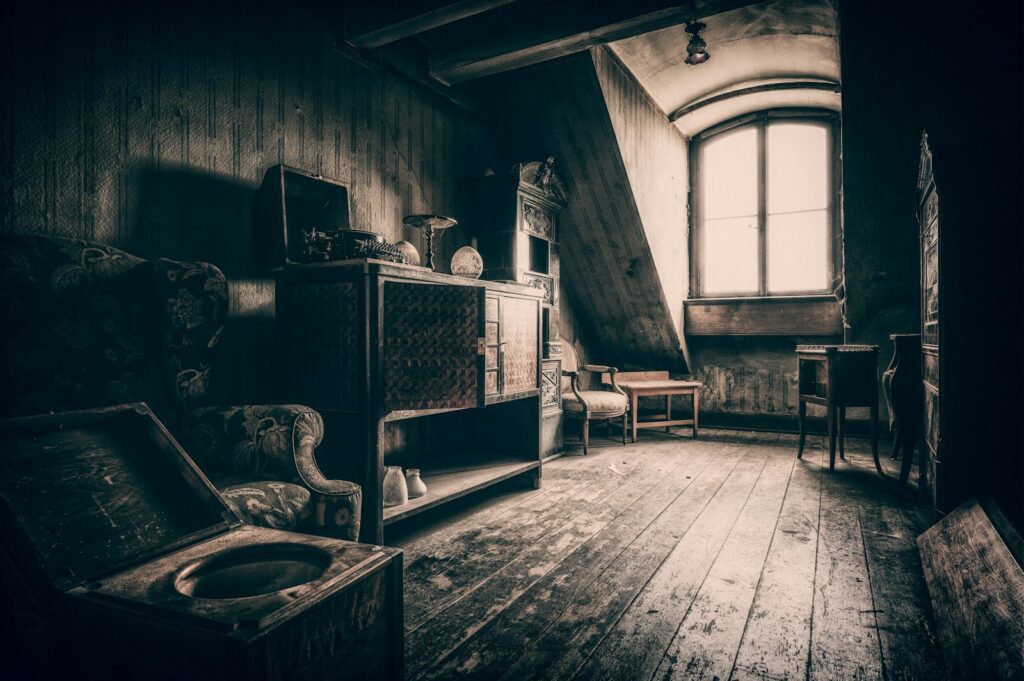
Extra dressers, mismatched chairs, and old bed frames often get pushed into an attic or basement under the assumption that a grandchild moving into a first apartment will eventually want them. But hauling heavy furniture down narrow attic stairs is a genuinely difficult and sometimes dangerous job, and most of it turns out to be too worn, outdated, or impractical to actually use. Grown kids are far more likely to want help buying something functional than to inherit furniture that needs to be repaired or refinished first. If a piece hasn’t been used or requested in the last few years, it’s a strong sign nobody is coming for it. Donating it now, while you can still choose where it goes, is far kinder than leaving it as a heavy, awkward decision for someone else.
Multiple Complete Sets of Holiday Dishware
Between wedding gifts, inherited pieces, and impulse buys at after-Christmas sales, it’s easy to end up with several full sets of holiday-themed plates, mugs, and serving dishes. Realistically, most families only use one set during the holidays, and the rest sit wrapped in tissue paper for 11 months of the year. Grown kids who end up with multiple complete sets often can’t bear to donate anything sentimental, so it just gets moved from house to house, unopened, for years. Picking a single favorite set to keep and donating the rest while everyone can still enjoy deciding what happens to them prevents this slow-motion pileup. It also means the set you do keep will actually get used and appreciated rather than stored in a box no one opens.
Large Collections Tied to a Specific Hobby You’ve Since Given Up
Stamp collections, model trains, needlepoint supplies, or an entire garage of woodworking tools from a hobby you loved for a decade can be genuinely difficult for children to part with, even after you’ve moved on from it yourself. These collections often carry real monetary and emotional value, but only if someone takes the time to appraise, sell, or donate them properly, and grown kids rarely have that time or expertise. If you’ve stopped actively using a hobby’s supplies, it’s worth researching resale options, collector groups, or donation programs yourself while you still have the specific knowledge about what’s valuable and what isn’t. That expertise dies with the collection’s context, leaving kids guessing whether a box of vintage tools is treasure or trash. Handling it now turns a burden into a final, thoughtful gift.
A Garage or Shed Full of Half-Used Home Improvement Supplies
Leftover paint cans, extra tile, spare lumber, and hardware from decades of home projects tend to accumulate in garages and sheds without anyone noticing how much space they take up. Old paint in particular can be hazardous waste that requires special disposal, which most kids don’t realize until they’re standing in a garage wondering how to legally get rid of a dozen half-full cans. Consolidating and properly disposing of expired or unusable materials on an annual basis keeps this from becoming an overwhelming project. It also means whatever supplies remain are actually still useful rather than decades past their shelf life. A garage that’s organized and current is a genuinely helpful thing to inherit; one packed with forgotten renovation leftovers is not.
Boxes of Photographs Without Any Labels
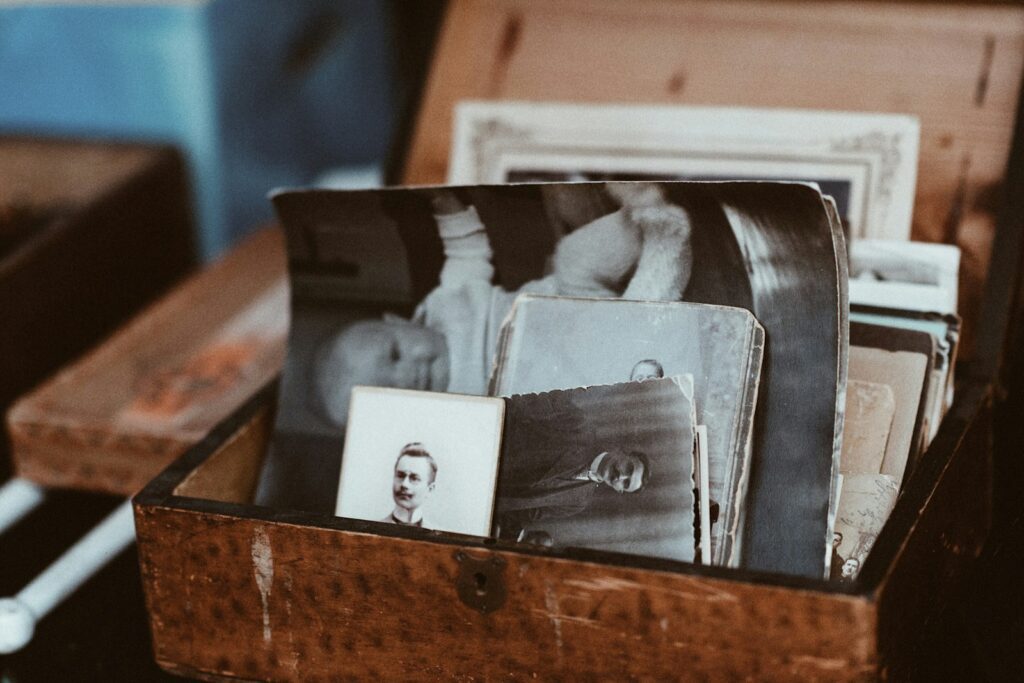
Thousands of unlabeled photographs can feel like a treasure trove in theory, but in practice they’re one of the most emotionally difficult things for grown children to sort through, precisely because they can’t bear to throw away a photo that might matter without knowing who’s in it. Taking even a little time to label key photos with names, dates, and locations turns a guessing game into an actual family archive. Digitizing favorites and organizing them into simple, labeled albums or a shared digital folder also makes them dramatically easier to preserve and share across the family. This is one of the few decluttering projects where the goal isn’t necessarily to have less, but to make what you keep genuinely usable. A shoebox of mystery photos often ends up in a landfill for lack of context; a labeled album gets passed down for generations.
Multiple Vehicles or Boats No Longer in Regular Use
An old car in the driveway, a boat that hasn’t touched water in years, or a camper sitting on blocks in the yard represents not just clutter but ongoing costs in insurance, registration, and space that grown kids often don’t realize they’re inheriting along with the sentimental attachment. Selling or donating vehicles that aren’t being actively used avoids leaving your family with the legal and logistical headache of transferring a title, addressing liens, or arranging for costly disposal or towing. It also means you get a say in where the vehicle ends up rather than leaving that decision, and the cash from a sale, in limbo. If a vehicle hasn’t been driven in the last year, it’s worth being honest about whether the plan to fix it up someday is likely to happen.
Unfinished or Long-Term Craft and Sewing Projects
A closet full of half-finished quilts, unassembled scrapbooks, or bags of fabric bought for projects that never quite got started is common among crafters, but it puts grown kids in an uncomfortable spot: finishing someone else’s unfinished project feels obligatory, yet most people don’t have the skill, time, or vision to do it. Being realistic about which projects you’ll genuinely still complete, and letting go of the rest through donation to a local craft guild or senior center, prevents this quiet pileup. If a project has been sitting untouched for more than a year or two, it’s a fairly reliable sign it’s not coming back to the top of the list. Finished items you’re proud of are wonderful to pass down; unfinished supplies mostly become someone else’s guilt.
Multiple Copies of the Same Important Documents
It’s common to keep several photocopies of a will, power of attorney, or insurance policy scattered across different drawers, folders, and safes just in case one gets lost. This actually creates more confusion for grown children during an already stressful time, since they may not know which version is the most current or where the original signed copy is located. Consolidating these documents into one clearly labeled, secure location and telling your kids exactly where that is removes an enormous amount of uncertainty when it matters most. It’s worth doing this update anytime a document changes, so there’s never a question about which copy is valid. A single well-organized folder is infinitely more useful than a dozen scattered, possibly outdated ones.
A House Full of “Good” Items Being Saved for a Special Occasion
Unused candles, unworn jewelry, the nicest guest towels, and perfume saved for a special occasion that never quite arrives are common in nearly every home, and they represent a strange kind of clutter: things too nice to use, but not nice enough to feel like they’re worth passing down formally. Grown kids often find drawers of barely touched “good” items and aren’t sure whether they were meant to be gifts, keepsakes, or just unused stock. Making a habit of actually using nice things now, rather than saving them indefinitely, means less gets left behind in this ambiguous category. If something was purchased to be enjoyed, using it is a better tribute to that original intention than leaving it in its box for someone else to eventually find.