


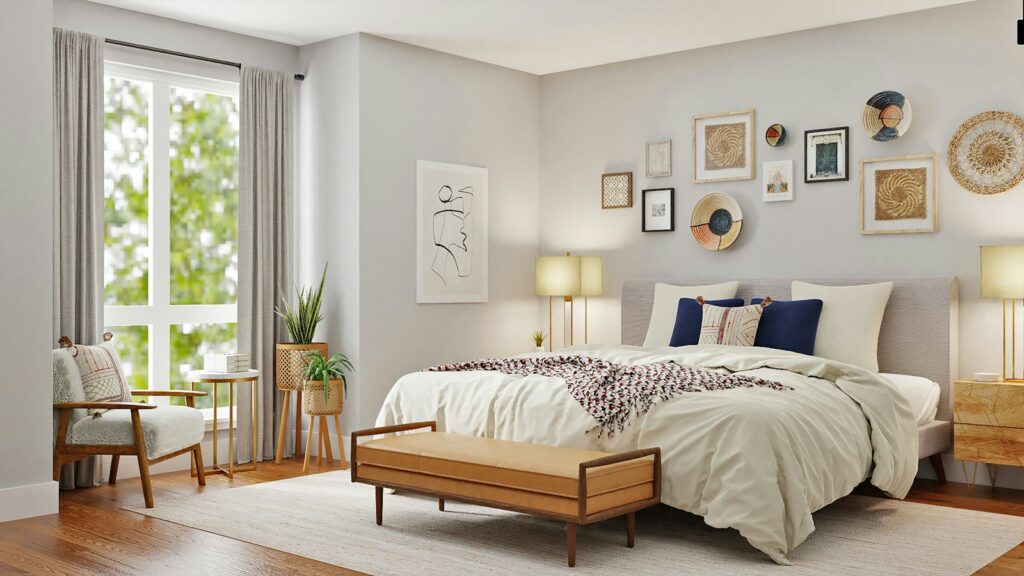
Your bedroom is supposed to be the one room in the house where your brain gets to power down, but for a lot of us, it’s actually where the chaos of the day quietly lands — the chair that catches clothes, the nightstand that’s become a second junk drawer, the laundry basket that never quite makes it to the laundry room. None of it happened on purpose. It just accumulated, the way things do in the room nobody sees but you.
The trouble is that a chaotic bedroom doesn’t just look messy, it can genuinely mess with how well you unwind and sleep. Researchers presenting at a national sleep conference found that decluttering the bedroom improved participants’ sleep quality, which is reason enough to take a closer look. Here are eleven things quietly driving that chaos.

The “Chair” That’s Actually a Closet
Nearly every bedroom has one: a chair, bench, or ottoman that has slowly stopped being furniture you sit on and started being furniture you pile clothes onto. Once it crosses that line, it becomes a visual signal that clutter is welcome here, and things multiply on it fast because there’s no longer a clear line between “put away” and “not put away.”
A Nightstand Covered in Random Objects
Water glasses, old receipts, hand lotion, three different chargers, and a book you haven’t opened in months all tend to collect on the nightstand because it’s within arm’s reach of where you spend the most passive time in the house. The problem is that a cluttered nightstand is usually the last thing you see before bed and the first thing you see in the morning, which sets a chaotic tone at both ends of the day.
Laundry That Lives in the Bedroom
Clean laundry waiting to be folded, dirty laundry waiting for wash day, laundry in transition between the two — bedrooms often end up as a holding zone for all of it, especially when the laundry room is elsewhere in the house. A basket or pile of laundry sitting out for days doesn’t just look unfinished, it becomes part of the room’s visual noise every time you walk in.
Too Much Furniture for the Room’s Size
A dresser, a bench, a reading chair, a full-size desk, and a nightstand on each side of the bed might all be individually useful, but crammed into a room that isn’t sized for that much furniture, they leave almost no open floor space. A room with no breathing room reads as cluttered even when every item in it is technically organized, simply because there’s nowhere for the eye — or the body — to rest.
An Overflowing Closet With the Door Left Open
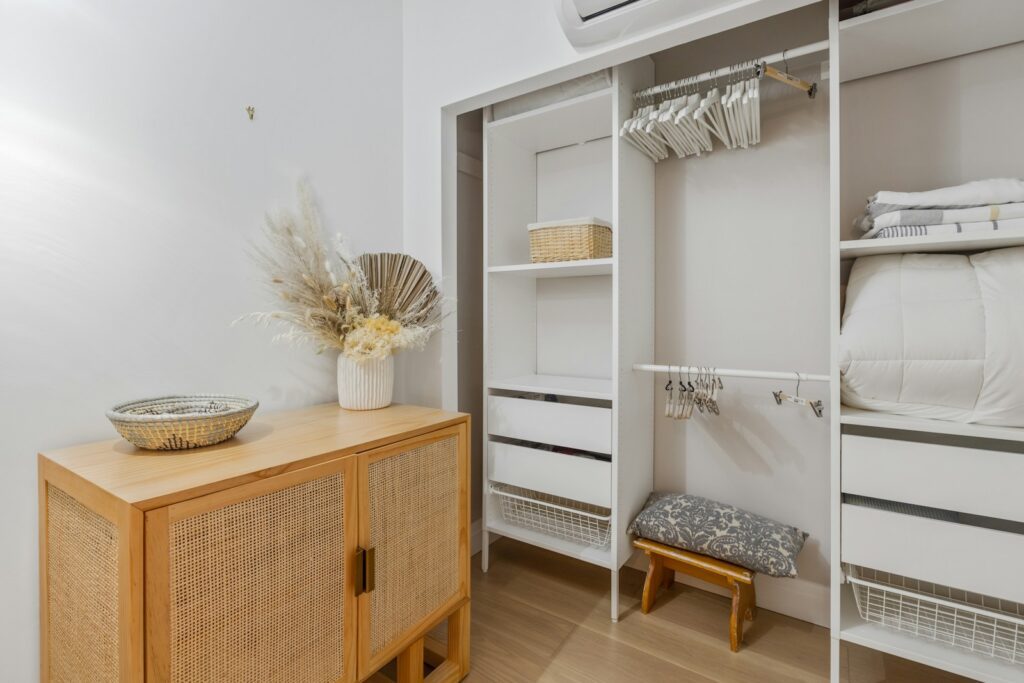
A closet stuffed past capacity, with the door left ajar because it won’t fully close anymore, extends the visual chaos of the closet into the room itself. Out of sight only works as an organizing strategy if the door can actually stay shut, and a bulging closet undermines that instantly.
Under-Bed Storage You’ve Forgotten About
The space under the bed is prime real estate for storage bins, but it’s also incredibly easy to lose track of what’s down there, turning it into a black hole of forgotten off-season clothes and miscellaneous boxes. A cluttered under-bed area doesn’t show visually, but it adds to the low-grade sense that the room isn’t fully sorted out, even if you can’t immediately say why.
Cords Snaking Across the Floor or Nightstand
Phone chargers, lamp cords, and white-noise machine cables tend to trail across nightstands and down onto the floor in a tangle, and visible cords read as clutter even when the objects attached to them are perfectly tidy. A simple cord clip or a small tray to corral them can change how organized the whole surface looks.
A Bed That’s Rarely Made
An unmade bed takes up the largest visual footprint in the room, so when it’s rumpled and messy, it sets the tone for how chaotic the entire space feels, regardless of how tidy everything else is. Making the bed takes under two minutes and instantly makes the room read as put-together, even on days when nothing else got tidied.
Decor That No Longer Matches How You Live
A bedroom filled with decorative pillows, a bench at the foot of the bed, and a bunch of accent objects can look lovely in theory, but if none of it actually gets used, it just becomes more stuff to move, dust, and work around every single day. Chaos isn’t only about mess; sometimes it’s about a room holding more objects than its actual daily use requires.
A Desk or Workspace Crammed Into the Corner
Working from home pushed a lot of desks into bedrooms out of necessity, but a workspace with papers, cables, and office supplies sitting in the same room where you’re trying to relax can keep your brain subtly tied to work mode even after you’ve logged off for the day. If a desk can’t be visually separated or tidied at day’s end, it tends to blur into the room’s overall clutter.
Shoes Left Wherever They Landed
Shoes kicked off at the end of the day and left scattered near the closet, bed, or door are one of the fastest ways a room starts to feel disordered, since they’re low to the ground and catch the eye immediately. A simple shoe tray or basket by the closet gives them a landing spot that takes the same amount of effort as leaving them on the floor, minus the visual chaos.