


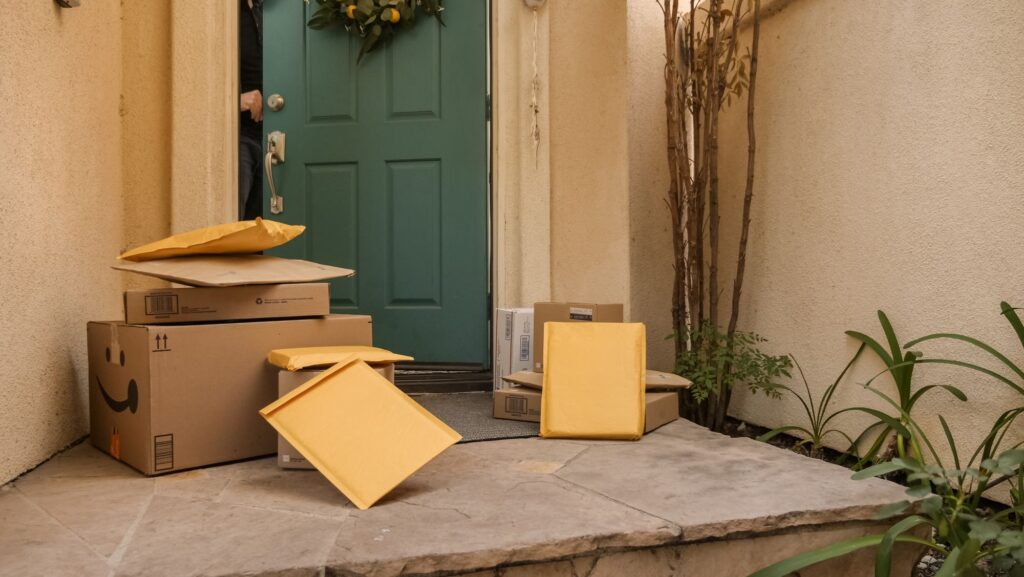
Somewhere on a porch near you, a box is sitting in plain sight right now, and the odds that it stays there until you get home are worse than you’d think. According to home security data compiled by SafeHome.org, there were roughly 119 million reported package thefts in a recent year, which works out to about one in every 180 packages delivered in this country simply vanishing. In a single quarter alone, 17 percent of Americans said they had a package stolen, which means this is not a rare misfortune that happens to unlucky neighbors. It is a routine cost of shopping online, and it is happening at a scale large enough that most of us will experience it eventually. The good news, and it is real good news, is that the data on what actually reduces theft is a lot more specific and a lot more encouraging than the doom-scroll headlines suggest. You do not need to overhaul your life or install a fortress. You need to understand which small changes carry the most weight, and then do a few of them.
The Scale of the Problem Is Bigger Than “Porch Pirates” Makes It Sound
The phrase “porch pirate” makes package theft sound almost quaint, like something that happens to a handful of unlucky suburbs during the holidays. The numbers tell a different story. SafeHome.org’s research found that 88 percent of Americans say they worry at least somewhat about package theft, and that worry tracks with real experience rather than anxiety alone. When nearly one in five people report being victimized within a three-month window, this stops being an occasional inconvenience and becomes a predictable part of the delivery economy, the same way you plan for shipping delays or damaged boxes. Insurance and consumer research firm ValuePenguin found something worth sitting with in its own porch pirates research: of the people who filed a claim after a theft, 55 percent went to the seller, 31 percent went to the shipping company, and only 29 percent bothered reporting it to police. Most victims are quietly absorbing the loss or chasing a refund rather than treating it as a crime worth reporting, which is part of why the true scale stays hidden in plain sight.
Video Doorbells Help, But Ownership Alone Isn’t the Fix
A camera on your door is one of the most common responses to package theft, and for good reason. Security.org’s most recent package theft report found that 34 percent of people use a doorbell camera and 28 percent use an outdoor security camera with motion detection specifically as a theft deterrent, and ValuePenguin’s data shows 22 percent of Americans installed a camera in the past year for that exact reason. Here’s the nuance worth knowing: a camera’s real power isn’t the footage after the fact, it’s the visible presence that makes a would-be thief choose an easier house. Gene Petrino, a former SWAT commander cited in Security.org’s report, put the underlying philosophy simply: “Eliminate opportunity. Thieves can’t steal what they can’t see.” That’s a useful reframe. A camera that only records a theft in progress has already failed at its main job. The households getting the most value pair a visible camera with actually keeping packages out of sight, whether that means a delivery closer to the door, behind a planter, or somewhere not visible from the street.


Delivery Instructions and Lock Boxes Quietly Do a Lot of Work
This is the fix that gets the least attention and probably deserves the most. Most major carriers let you leave standing delivery instructions on an account or with a specific order, directing drivers to a side door, a covered porch, a garage keypad, or a lock box rather than the most visible spot by the front walk. A basic weatherproof delivery lock box costs less than a single stolen item and solves the problem at its root: the package is never exposed to the street in the first place. This matters because theft is overwhelmingly opportunistic. A driver who tucks a box behind a railing or inside a box mounted by the door removes the temptation entirely, rather than just documenting it if it happens. If you order frequently, setting this up once and letting it apply to every delivery is the kind of change that pays for itself in the first prevented theft.
Requiring a Signature Adds Friction Where Thieves Don’t Want It
Most shoppers skip signature confirmation because it feels like an extra hassle, but for higher-value orders it changes the entire risk calculation for a thief. A package that requires an adult signature cannot simply be lifted off a porch and driven away; it either gets returned to a depot, redirected to a pickup location, or redelivered on a schedule that puts a real person in the loop. That single requirement moves an expensive item out of the “grab and go” category entirely. It is not a fit for every order, obviously nobody wants to sign for a phone charger, but for electronics, jewelry, or anything with real resale value, the extra step is a small price for closing off the easiest form of theft.
Delivering to Work or a Neighbor Removes the Target Altogether
Sometimes the simplest solution is to make sure nothing is ever sitting unattended. ValuePenguin’s research specifically recommends “opting for delivery to your workplace” and “asking a trusted neighbor if packages can be delivered to their home” as effective preventive steps, and the data backs up how common these approaches already are. Security.org found that 17 percent of shoppers rely on a neighbor’s help with packages, 9 percent have items delivered to someone else entirely, and 7 percent will leave work specifically to retrieve a delivery before it sits exposed for long. None of these numbers are enormous on their own, but together they represent a meaningful share of people who have simply decided the safest porch is no porch at all. If you work somewhere that accepts personal mail, or you have a neighbor who is reliably home during the day, this is one of the few strategies that reduces risk to nearly zero rather than just lowering it.
Community Porch-Watch Networks Add Eyes You Don’t Have
Neighborhood-based alert systems, the kind that let people flag suspicious activity or a spotted theft in near real time, add a layer of deterrence that no single household camera can offer on its own. The value isn’t any one alert; it’s the cumulative effect of a street where multiple households are quietly watching for each other, which tends to push opportunistic thieves toward blocks where nobody is paying attention. If your neighborhood already has an informal group text or a shared alert habit, package theft is exactly the kind of low-stakes, high-frequency problem that benefits from that kind of loose, collective awareness. It costs nothing and it multiplies the effectiveness of everything else on this list.
Putting It Together
None of these strategies is a silver bullet on its own, and that is really the point worth taking away. A camera without hidden packaging just documents a loss. A lock box without any camera relies entirely on the thief not noticing it. What the data actually shows is that theft-prevention works in layers, not in single purchases, and the households with the lowest theft rates tend to be the ones stacking two or three of these approaches rather than betting everything on the one gadget that felt like the obvious answer. Start with whichever change fits your daily life most naturally, whether that is a delivery instruction you set once and forget or a standing arrangement with a neighbor, and let it compound from there. At a scale of 119 million thefts a year, you cannot control the odds industry-wide, but you can absolutely change your own.