


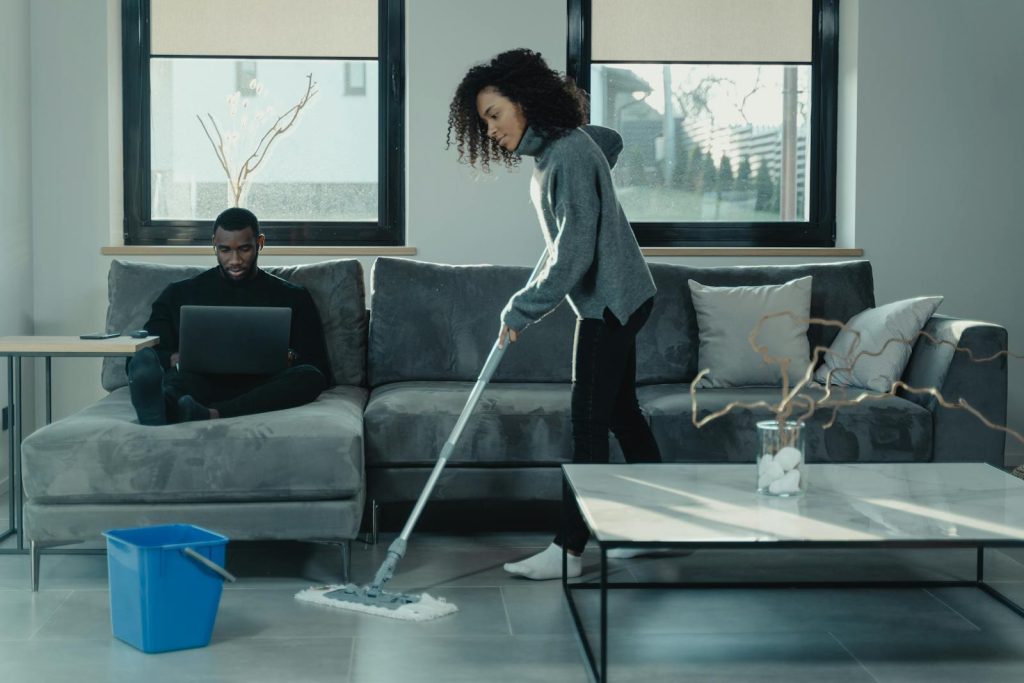
Your home might look cozy, but small everyday habits can quietly make it much harder to clean. From how you arrange furniture to the colors on your walls, certain choices turn quick wipe downs into full weekend projects. By spotting these 12 hidden obstacles, you can adjust your space so it stays cleaner with less effort and fewer marathon scrubbing sessions.
1) Lingering Dirt and Grime Buildup
Lingering dirt and grime buildup makes every cleaning session feel like a deep clean. Staging advice that tells you to “clean like you’re expecting company” highlights how dust, grease, and fingerprints accumulate on every surface, from baseboards to light switches, until simple wiping no longer works. Guidance on thorough surface cleaning shows that once grime settles into texture and corners, you need stronger products and more elbow grease just to reach a basic standard.
When you let this buildup linger, you also shorten the life of finishes and fabrics, because abrasive particles scratch floors and counters each time you walk or wipe. The stakes are higher than aesthetics, since trapped dust and residue can aggravate allergies and make your home feel stale even after you tidy. Tackling dirt before it layers up keeps routine cleaning fast and protects the materials you rely on every day.
2) Embedded Household Odors
Embedded household odors quietly raise the difficulty level of cleaning, even when rooms look neat. Staging guidance that urges you to “eliminate odors” points to smells from cooking, pets, or smoking that sink into upholstery, curtains, and walls, where they resist basic sprays. Once these scents bond with fibers, you are looking at repeated scrubbing, laundering, and odor-neutralizing treatments instead of a quick refresh.
Short-cut routines that promise you can Clean your home in under 30 minutes work only if you have not let odors build up in the first place. Otherwise, you end up layering fragrance over stale air, which rarely convinces guests or buyers. For you, that means more frequent deep cleans, more products to buy, and more time spent chasing a “fresh” smell that could have been preserved with earlier ventilation and targeted odor control.
3) Personal Items Collecting Dust


Personal items collecting dust turn simple dusting into a delicate, time-consuming chore. Staging advice that tells you to “depersonalize” by removing personal photos, memorabilia, and collections is not just about aesthetics, it is about cleaning access. Every frame, trophy, and figurine creates edges and gaps where dust settles thickly, forcing you to pick up and wipe each piece instead of gliding a cloth across a clear surface.
People who share their best cleaning shortcuts often stress that the less stuff you keep out, the easier it is to maintain. One discussion on making your home easier to clean notes that having “a place for everything” dramatically cuts effort, a point echoed in a thread on what you have done to make your home easier to clean. When you edit down personal displays, you still keep meaningful items, but you stop turning every shelf into a dust trap.
4) Excess Clutter Piling Up
Excess clutter piling up is one of the biggest reasons your home feels impossible to clean. Staging guidance that urges you to “declutter” targets stacks of papers, books, toys, and random objects that block floors, countertops, and shelves. When every surface is covered, you cannot vacuum, mop, or wipe without first moving piles, which effectively doubles the time and energy required for even basic chores.
Decluttering experts repeatedly point out that when you You CAN make your home look and feel clean with less stuff, you are not just improving appearances, you are reducing friction. Even visual reminders like the “Things We Do That Make Cleaning Harder” board, which highlights “Organize Your Home,” “Top,” and “Decluttering Hacks And Ideas” alongside 371 “Likes” and 294 “Shares,” show how strongly people connect clutter with cleaning stress. Fewer items out means faster resets and less mental load every time you tidy.
5) Cramped Furniture Layouts
Cramped furniture layouts trap dust and crumbs in places your vacuum rarely reaches. Staging advice that tells you to “highlight traffic flow” by rearranging furniture is partly about making rooms feel larger, but it also reduces the tight gaps where dirt collects. When sofas, chairs, and side tables are jammed together, you end up with narrow channels that require awkward bending or full furniture moves just to clean properly.
People who prioritize easy maintenance often mention that open pathways make it simpler to run a robot vacuum or do a fast sweep. In conversations about how to keep your home staying fresh and clean, habits like shoes off at the door and using air purifiers work best when floors are unobstructed. For you, a more spacious layout means less trapped debris, fewer missed corners, and cleaning tools that can actually do their job.
6) Bold Wall Colors Showing Stains
Bold wall colors showing stains can make your home feel dirtier than it is and push you into constant touch-ups. Staging guidance that recommends you “neutralize the palette” by painting over intense hues reflects how saturated colors highlight every scuff, fingerprint, and splash. On a deep navy or bright red wall, even a minor mark reads as a major flaw, so you end up repainting or scrubbing far more often.
When walls are neutral, routine cleaning usually means a light wipe where needed, not a full repaint. Bold colors also complicate patching, since matching the exact shade and finish is tricky once paint has aged. Over time, that translates into more time, more paint, and more frustration, all because your walls broadcast every small mess instead of quietly absorbing it into a calmer backdrop.
7) Dull Fixtures and Windows
Dull fixtures and windows make cleaning feel endless because they never quite look finished. Staging advice that tells you to “add sparkle” by polishing hardware and glass is a response to hard water spots, fingerprints, and smudges that cling to shiny surfaces. Once mineral deposits and oils build up, quick rinses no longer work, and you need targeted products and extra passes to restore clarity.
Guides that show you how to Add sparkle to chrome and “Disinfect” and “Clean” high-touch areas underline how neglected fixtures become hygiene risks as well as eyesores. Cloudy windows also block natural light, which can make rooms feel dingier and hide dust until it is severe. Keeping glass and metal polished from the start prevents that stubborn film that turns every cleaning session into a battle for a streak-free finish.
8) Grimy Kitchen Cabinets
Grimy kitchen cabinets quietly turn organizing into a full-scale deep clean. Staging guidance that tells you to “freshen cabinets” by wiping and organizing inside surfaces is a response to greasy residues and spills that hide behind closed doors. Over time, cooking vapors mix with dust to create a sticky film on shelves, door fronts, and hardware, so you cannot simply rearrange items without scrubbing first.
Social posts that urge you to clear out “Things” like “Expired” pantry items, “Unused” gadgets, “Worn” towels, and “Old” magazines, as in one decluttering reel, show how much hidden clutter and grime accumulate in storage. When cabinets are packed and dirty, you avoid opening them, which only lets the problem grow. Regularly emptying and wiping these spaces keeps grease from hardening and makes everyday cooking and cleanup far less punishing.
9) Moldy Bathroom Surfaces
Moldy bathroom surfaces are a classic example of a problem that multiplies your cleaning workload. Staging advice that tells you to “stage the bathrooms” by scrubbing tiles, grout, mirrors, and fixtures is aimed at mold, soap scum, and water marks that thrive in humidity. Once mold threads into grout lines, you need bleach soaks, stiff brushes, and better ventilation just to keep it from returning.
Videos that encourage you to Add sparkle to darker days by doing a “Deep Clean the Hob,” “Oven,” and bathroom areas highlight how neglected moisture zones demand heavy-duty sessions. For homeowners, the stakes go beyond appearance, since mold can damage grout and caulk and affect indoor air quality. Staying ahead of moisture with fans, squeegees, and regular wipe downs keeps bathrooms in the “quick clean” category instead of the “weekend project” one.
10) Sticky Kitchen Counters and Appliances
Sticky kitchen counters and appliances make everyday tidying feel like industrial degreasing. Staging guidance that urges you to “make the kitchen pop” by focusing on countertops and appliances recognizes how food splatters and cooking oils bake onto surfaces over time. Once residue hardens, you need abrasive tools and strong degreasers, not just a damp cloth, to restore a clean feel.
Cleaning boards that spotlight “Things We Do That Make Cleaning Harder” often single out ignoring splatters as a key mistake, because every missed wipe becomes tomorrow’s stuck-on mess. When you let grease accumulate on stovetops, range hoods, and cabinet faces, you also attract more dust, which forms a stubborn film. Tackling spills immediately keeps your kitchen in a state where a quick pass with a cloth is enough, instead of scheduling recurring heavy scrubs.
11) Dust Under Bedroom Furniture
Dust under bedroom furniture quietly sabotages your efforts to keep sleeping spaces fresh. Staging advice that tells you to “stage the bedrooms” by making beds and clearing nightstands is partly about presentation, but it also exposes the dust bunnies and lint that gather under low beds and heavy dressers. When these areas are crammed with storage or too low for a vacuum, you end up needing to move furniture or crawl on the floor to clean properly.
People who share long-term decluttering strategies, such as those who say you should Learn room-by-room habits, often emphasize keeping under-bed areas either clear or intentionally organized. Letting dust accumulate there affects allergies and makes the whole room feel stale, even if surfaces look tidy. Choosing furniture with enough clearance for cleaning tools, or minimizing what you store underneath, keeps bedroom upkeep manageable.
12) Pet Hair and Dander Spread
Pet hair and dander spread can turn every cleaning session into a full reset of your entire home. Staging guidance that tells you to “do something about pets” is a direct response to fur on rugs, upholstery, and curtains, along with accidents that soak into floors and fabrics. Once hair embeds in textiles and dander settles into corners, you need frequent vacuuming, lint rolling, and laundering just to keep surfaces looking presentable.
Owners who talk about keeping spaces livable with animals often rely on tools like robot vacuums and strict habits like shoes off at the door, as highlighted in discussions of how to Declutter Your Home for a Calmer 2025 Start. When you ignore shedding, every soft surface becomes a magnet, and guests notice before you do. Regular grooming, washable covers, and targeted cleaning routines keep pet love from translating into constant, exhausting cleanup.
More from Decluttering Mom: