


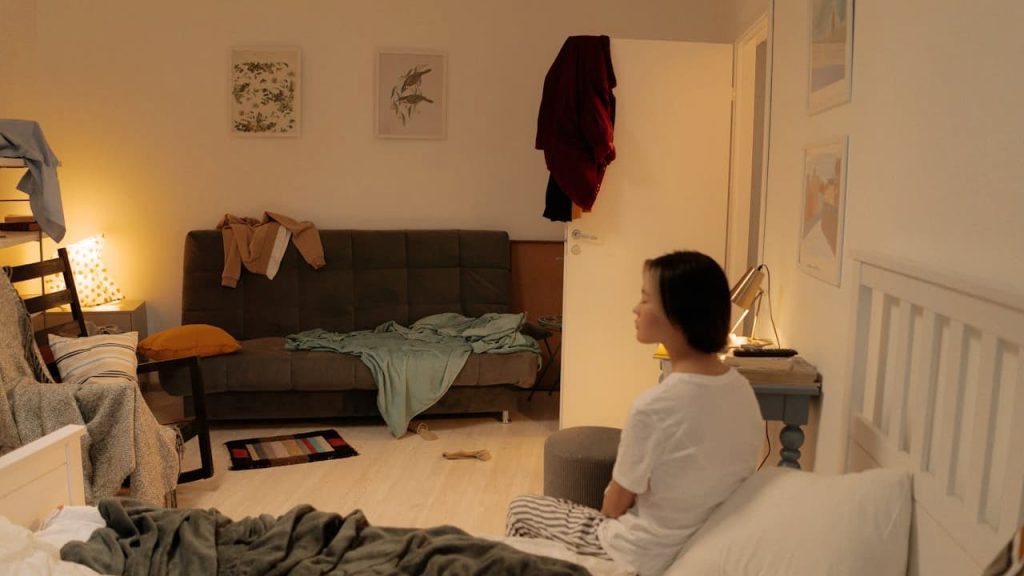
Hidden stressors at home rarely look dramatic. They creep in through cluttered corners, buzzing notifications, awkward furniture layouts, and security worries that sit in the back of your mind. By spotting and fixing these small but constant triggers, you can turn your space into a place that actually restores you instead of quietly wearing you down.
1) Cluttered bedroom surfaces that keep your brain on alert


Cluttered bedroom surfaces are a classic hidden stress trigger, because every pile of “to deal with later” sends your brain a low-level reminder that your work is unfinished. Guidance on items you should never keep in your sleeping space, such as stacks of paperwork, overflowing laundry, or random storage bins, shows how visual noise can undermine rest, which is why experts urge you to declutter your bedroom and keep only essentials within sight. When your nightstand and dresser are clear, your nervous system gets a powerful cue that it is safe to wind down.
Beyond aesthetics, cluttered surfaces make it harder to find what you need, which adds time pressure and frustration to busy mornings. That daily scramble, even if it lasts only a few minutes, can spike cortisol and set a tense tone for the day. By assigning every item a home, using small trays or drawers, and enforcing a “nothing new lives here overnight” rule for your bedroom, you reduce decision fatigue and reclaim the room as a genuine recovery zone.
2) Work-from-home setups that blur every boundary
Work-from-home setups can quietly turn your entire house into an office, which keeps your brain in productivity mode long after you log off. Advice on remote productivity stresses the importance of a defined workspace, regular hours, and clear rituals that signal when work starts and ends, because without them, work-from-home habits can bleed into evenings and weekends. When your laptop lives on the kitchen table and your phone pings with email at all hours, your body never fully shifts into rest-and-digest mode.
That constant low-level vigilance can show up as irritability, poor sleep, and a sense that you are “always behind,” even if your workload has not changed. Creating a dedicated desk, using noise-canceling headphones, and silencing work apps after a set time helps your brain separate roles: worker, parent, partner, friend. Those boundaries protect not only your mental health but also your relationships, because the people you live with feel the difference when you are truly off the clock instead of half-present and half-checking Slack.
3) Trip hazards that keep you subconsciously tense
Trip hazards are a major source of hidden stress, because your body instinctively stays on guard when floors feel unsafe. Reporting on fall risks highlights how cluttered walkways, loose rugs, and poor lighting can significantly increase the chance of injury, noting that even everyday items like electrical cords or small furniture can raise your odds of a serious accident, which is why experts flag these surprising fall risks as urgent fixes. When you know a misstep could send you to the hospital, you move more cautiously, even if you do not consciously register the fear.
That constant micro-bracing, especially for older adults or anyone with mobility issues, can translate into muscle tension, fatigue, and a reluctance to move freely around your own home. Clearing pathways, securing rugs with non-slip backing, and adding motion-sensor night lights in hallways and bathrooms reduces both the physical danger and the mental load of worrying about it. The payoff is not just fewer falls, but a home where you and your loved ones can walk confidently instead of tiptoeing around hazards.
4) Home security worries that never fully switch off
Home security worries are another powerful but often unspoken stressor, especially if you live alone or in a neighborhood where you have heard about break-ins. Practical safety advice emphasizes simple, visible deterrents such as sturdy locks, good exterior lighting, and even a “Beware of Dog” sign, noting that you can improve your sense of control with straightforward measures like these or by following expert tips on protecting your home. When you feel your property is vulnerable, your nervous system often stays in a low-grade fight-or-flight state, especially at night.
That background anxiety can show up as difficulty falling asleep, jumping at small noises, or compulsively rechecking doors and windows. Investing in basic security, such as motion-activated lights, window locks, or a video doorbell, can dramatically reduce that mental strain. The goal is not to live in fear, but to create enough visible and practical barriers that you trust your home to do its job as a safe base, so your mind is free to focus on rest, relationships, and daily life instead of worst-case scenarios.
5) Constant digital notifications that hijack your attention
Constant digital notifications are one of the most pervasive hidden stressors in modern homes, because they follow you from room to room. Every ping, buzz, or banner forces your brain to decide whether to respond, which keeps your attention fragmented and your stress response lightly activated. Even when alerts are “only” for social media or news, the repeated interruptions can raise heart rate and make it harder to sink into deep relaxation, whether you are cooking, reading, or trying to fall asleep.
Over time, that pattern trains you to expect disruption, so silence itself can feel unsettling. Turning off nonessential alerts, using “Do Not Disturb” modes during meals and at night, and charging devices outside the bedroom can dramatically lower that background noise. The stakes are not just about focus, but about reclaiming your home as a place where your nervous system can downshift, instead of a space where you are always braced for the next vibration in your pocket.
6) Poor bedroom lighting that confuses your body clock
Poor bedroom lighting quietly undermines your sleep, which is one of the biggest drivers of chronic stress. Harsh overhead lights at night, bright screens inches from your face, or, on the other end, dim lighting that makes it hard to read can all confuse your circadian rhythm. When your brain gets mixed signals about whether it is day or night, it delays the release of melatonin, the hormone that helps you fall asleep, leaving you wired at bedtime and groggy in the morning.
That sleep disruption does not just make you tired, it also raises cortisol, impairs decision-making, and lowers your tolerance for everyday frustrations. Swapping to warm, low-intensity bulbs, using bedside lamps instead of ceiling fixtures at night, and dimming screens at least an hour before bed can help your body recognize that it is time to wind down. Over weeks, those small changes can reduce irritability and make your bedroom feel like a sanctuary instead of a place where you toss and turn.
7) Overstuffed closets that turn every outfit into a decision crisis
Overstuffed closets are a hidden stress engine, because they turn a simple daily task into a decision crisis. When hangers are jammed together and shelves are stacked with clothes you never wear, you have to sift through visual clutter before you can even see your real options. That extra friction each morning adds to decision fatigue, which research links to poorer self-control and a greater sense of overwhelm later in the day.
There is also an emotional layer, because unworn items often carry guilt about money spent or weight changed, which can trigger shame every time you open the door. Editing your wardrobe to what actually fits your current life, grouping items by category, and using simple systems like “one in, one out” reduces both the physical mess and the emotional noise. The result is not just a neater closet, but a calmer start to your day and a home that feels aligned with who you are now, not who you used to be.
8) Open-plan spaces with zero acoustic privacy
Open-plan spaces can look airy and modern, but they often hide a serious stress problem: no acoustic privacy. When cooking sounds, television dialogue, and phone calls all bounce around the same large room, your brain has to work harder to filter out irrelevant noise. That constant background chatter can raise stress hormones and make it difficult to concentrate, especially if you are working from home or helping children with homework at the dining table.
Over time, the lack of quiet corners can strain relationships, because everyone feels like they are competing for sound space. Simple fixes, such as adding rugs and curtains to absorb noise, using bookcases or folding screens to carve out zones, and agreeing on “quiet hours” for certain activities, can restore a sense of calm. The goal is not to abandon open layouts, but to design them so that your nervous system gets regular breaks from sensory overload instead of living in a constant hum.
9) Unfinished projects that nag you from every corner
Unfinished projects are classic background stressors, because they represent open loops your brain keeps trying to close. Half-painted walls, a disassembled bike in the hallway, or a stack of frames waiting to be hung all send the same message: you are behind. Even if you rarely think about them consciously, your mind tracks these loose ends, which can create a low-level sense of failure or procrastination every time you walk past.
That ongoing self-criticism can sap motivation and make it harder to start new tasks, feeding a cycle of avoidance. Breaking projects into smaller, clearly defined steps, scheduling specific time blocks to tackle them, or deliberately deciding to abandon certain ideas can relieve that pressure. When you either finish or formally release a project, you free up mental bandwidth, making your home feel less like a to-do list and more like a place where you are allowed to rest.
10) Poorly arranged furniture that fights your daily routines
Poorly arranged furniture can quietly raise your stress by making everyday movements awkward and inefficient. If you have to squeeze sideways past a coffee table, reach over a sofa to close curtains, or walk a long detour around a dining set to get to the kitchen, your body experiences small bursts of frustration dozens of times a day. Those micro-irritations accumulate, especially when you are already tired or in a hurry.
There is also a safety angle, because tight layouts increase the risk of bumps and trips, particularly for children and older adults. Rearranging furniture to create clear pathways, placing frequently used items within easy reach, and aligning seating with natural focal points like windows or fireplaces can make your home feel more intuitive. When your space supports your routines instead of fighting them, you conserve energy and reduce the background tension that comes from constantly navigating obstacles.
11) Kitchen chaos that turns meals into daily emergencies
Kitchen chaos is a potent hidden stressor, because it hits at least three times a day. When counters are crowded, pantry shelves are disorganized, and you cannot find basic tools like a sharp knife or measuring cup, simple meals start to feel like emergencies. That sense of scrambling, especially at the end of a long workday, can spike stress hormones and make you more likely to snap at family members or default to takeout.
Over time, the combination of rushed eating, higher food costs, and guilt about unused groceries can weigh heavily on your mood. Streamlining your kitchen by grouping items by task, keeping only daily-use appliances on the counter, and doing a quick nightly reset can transform cooking from a source of dread into a predictable routine. The payoff is not just calmer evenings, but also better nutrition and a stronger sense that your home is supporting your health instead of sabotaging it.
12) Laundry piles that signal you are always behind
Laundry piles are more than a housekeeping issue, they are a visual reminder that your responsibilities never end. Whether it is a mountain of dirty clothes in the bathroom or clean items heaped on a chair waiting to be folded, the message is the same: you still have work to do. That constant sense of being behind can erode your ability to relax, because sitting down with a book or show feels undeserved when chores are staring at you.
For parents or caregivers, laundry can also symbolize the invisible labor of caring for others, which can fuel resentment if it is not shared fairly. Setting a realistic schedule, such as one load a day or designated “laundry days,” and finishing each load all the way to putting clothes away reduces that lingering clutter. When laundry has a predictable rhythm instead of erupting into crises, your home feels more manageable and your downtime feels genuinely off-duty.
13) Overloaded entryways that make every arrival stressful
Overloaded entryways quietly raise your stress every time you walk through the door. When shoes, bags, mail, and packages pile up near the threshold, you are greeted not by a sense of welcome, but by a wall of tasks. That first impression matters, because it sets the emotional tone for the rest of your time at home, especially after a demanding day.
Cluttered entrances also slow you down when you leave, increasing the risk of forgotten keys, misplaced wallets, or missed buses. Creating simple landing zones, such as hooks for coats, a tray for mail, and a basket for shoes, can transform the space into a functional buffer between the outside world and your private life. With a calmer, more organized entry, you start and end each day with a small but powerful signal that your home is under control.
14) Neglected maintenance that keeps worst-case scenarios in your head
Neglected maintenance is a subtle but powerful stressor, because it keeps worst-case scenarios running in the background of your mind. A slow drip under the sink, a flickering outlet, or a strange noise from the furnace may seem minor, but each one carries the fear that it could turn into a flood, fire, or expensive breakdown at any moment. That uncertainty can make you feel like your home is a ticking time bomb instead of a stable refuge.
Financial anxiety often compounds the problem, as you imagine repair bills you are not sure you can cover. Creating a simple maintenance checklist, tackling small fixes before they escalate, and setting aside a modest monthly amount for home repairs can dramatically reduce that mental load. When you know you are steadily addressing issues instead of ignoring them, your home feels safer, and your mind is free to focus on daily life instead of looming disasters.
More from Decluttering Mom: