



By 21, most people are figuring out careers, relationships, and maybe how to pay off a first car, not whether they are going to lose an organ. For Caris Gibson, a young woman whose life has been derailed by a rare urinary condition, that is the brutal reality on the table. After years of being told she just had simple infections, she is now staring down the possibility that her bladder might have to be removed altogether.
Her story is not just about one rare diagnosis. It is about what happens when a young woman’s pain is brushed off, when a stretched health system moves too slowly, and when a family has to turn to fundraising and daily runs just to keep treatment within reach.

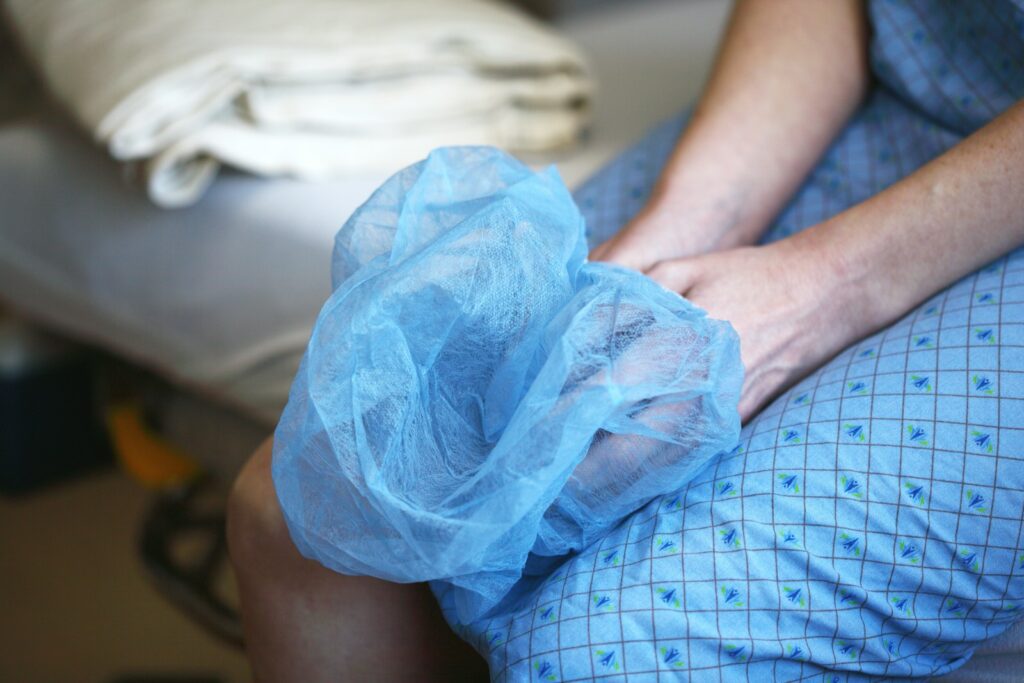
From “just a UTI” to a terrifying diagnosis
The problems started quietly for Caris Gibson, with symptoms that sounded familiar and, on the surface, fairly routine. She struggled to pass urine, felt constant discomfort, and was repeatedly told it was likely a urinary tract infection, or UTI, something many women are used to hearing. Each time she sought help, the message was essentially the same: take antibiotics, drink more water, and wait it out, as if the pain and retention were just an annoying footnote in an otherwise normal life.
Instead of easing, the symptoms escalated, and the gap between what she was feeling and what she was being told grew wider. Over roughly two years, the young Woman found herself in and out of medical settings, still being reassured that it was nothing more serious than infections, even as her bladder function deteriorated. By the time specialists finally took a closer look, the damage and distress were already deep, and the idea that she might one day lose her bladder had shifted from unthinkable to horribly plausible.
Finally getting a name: Fowler’s syndrome
After years of uncertainty, Caris eventually received a diagnosis that most people have never heard of. She was told she has Fowler’s syndrome, a rare condition that affects the urethra and can stop the bladder from emptying properly. For her, that label arrived only after countless appointments and missteps, and it came with a harsh catch: the longer the condition went untreated, the more her organs were put at risk. Earlier in the journey, she had dismissed her symptoms as infections, and she was not alone in that assumption, since doctors repeatedly framed them that way too.
It was only in November 2025 that Caris was formally told she had Fowler’s Syndrome, a turning point that came far later than it should have. By then, she was already living with extreme urinary retention and the constant threat of infection. The diagnosis finally explained why standard UTI treatments had never worked, and why her body seemed to be fighting a battle that antibiotics could not touch. It also placed her on a waiting list for specialist care within the NHS, a queue that has left her condition hanging in limbo.
Living with constant pain and the fear of losing an organ
Getting a name for the condition did not magically make life easier. Day to day, Caris is dealing with pain that would flatten most people. She has described how her kidneys hurt and how her abdomen feels heavy and distended when her bladder fails to empty, a physical weight that mirrors the emotional load she is carrying. The idea that “things are getting worse and worse” is not a dramatic flourish for her, it is a blunt assessment of what happens each time her body cannot do something as basic as go to the bathroom.
Doctors have warned that if her bladder continues to malfunction, she may eventually need it removed to protect her kidneys and overall health. That possibility hangs over her like a deadline she never agreed to, especially as she waits for more advanced treatment. In one account, she explained that she might have to contemplate a future where her bladder is gone, a scenario that would mean major surgery and lifelong adjustments. The sense that Things Are Getting is not just emotional language, it reflects the medical reality that untreated retention can damage the kidneys and lead to repeated infections.
A family running to keep treatment within reach
While Caris waits for specialist care, her family has stepped into a role no one really plans for: part-time medical advocates, part-time fundraisers. Her mum, Jill, has become a central figure in that effort, lacing up her trainers and running 5km every single day in 2026 to raise money for her daughter’s treatment. It is a simple, almost old-school gesture, but it captures the grind of trying to fill the gaps left by an overstretched system, one foot in front of the other, day after day.
The daily runs are not just symbolic. They are tied to a fundraiser that aims to cover the cost of specialist procedures if the NHS cannot provide them quickly enough. Coverage of the family’s efforts notes that Caris and Jill are pushing ahead with this plan while she remains on a waiting list, and that Jill has been running for months to keep the momentum going. One report highlights how Caris and her mum are preparing for the possibility that sacral nerve stimulation might not be available in time, which is why the fundraiser has become such a lifeline.
What Fowler’s syndrome actually is, and why it is so often missed
Part of the reason Caris ended up in this position is that Fowler’s syndrome is both rare and poorly understood. The condition affects the urethral sphincter, the ring of muscle that helps control urine flow, and can cause the bladder to retain large volumes of urine without the usual urge to go. For a young woman turning up at a clinic with pain and difficulty peeing, it is far easier for a busy doctor to assume a straightforward UTI than to jump to a rare neurological problem affecting the urinary tract.
Specialist groups have tried to raise awareness of how this condition presents, listing symptoms such as severe urinary retention, abdominal pain, and frequent infections. One organisation, Fowler’s Syndrome UK, points out that frequent urinary infections and difficulty emptying the bladder can be key warning signs, especially in younger women who do not fit the typical profile for other urological problems. In Caris’s case, those red flags were present for roughly two years before anyone connected the dots, which is why her story is now being used as a cautionary tale about listening more closely when patients say something feels seriously wrong.
More from Decluttering Mom: