Bookshelves are one of the last places most people think to check for real value during a cleanout. Worn spines and yellowed pages just don’t scream “collectible” the way jewelry or china might.
Yet books are an active collecting category, and a handful of specific details can turn a dusty volume into a genuine find. Here are six to look for.
True First Editions
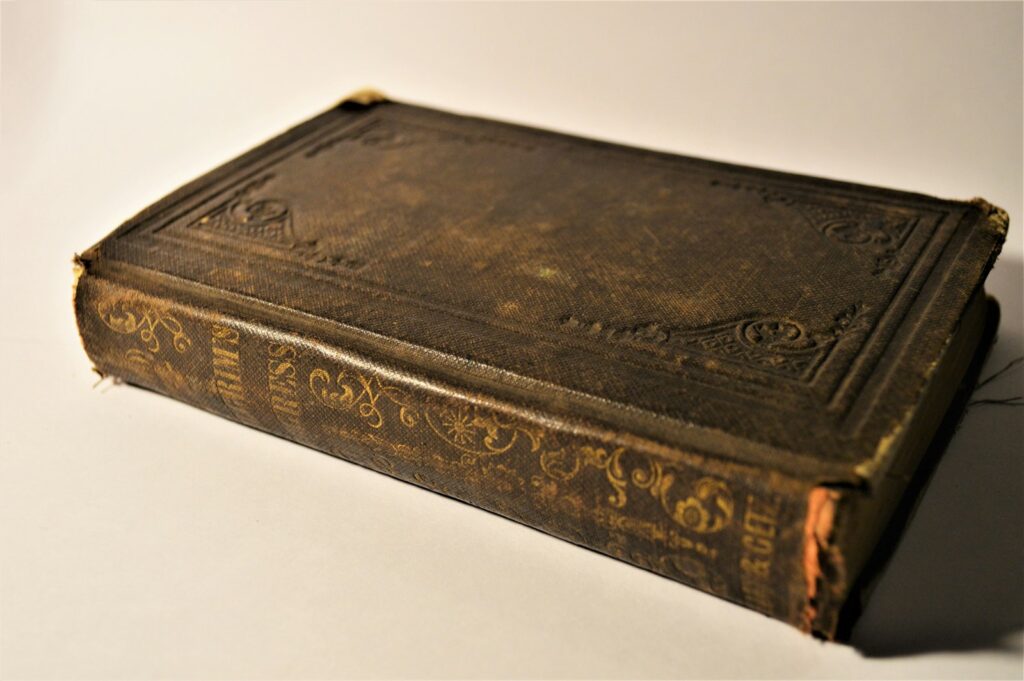
Determining whether a book is a first edition, and specifically a first printing of that edition, is one of the biggest factors in book collecting value. Checking the copyright page for wording like “first edition” alongside a complete number line is the standard way to verify this, according to rare book identification guides. The number line is a row of digits on that page. AbeBooks explains that if a 1 is present, the book is usually a first, whether the digits run up, down, or in a mixed order. Check the line even when the words “first edition” appear, because some publishers left that statement in place on later printings. For books published before 1900, a date on the title page that matches the date on the copyright page is a good sign. Publishers used different conventions across decades and imprints, so it’s worth researching the specific publisher’s practices rather than assuming a single universal rule applies to every book on the shelf.
Books With Intact Dust Jackets
A missing dust jacket can reduce a valuable first edition’s worth dramatically, sometimes by the majority of its total value, since jackets were fragile and frequently discarded or damaged over the decades, according to rare book auction specialists. Writing about The Great Gatsby, Swann Galleries says a nice first edition without its jacket will still bring a couple of thousand dollars, while an original jacket with no major damage can add two zeros to the selling price. Among the examples in its roundup of first-edition dust jackets are George Orwell’s Burmese Days, sold for $16,800 in June 2013, and Jack London’s The Sea-Wolf, sold for $6,250 in November 2018. Even a torn or heavily worn jacket is worth keeping with its book rather than discarding. Don’t tape tears, trim ragged edges, or peel off old price stickers. Slip the jacket into a clear archival cover if you have one, and keep the book out of direct sunlight, which fades spines quickly.
Signed and Inscribed Copies
An author’s signature, especially one accompanied by a personal inscription that can be verified as authentic, adds meaningful value to an otherwise ordinary copy of a book. In the Antiquarian Booksellers’ Association of America glossary, a signed book is one in which the author, illustrator, or publisher has written their name, usually on the endpapers or title page. An inscribed book carries a handwritten, signed statement, usually written for a specific named person. Who signed matters most, followed by who the inscription was written to. A name with a date or a gift message on the front endpaper is more often a previous owner’s. Signatures obtained at organized author events with documentation tend to be easier to verify than unsourced signatures found in an inherited book, so keep any ticket, receipt, or letter tucked inside. Either way, a signed copy is worth setting aside for research rather than assuming a scrawled name inside the cover is simply a previous owner’s signature.
Little Golden Books From Early Print Runs
Small, inexpensive children’s books with the recognizable gold foil spine were mass-produced for decades, but certain early titles from the original 1940s print runs, particularly in excellent condition, can be worth a genuinely surprising amount compared to their original low retail price, according to collectible children’s book guides. The series launched in 1942 at 25 cents a copy. One collector’s guide notes that the first twelve titles, among them The Poky Little Puppy and Three Little Kittens, were issued with blue spines and dust jackets, and that pristine first editions with their jackets range from $100 to $125. For books printed from 1947 to 1970, look for a small letter in the lower right corner of the last page. An “A” means first edition, a “B” means second, and so on. Check the back cover for a list of other titles in the series, which helps narrow down a book’s approximate publication era. Scribbles, torn pages, and chewed corners are common and lower the price considerably.
Leather-Bound Sets
Matched sets of leather-bound classics, often sold as complete encyclopedia or literary collections decades ago, are more common than genuinely rare, but well-preserved sets with intact gilt lettering and supple, uncracked leather can still hold decorative and modest collector value, according to antique book collecting resources. Collectors Weekly notes that some people buy leather-bound books purely as decorative objects to fill the shelves of a living room or study, while others collect for content. Either way, a set needs to be complete. Line the volumes up in order and confirm that none are missing, because a gap hurts both kinds of buyer. Then check for cracking along the spine hinges, since leather that’s dried out and split significantly reduces both display value and long-term stability. Reddish powder that rubs off on your hands is another sign of leather breaking down. Open a few volumes and look for loose boards, a musty smell, and pages spotted brown. Keep sets upright on a shelf, away from radiators and damp walls.
Vintage Maps and Atlases
Old atlases and books containing detailed fold-out maps are sometimes more valuable for their maps than their text, particularly maps depicting now-outdated borders, territories, or place names. Start by finding the date, which is usually on the title page or printed in the margin of the maps themselves. Then count. Most atlases include a list of maps or plates near the front, and checking each one against that list tells you whether the book is complete. Unfold any fold-out maps slowly and look along the creases, where tears start. Carefully check whether maps are intact and un-torn before assuming a water-stained or damaged atlas has no value, since individual maps are sometimes collected and sold separately from the books that originally contained them. Original hand coloring, an early date, and a complete set of maps raise interest. Missing plates, tape repairs, and heavy brown spotting lower it. Don’t cut maps out yourself or press them flat under weights. Leave the book as it is and show it to a dealer.