Childhood bedrooms have a way of staying frozen in time long after the kid who lived there grows up and moves out. Parents often keep boxes of old belongings for years before finally deciding what to do with them.
When that day comes, it’s worth remembering that plenty of childhood staples have grown into genuinely active collecting categories. Here are six things worth checking before they’re cleared out for good.
Dolls From the 1960s and 70s
An old doll tucked away in a closet, particularly an early fashion doll with its original outfit still attached, is worth researching before assuming it’s simply a worn-out toy, according to doll collecting guides. Check the small manufacturer stamp typically found on the doll’s back or base, and keep any original clothing and accessories together, since complete outfits significantly boost a doll’s overall value.
Barbie is the name most families will run into. Mattel introduced her in 1959, and within a year she was the biggest selling fashion doll of all time, according to The Strong National Museum of Play. That popularity means plenty of dolls survive, so the details decide the price. Write down every word and number in the marking and search it exactly. Then check condition: cut or matted hair, chewed hands and feet, green marks where metal earrings sat and faded face paint all lower value. Tiny shoes, purses and the original box raise it. Do not wash the clothes or restyle the hair first.
Sports and Trading Cards
Shoeboxes of trading cards accumulated over a childhood are one of the most commonly discovered collectibles in old bedrooms, and certain cards, particularly those in excellent, unbent condition from specific years and sets, can carry genuine value. Handle cards by their edges rather than the printed surface to avoid adding fingerprints or creases, and store them in protective sleeves rather than loose in a shoebox while you sort through what’s worth researching further.
Condition is graded more strictly than most people expect. Grading company PSA rates cards on a 1 to 10 scale and lists staining, off-center printing, print defects and marks among the flaws it notes on a label. Look at the four corners first, then the borders. Sharp corners and an evenly centered picture are what buyers pay for, and a single crease drops a card a long way. Next, read the year, set name and card number on the back and search that exact card. Do not put rubber bands around stacks.
Comic Book Collections
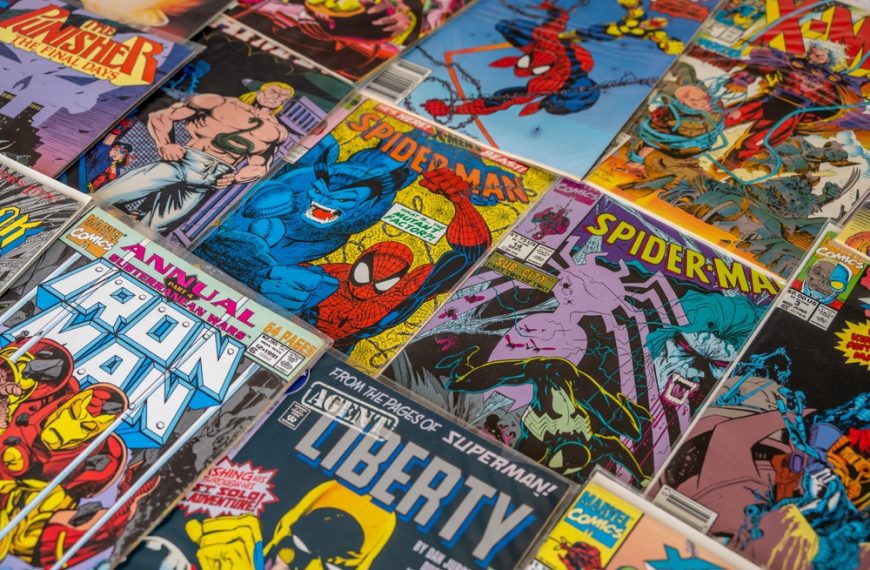
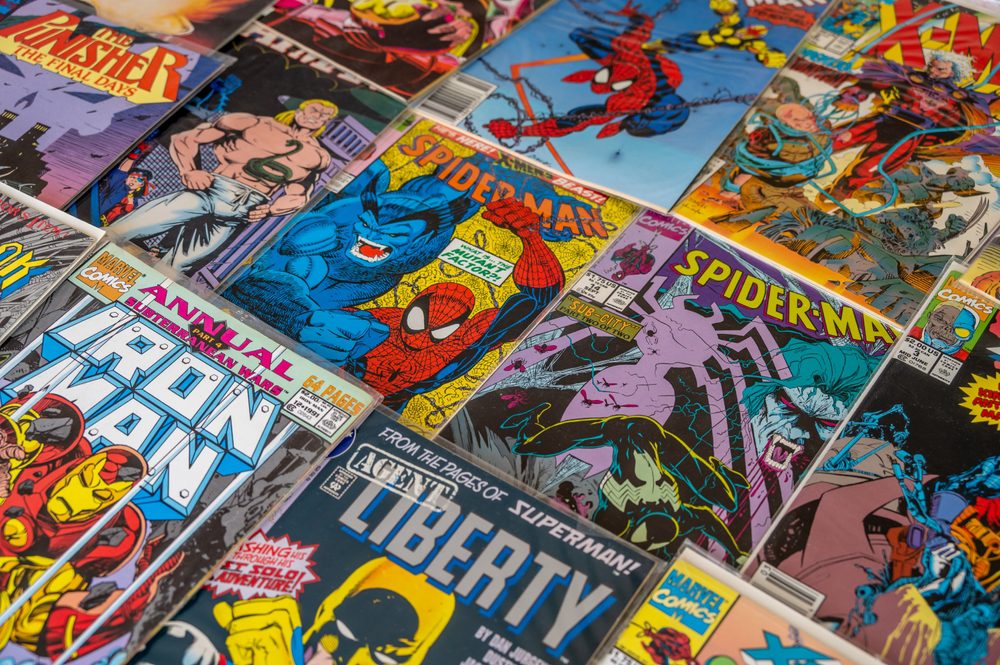
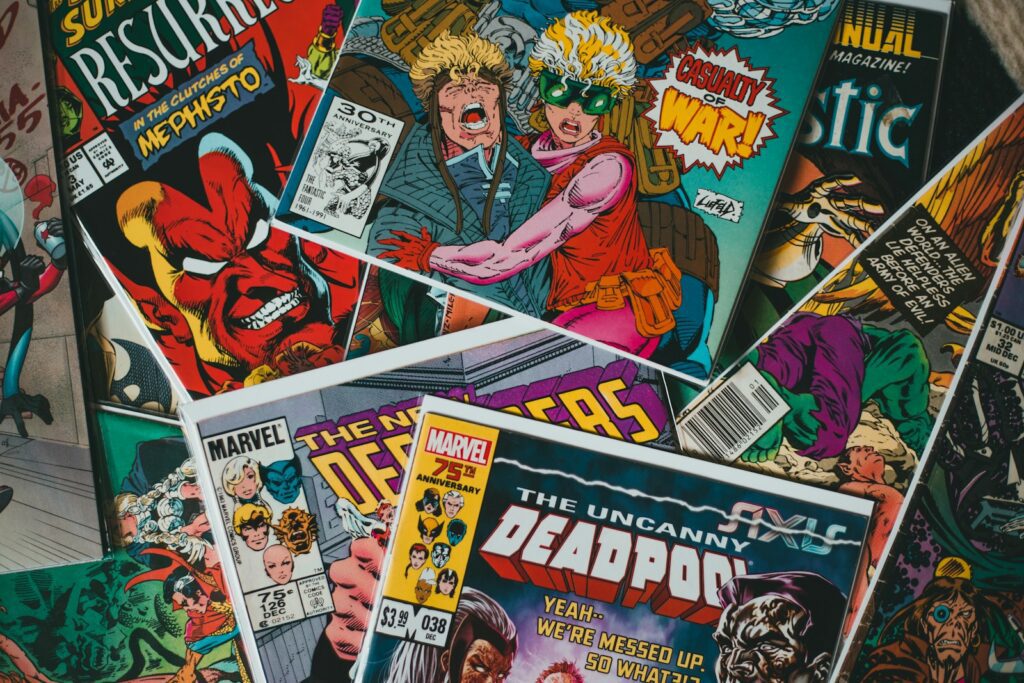
Stacks of comics stored under a bed or in a closet for decades often suffer from humidity and light damage, but plenty of collections survive in surprisingly good condition. Certain vintage issues, particularly early appearances of well-known characters, carry real collector value, while even common back issues in strong condition hold modest worth. Store any promising finds flat in protective sleeves rather than stacked loosely once you’ve identified them.
Find the issue number on the cover and the publication date in the small print on the first page, then search that exact issue. Judge condition honestly. Grading company CGC uses a scale from 0.5 to 10 and caps a book with brittle pages at 3.5. Spine creases, tears, rusty staples and missing pages also count against it. For storage, the Library of Congress recommends a cool, dry spot at about 35 percent relative humidity with minimal light, and it warns against attics and basements. Do not try to clean or tape a book yourself.
Yearbooks and School Memorabilia
Old yearbooks and school memorabilia are typically kept purely for sentimental reasons, but certain yearbooks, particularly those featuring a person who later became well-known, or from schools with limited surviving copies, can carry unexpected collector interest. Even without a notable connection, well-preserved yearbooks from certain decades hold a modest but real market among collectors focused on social and educational history.
Check the school name, city and year on the spine and title page, then scan the class lists and index for any name you recognize. Athletes, actors, musicians and politicians are the names buyers search for, and the volumes from the years that person attended are the ones that matter. Look for loose or missing pages, cut-out photos, a cracked spine and a mildew smell, all of which lower the price. Letter jackets, pennants, class rings, programs and pins from the same school can be offered together as one lot. If nothing stands out, a local historical society or the school’s alumni office may want the book.
Vintage Board Games
Board games that spent a childhood being played hundreds of times rarely survive in pristine condition, but even well-loved examples with complete pieces and a legible box can interest collectors who focus on specific game titles or distinctive box art from certain decades. Check the box contents against the included instructions before assuming a game is missing pieces, since components are sometimes tucked into unexpected compartments.
Look for the copyright year and the maker’s name on the box edge, the board and the rule sheet, because the same title was often reprinted for decades and the edition matters. Count the cards, money, tokens and dice against the contents list. Check the box corners for splits and tape, the lid for fading and water rings, and the board for a torn fold. Games tied to a TV show, movie or cartoon character can draw fans of that property as well as game collectors. Put small parts in zip bags so nothing falls out, and do not tape the box corners.
Concert Tickets and Posters
Ticket stubs and posters saved from childhood and teenage concerts are easy to overlook as simple paper ephemera, but items connected to popular performers or notable early tour dates can carry real value among memorabilia collectors. Store any paper items flat, away from direct sunlight and humidity, and avoid taping or laminating them, since these preservation shortcuts can actually reduce a piece’s value to serious collectors.
On a ticket, the performer, venue and date should all be readable. PSA authenticates tickets and grades both full tickets and torn stubs on its 1 to 10 scale, so a stub from a notable show is worth setting aside. On a poster, look for a printer’s name or credit line along the bottom edge. Posters printed to advertise the show are what collectors want, while store-bought wall posters bring little. Pinholes, tape stains, fold lines and fading all lower value. The Library of Congress advises storing oversized paper flat or rolled, and keeping tape, glue and rubber bands off it.