The living room is where guests spend the most time and where clutter is often the most visible, yet it’s also where a lot of it hides in plain sight — tucked into shelves, stacked in corners, or spread across a coffee table nobody can actually put a drink on anymore.
If you’re tired of dusting around the same objects week after week, these seven categories are a good place to start clearing.
DVDs and Media You No Longer Play
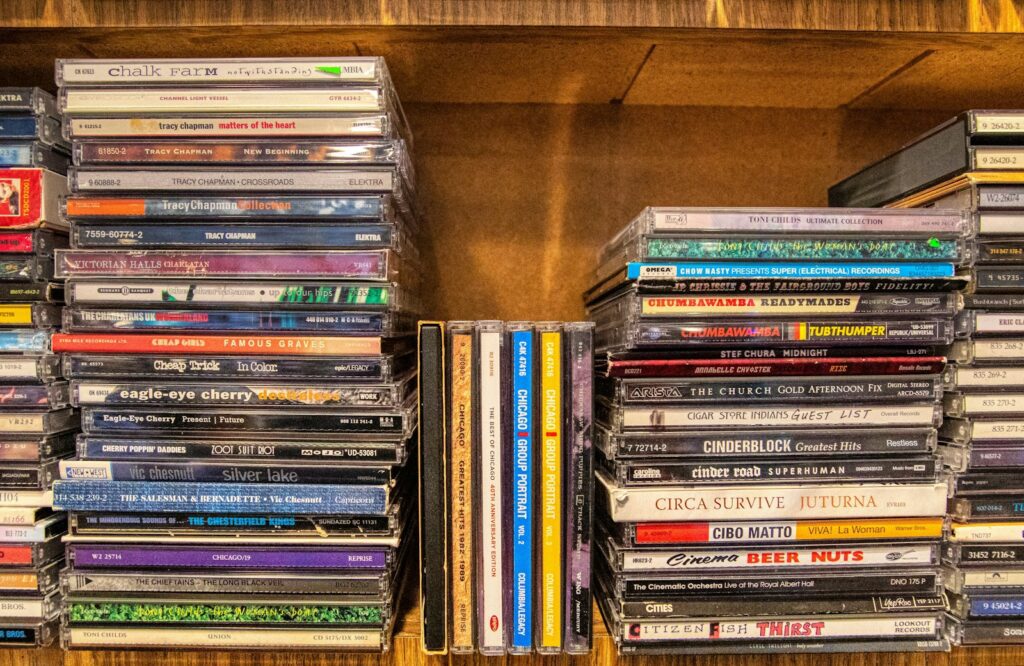
With most households streaming instead of playing physical media, a shelf of old DVDs or CDs often sits as a dust collector rather than actual entertainment. Start with the easy question: do you still own a working player? If not, the whole shelf is a candidate. If you do, pull every title you haven’t watched or played in years and ask whether you’d pick it over what’s already on your streaming services. Keep the few things that are hard to find elsewhere, such as home movies, a concert recording, or a box set you rewatch every winter. Open each case before it leaves the house, because discs wander into the wrong boxes and an empty case is no use to anyone. Badly scratched discs aren’t worth donating either. Titles in good shape can go to a library book sale or a thrift store. Call first, since some locations have stopped taking physical media. Whatever stays should fit in one bin or on a single shelf.
Decorative Items You No Longer Love
Decor evolves with taste, and pieces that felt exciting a few years ago can start to feel dated or simply forgotten once they’ve blended into the background. Do a walk-through of your shelves and mantel, and be honest about which pieces you’d choose again today. A quick way to find out is to clear one surface completely, wipe it down, and put back only the things you miss. Whatever is left over is your donation pile. Watch for the usual offenders: gifts you display out of guilt, souvenirs from trips you barely remember, faux plants gone gray with dust, candles you’ll never burn, and frames still holding the stock photo. Small objects take the longest to dust because each one has to be lifted, so a shelf with three larger pieces cleans faster than one with twelve small ones. If you’re unsure about something, box it for a month. If you don’t go looking for it, swap it out for good.
Remote Controls for Devices You Don’t Own Anymore
Old cable box remotes, a remote for a TV you upgraded years ago, or a universal remote that never quite worked right tend to collect in a basket or drawer near the couch. Gather every remote in the house and test each one against the devices you own now. Keep only what pairs with something current. Before the rest leave, open the battery compartments. The EPA’s guidance on electronics donation and recycling says to remove batteries first because they may need to be recycled separately. Its page on used household batteries says alkaline batteries can go in household trash in most communities, while button-cell, coin, and lithium batteries should stay out of both the trash and the curbside bin. Look for corrosion while you’re in there, since a leaking battery can ruin a remote you want to keep. Cable and satellite remotes often belong to the provider, so return those with the box. Recycle the rest through an electronics recycling program.
Magazines and Catalogs Past Their Relevance
A coffee table stack of old magazines rarely gets revisited once the initial read-through is done, and catalogs in particular are outdated the moment a new season’s version arrives. Recycle what’s expired. The EPA’s guide to common recyclables confirms that magazines can be recycled. If you’re holding on to an issue for one recipe or a paint color, tear out the page or photograph it and let the rest go. Then stop the pile from growing back. Consider cutting subscriptions you no longer read cover to cover, and check the renewal dates, since many renew automatically. For catalogs, the FTC’s advice on how to stop junk mail points to DMAchoice.org, where a $6 online registration lets you choose which catalogs and magazine offers you get, and it lasts 10 years. The FTC notes that it stops most promotional mail, not all. Give current issues one basket, and recycle an old one each time a new one arrives.
Throw Pillows You Don’t Actually Use
Decorative pillows that spend all their time being moved to the floor so someone can actually sit down are more obstacle than accessory. Count how many are on the couch right now, then count how many are still there after a movie night. The ones that stayed are the ones you use. A simple limit helps: two for a loveseat, three or four for a full sofa, one for an armchair. Choose the keepers by comfort first, then color. Flat, lumpy inserts and covers that have faded or pilled are the first to go. If you like changing the look by season, keep the inserts and store only the extra covers, which fold flat into a drawer instead of filling a closet shelf. Check the care tags too, since covers that unzip and go in the wash are easier to live with than pillows that are spot clean only. Pass along extras in good condition, but ask the thrift store first, because some don’t accept used pillows.
Chargers and Cords Tangled Near the TV Stand
Entertainment centers often become a nest of cords for devices that have long since been replaced or unplugged. Switch off the power strip, pull the stand away from the wall, and trace each cord from end to end to confirm what it’s for. Clear out anything connected to nothing. Duplicates can go too: you don’t need four spare HDMI cables or the charger for a phone you traded in. While you’re back there, look for cracked insulation, exposed wire, or bent prongs, and throw those cords out rather than saving them as spares. Label the ones that stay with a strip of masking tape near the plug so the next swap takes seconds. Keep one spare of each type you use in a single zip bag. Ask your local electronics recycling drop-off whether it takes cables before you bin the rest. A cord management box or clips can keep the remaining ones tidy, out of sight, and off the floor where dust gathers.
Board Games With Missing Pieces
A game missing key pieces isn’t really playable anymore, no matter how much nostalgia is attached to the box. Take each game off the shelf, open it, and check the contents against the list in the rules, which usually shows how many cards, tokens, and pawns should be inside. A missing die or timer is easy to replace from another set or a phone app. A missing deck or a custom piece the game depends on is harder, though it’s worth checking whether the maker sells replacement parts before you give up on a favorite. If pieces have gone missing over the years and the game hasn’t been played in ages as a result, it’s fine to let it go. Save leftover dice and pawns in a small bag as spares if you like, and recycle the cardboard. Complete games in good condition can be donated to schools, shelters, or community centers. Tape or band the box shut so everything arrives together, and note on the lid that it’s complete.