


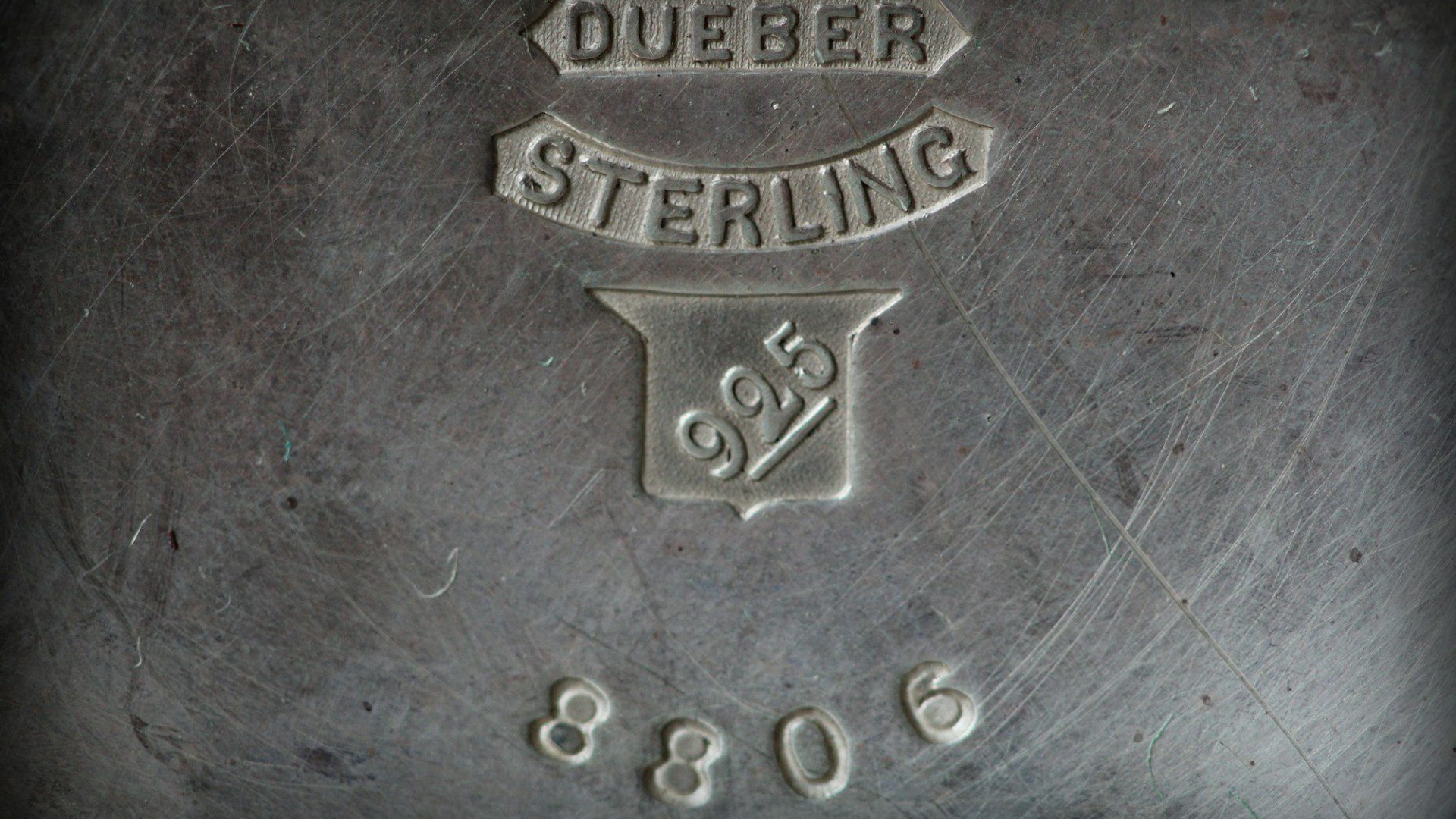
Across nearly every category of household item, one small detail consistently separates a genuine find from ordinary clutter: whether the piece is marked, and by whom. Most people skip this step entirely and donate based on how old or worn something looks.
But a maker’s mark is often the single fastest way to tell what you’re actually holding. Here are seven categories where it’s worth flipping, turning, and checking before anything leaves the house.
Pottery and Ceramic Backstamps
Bowls, vases, and dinnerware almost always carry a mark on the underside identifying the manufacturer, and that mark is the starting point for figuring out whether a piece is a common production run or something considerably rarer, according to pottery value guides. McCoy is a good example of how much a mark can tell you. That guide traces the company from 1899 to 1991, notes that style numbers appeared from 1929 and that by the mid-1940s pieces were marked simply McCoy, and says prices run from under $100 to several thousand depending on rarity, demand, condition, and authenticity.
Because reproductions sometimes copy well-known marks, an unusually crisp or shiny stamp on a piece that otherwise looks old is worth extra scrutiny before assuming it’s original. Photograph the mark straight on, along with any numbers or letters pressed into the clay beside it. Then check condition, since the guide says chips and repairs cut value sharply while bright color and intact glaze raise it.
Silver Hallmarks
Flatware, serving pieces, and jewelry made of genuine silver carry a small stamped hallmark, typically “sterling” or “925,” that distinguishes real silver from silverplate or base metal look-alikes, according to silver hallmark guides. Sterling is 92.5% pure silver, and the guide lists other marks worth knowing. A lion with one raised paw indicates English sterling, and “coin” means 90% silver. EPNS, EP, EPBM, and BP all mean the piece is plated, not solid.
Because sterling carries genuine metal value on top of any collectible design, checking for this mark before donating anything silver-colored is one of the highest-value habits in decluttering. Look on the back of fork and spoon handles, the underside of bowls and trays, and inside ring bands, and use a magnifier, since the stamps are tiny. Check every piece in a set, because mixed drawers often hold both sterling and plate. Do not polish away tarnish with anything abrasive before the piece has been identified. Tarnish wipes off later, but a worn-down mark cannot be restored.
Furniture Labels and Stamps
The back panels, drawer interiors, and undersides of furniture frequently hide a paper label, ink stamp, or branded mark identifying the maker, according to furniture identification guides. That guide also says to check drawer bottoms and sides, inside the frame, near joints and hardware, and on legs or stretchers. Marks come in several forms: ink stamps, thin ivory-colored labels, embossed metal tags, and names burned into the wood with a heated tool.
Even a faded, partial label is worth photographing and researching, since certain furniture makers and workshops are associated with significantly higher resale values than unmarked, generic pieces of similar age and style. Pull every drawer all the way out and use a flashlight, because labels are often on surfaces you never normally see. Do not peel, clean, or tape over a paper label, and do not strip or refinish a piece before it has been identified. If you find no mark, the guide notes that construction, materials, and joinery become the main clues.
Signed Costume Jewelry
A tiny signature stamped on a clasp or pin back can turn an ordinary-looking costume piece into a genuinely desirable collectible, since certain mid-century jewelry makers built strong reputations for quality design and construction, according to jewelry appraisal guides. Trifari shows how a mark can date a piece. That reference says KTF was used from 1935 through 1937, the name Trifari with a crown over the T came after 1937, and pieces from 1942 through 1947 carry sterling marks. It also describes the Jelly Belly brooches, made with clear Lucite set in sterling or gold-washed silver.
Checking every piece for a signature before sorting a jewelry box into “keep” and “donate” piles takes only a few extra minutes but can meaningfully change what ends up in each pile. Look on the back of brooches, the inside of bracelets, earring clips, and the small tag near a necklace clasp. Keep matching sets together, note missing stones, and do not soak pieces in cleaner, which can loosen glued stones.
Etched Glass and Crystal Signatures
Fine glassware and crystal pieces sometimes carry a small etched or acid-stamped manufacturer’s signature, usually on the base, that’s easy to miss without deliberately checking. This mark can distinguish a well-known glasshouse’s work from a generic, unsigned piece of similar style. A name can connect a plain-looking vase to a maker such as Steuben, where Frederick Carder introduced the iridescent Aurene glass in 1903.
Holding a piece up to bright, angled light and examining the base carefully is often the only way to spot these subtle etched signatures. Wash and dry the base first, since dust and water spots hide faint marks. Tilt the piece slowly and look for a small frosted patch or fine scratched lettering near the center or along the edge of the foot. Check for remnants of a paper or foil label as well, and leave any label in place. While you are there, look for chips on the rim and foot and for cloudiness inside vases and decanters.
Cast Iron Cookware Logos
The raised logo on the underside of a cast iron pan identifies both the manufacturer and, often, the approximate production era, which directly affects collector interest, according to cast iron identification resources. That site explains that the large number on a pan is not its diameter in inches. It refers to the stove openings on old wood-burning ranges, and the letter that sometimes follows only identifies which mold made the pan.
Because certain early logo styles from well-regarded foundries are considerably more valuable than later, more common production marks, this is one of the easiest checks to perform before scrapping old cookware. The same site’s trademark timeline dates Griswold’s plain Erie mark to 1880 through 1910, its large block logo to 1920 through 1940, and its small block logo to 1939 through 1957. Scrub off enough grease to read the bottom, then set the pan on a flat counter to check for wobble and look closely for cracks, which matter more than rust.
Toy Manufacturer Stamps
Action figures, dolls, and diecast vehicles typically carry a small molded or stamped manufacturer’s mark, often along with a copyright date, somewhere on the body or base. This information helps establish both authenticity and production era, both of which significantly affect collector value. On small diecast cars, for instance, the name Lesney belongs to the London firm behind Matchbox, which moved into small, affordable toys in the late 1940s.
Checking for these marks before sorting old toys into donation boxes can reveal that a seemingly ordinary childhood toy is actually a documented, collectible piece. Look on the underside of vehicles, the lower back, neck, or feet of dolls and figures, and inside battery covers. Treat a copyright date with care: it tells you the earliest a toy could have been made, not necessarily the year it left the factory. Write down the maker, date, and country exactly as they appear. Keep accessories, clothing, and packaging with the toy, and do not repaint or wash off original paint.