


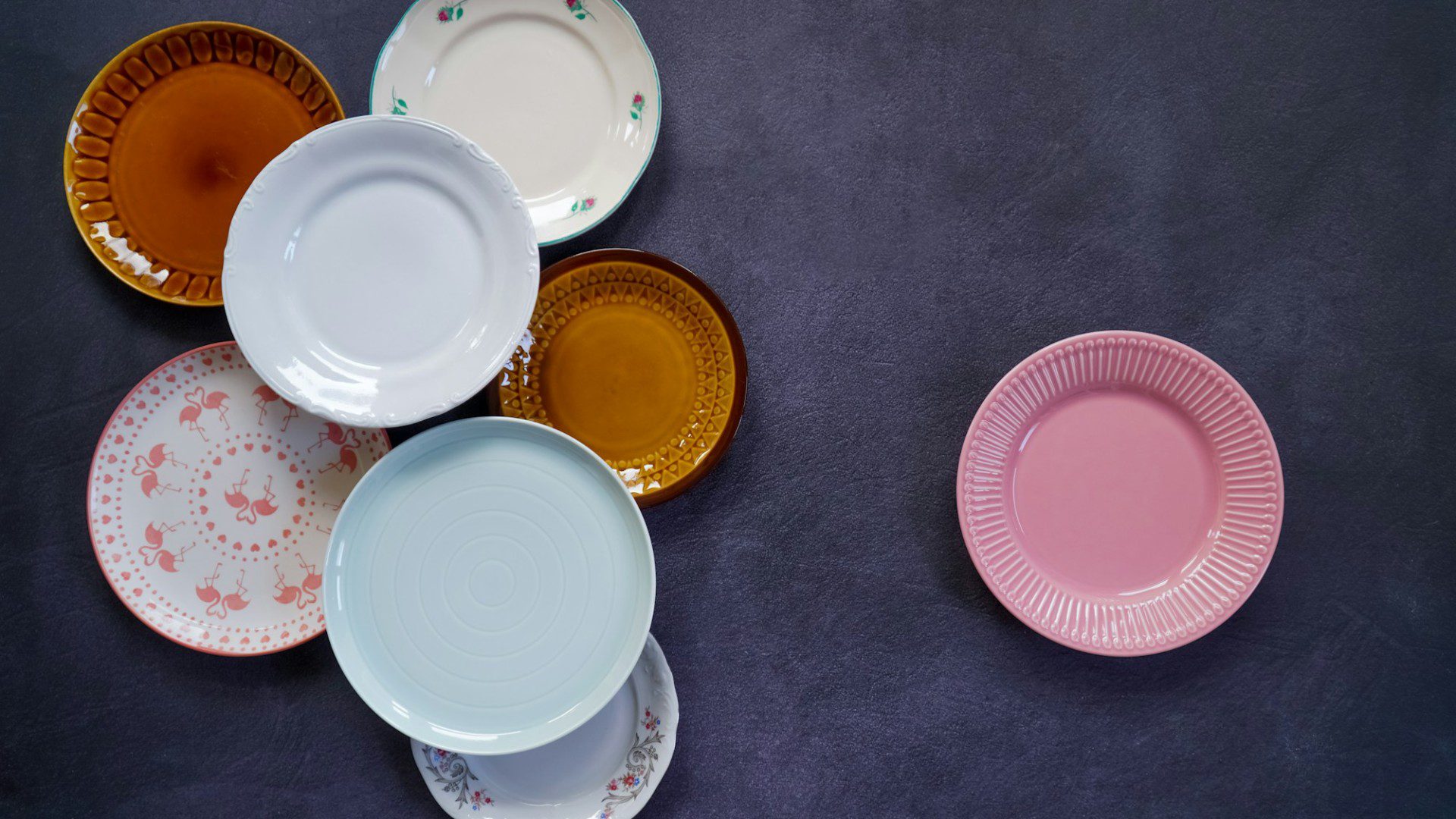
Dishes get donated in bulk more than almost any other household category. A cabinet full of plates and bowls, especially ones that don’t match current decor, feels like an easy, guilt-free donation decision.
But dinnerware is one of the most active corners of the collectibles world, and the maker’s mark on the back of a plate can completely change its story. Check for these eight before boxing up a cabinet full of dishes.
Fiestaware
Bright, solid-colored dishware with a distinctive ringed design is instantly recognizable Fiestaware, and vintage pieces, especially in the earliest color runs, are worth notably more than the modern versions still sold in stores today. Fiesta was introduced in 1936, the original line was discontinued in 1969, and a new line followed in 1986, so the first job is working out which era a piece belongs to. Check the backstamp and glaze glossiness before assuming a colorful set is simply a newer reissue.
The original red glaze famously used a uranium-based compound to achieve its vivid color, according to the Oak Ridge Associated Universities health physics museum. The museum says red was made with natural uranium from 1936 to 1943, when the government confiscated the company’s uranium stocks during World War II, and with depleted uranium from 1959 to 1969. It reports measurable radiation at the surface of red pieces and cites tests in which uranium leached into an acidic solution left in contact with the glaze for 24 hours.
Depression Glass
Pastel-colored pressed glass dishes from the 1920s through the 1940s remain some of the most collected glassware around, but identifying an authentic vintage piece from a later reproduction requires checking pattern details and glass thickness carefully, according to glass collecting guides. That guide says genuine pieces usually show small bubbles, visible mold seams, and light scratching from decades of flatware, while reproductions tend to be flawless and noticeably thicker.
Color and pattern together set the price. Many common pieces sell for only a few dollars, but the guide notes that cobalt blue Royal Lace outranks the other colors in that pattern and that blue Mayfair and pink or yellow Cameo can bring hundreds. More than 100 patterns came from over twenty companies, including Jeannette, Hazel-Atlas, and Anchor Hocking, so match the pattern name before pricing anything. Check for chips and cracks, and for the permanent cloudy etching that dishwashers leave behind, which collectors call sick glass. Wash these pieces by hand and keep matching sets together.
Blue Willow China
The familiar blue-and-white pattern depicting a pagoda, bridge, and birds has been produced by dozens of manufacturers over more than two centuries, which means value varies enormously based on who actually made a given piece, according to Blue Willow collecting guides. The standard version of the pattern traces to the Spode pottery in England in the 1790s. Buffalo Pottery was the first American producer in the early 1900s, and Japanese production began around the 1920s.
Checking the backstamp for a manufacturer’s name, rather than assuming all blue willow pattern dishes are equally common, can reveal a considerably more collectible maker. Marks reading Nippon, Japan, Made in Japan, or Occupied Japan identify Japanese pieces and help date them. The guide puts prices anywhere from $10 to more than $1,000, with older English pieces at the top and unmarked platters around $12 to $20. Serving pieces such as soup tureens, large platters, and pitchers bring the most. At the low end, a chipped or cracked piece has no real value.
Fire-King Jadeite
Opaque, milky green glass dishware may be Fire-King Jadeite, and certain mixing bowls, mugs, and less common shapes within the line can be worth well beyond what most people expect from thrift store glass, according to glassware collecting guides. Anchor Hocking began making it in the late 1940s, and the lines that guide names include Restaurant Ware, Jane Ray, and Alice. It puts pieces generally in the $50 to $500 range, with nesting bowl sets, some serving pieces, and full dinnerware sets at $250 to $1,000.
Check the bottom for a maker’s mark and compare the shape to reference photos before donating a piece that looks simply like old cafeteria dishware. The guide points to two signs of a real piece: noticeable weight and a Fire-King mark embossed on the underside, in block lettering on early pieces and a script-style logo later. Do not assume every green glass dish is Fire-King just because of its color. Run a fingertip around rims and handles for chips before pricing.
Noritake China
Delicate, often hand-painted china with gold trim and intricate florals is frequently marked Noritake on the underside, and certain patterns and production eras from this long-running Japanese porcelain maker are genuinely collectible, according to Noritake collecting guides. The backstamp helps date a piece. That guide explains that porcelain exported before 1921 was marked Nippon, later pieces Japan or Made in Japan, and those from about 1948 to 1952 Occupied Japan. A large M inside a wreath, for the founding Morimura family, was used until World War II.
Because the company produced an enormous range of patterns over many decades, researching the specific backstamp and pattern name is the only reliable way to know what a set is actually worth. The guide says the earliest hand-painted pieces are the most valuable and names Azalea, made from 1915 to 1930 with pink flowers and gold detailing, among the popular patterns. Count the pieces, note any wear to the gold, and keep the set together while you research it.
Hall China’s Autumn Leaf Pattern
Dishware featuring a stylized orange and brown autumn leaf design was originally distributed as a promotional premium and became one of the most avidly collected American china patterns of the 20th century, with an entire dedicated collector’s club built around it, according to the National Autumn Leaf Collector’s Club. Certain rare serving pieces within this pattern command significant premiums over common plates and cups.
Start with the underside. A clear backstamp is what separates a documented piece from a lookalike leaf pattern. Then sort by form. Dinner plates, cups, and saucers are the pieces most households kept in quantity, while teapots, coffee servers, covered dishes, and anything with its original lid are the ones to research individually. Check the decal for fading and the gold trim for wear, both of which get worse in a dishwasher, and look inside pitchers and pots for stains or hairline cracks. Keep lids with their bases, since a lid that has been separated is hard to match later.
Corningware and Pyrex Flameware
Stovetop-safe glass and ceramic cookware in the distinctive cornflower blue pattern or clear blue-tinted glass is often used until it’s chipped or discolored, then donated without a second thought. Certain early patterns and less common pieces within these lines, however, are actively sought by collectors who focus specifically on mid-century cookware. Both trace back to Corning Glass Works in Corning, New York, where chemists created the heat-resistant borosilicate glass sold as Pyrex in 1915.
Check the bottom for a pattern name and production markings before assuming a scorched or stained piece has no remaining value. Copy down any model number and wording molded into the base, then compare the decoration against the Corning Museum of Glass pattern library, which shows Pyrex designs by name. Original lids, detachable handles, and cradles are the parts that go missing, so keep them with the dish. Baked-on stains usually matter less than chips, cracks, or a pattern worn pale by a dishwasher. Skip abrasive cleaners, which can dull the finish.
Homer Laughlin Dinnerware Patterns
Beyond Fiestaware, this long-running American pottery company produced numerous other dinnerware lines with their own devoted followings, often marked with a distinctive backstamp on the underside of each piece. The company was founded in 1873 in East Liverpool, Ohio, and took its name from one of the two brothers who started it, so there is a long span of ware to sort through.
Certain patterns and production years within the company’s broader catalog are considerably more valuable than others, so it’s worth researching the specific backstamp rather than assuming all vintage American dinnerware from this era carries similar value. Copy the mark exactly, including any letters and numbers under the name, since those small codes are often what pins down a date. Note the plate’s shape and rim as well as the decoration, because the same decal can appear on more than one shape. For help identifying a pattern, the Homer Laughlin China Collectors Association is a volunteer nonprofit devoted to this maker’s dishware.