


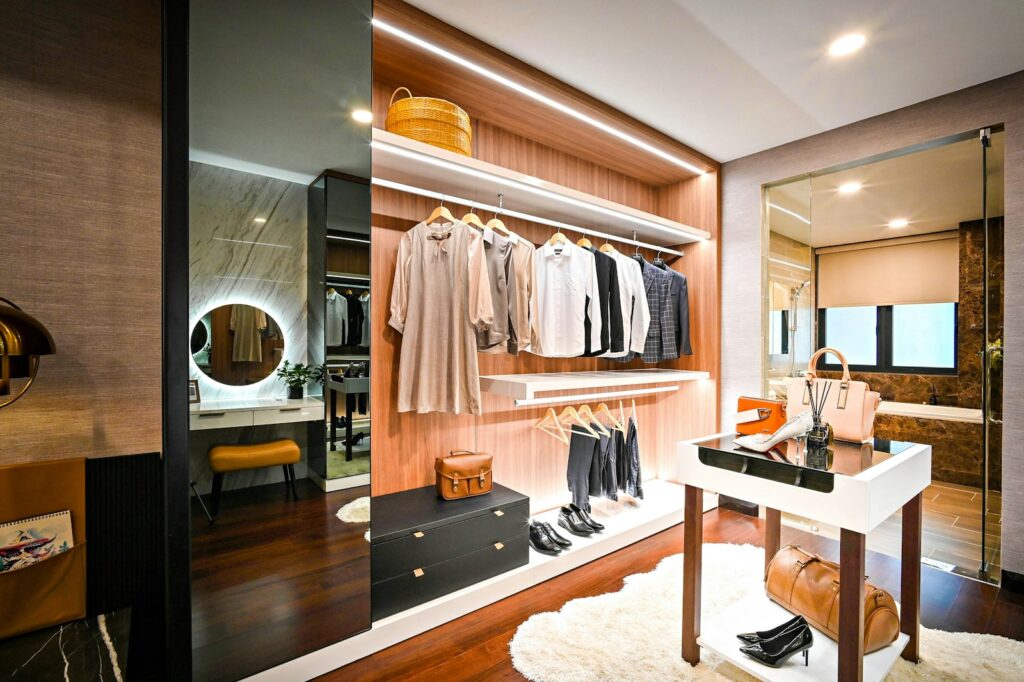
There’s an entire industry built around the idea that the right container will finally solve your clutter problem, and it’s easy to see why the pitch is so appealing. A cute basket or a labeled bin feels like progress, something concrete you can buy and see results from immediately. The uncomfortable truth is that buying organizing products before actually decluttering often just gives your mess a nicer outfit.
Professional organizers frequently point out that the sorting and purging step has to come first, or the containers themselves become just another category of stuff to manage. Some organizing products are especially prone to backfiring this way, either because they hide clutter rather than reducing it, or because they’re so specific in purpose that they rarely earn their keep. Here are eight to think twice about before adding to your cart.


Oversized Decorative Baskets
Large woven or fabric baskets are marketed as a stylish way to corral toys, blankets, or miscellaneous items, and visually they do create an instant sense of tidiness. The problem is that a basket’s depth and lack of internal structure make it incredibly easy to just toss things in without ever actually sorting them, which means the basket becomes a black hole where items go to be forgotten rather than organized. Over time, baskets like this often become the exact place where you store things you don’t know what to do with. If you already have deep baskets in use, doing a full empty-and-sort every few months keeps them from becoming a hidden second junk drawer.
Closet Systems Bought Before Purging Clothes
Elaborate closet organization systems with specialized shelving, hanging rods, and drawer inserts are a significant investment, and many people buy them hoping the new system itself will solve a cramped, overstuffed closet. Without decluttering the actual clothing first, though, a fancier system often just holds the same amount of stuff more expensively, and sometimes the rigid compartments end up fitting your wardrobe even less naturally than open shelving did. Organizers generally recommend clearing out everything you’re not wearing before measuring or installing any new system. That way the system is built around what you’ll actually keep, rather than becoming a costly frame around clutter that was never addressed.
Drawer Dividers for Categories You Don’t Actually Have
Specialty drawer organizers designed for very specific items — a dedicated sock divider, a jewelry tray with dozens of tiny compartments, a spice drawer insert shaped for particular bottle sizes — can work beautifully if your actual collection matches the product’s assumptions. But many people buy these dividers aspirationally, imagining a collection of neatly folded socks or perfectly sized spice jars that doesn’t match what they actually own. When the fit is wrong, the divider itself becomes an obstacle, wasting space around items that don’t fit its compartments as designed. Measuring and sorting your actual items before buying any divider prevents this mismatch and the frustration that comes with it.
Stackable Bins With No Clear Labeling System
Uniform stackable bins look wonderfully tidy on a shelf, especially in home organizing photos, but without a clear and consistently maintained labeling system, they quickly become a guessing game of which bin holds what. This is especially true once several household members are involved, since an intuitive system for one person is often invisible to everyone else. Bins that aren’t labeled clearly enough tend to get opened, rummaged through, and left slightly askew rather than restacked properly, undermining the tidy appearance they were bought to create. Investing in a simple, consistent labeling method — and actually maintaining it — is what makes stackable bins functional rather than just decorative.
Furniture With Hidden Storage
Ottomans that open up, beds with built-in drawers, and coffee tables with hidden compartments are popular precisely because they promise storage without visual clutter. The risk is that “hidden” storage is, by definition, out of sight, which makes it dangerously easy to stuff full of things you’re not ready to deal with and then simply forget about. Because you don’t see the mess daily, there’s little natural pressure to sort through it, and these hidden compartments can quietly become some of the most cluttered spots in a home. Treating hidden storage furniture with the same periodic review as a closet or drawer keeps it from becoming an out-of-sight, out-of-mind dumping ground.
Garment Bags for Clothes You’re Not Actually Wearing
Garment bags are genuinely useful for protecting special-occasion clothing, but they’re sometimes used instead to justify holding onto clothing that doesn’t fit, is out of style, or hasn’t been worn in years, simply because it’s now “protected” and out of the way. Zipping something into a garment bag can create a false sense that the item has been dealt with, when really it’s just been made harder to see and therefore harder to reconsider. If you find yourself using garment bags primarily for clothes you haven’t worn in over a year, it’s worth asking honestly whether the bag is protecting a keepsake or simply enabling avoidance. Reserving garment bags specifically for true special-occasion pieces keeps the rest of your closet honest.
Multi-Tiered Lazy Susans and Cabinet Organizers
Rotating shelves and tiered organizers promise to maximize cabinet space, and in the right circumstances they genuinely do. However, in cabinets that are already overstuffed, adding a rotating or tiered insert can actually reduce usable space by taking up vertical clearance that would otherwise fit taller items. These inserts work best in cabinets that have already been thinned out to a reasonable, specific set of items they’re designed for, like spice jars or canned goods of a similar size. Buying one to “fix” an overcrowded cabinet without first removing anything expired, duplicate, or unused often just rearranges the same amount of clutter into fancier packaging.
Command Centers and Mail Organizers That Become Their Own Pile
Wall-mounted mail sorters, key hooks, and family command centers are designed to intercept the daily influx of mail, school papers, and miscellaneous items before they spread across the kitchen counter. Ironically, these systems often become cluttered themselves, since it’s easy to shove papers into a slot without ever following through on sorting, recycling, or filing them. A command center only works if it’s paired with a regular habit of actually emptying it, ideally weekly, rather than treating it as a permanent storage solution. Without that habit, it simply becomes a more official-looking version of the counter pile it was meant to replace.