


The entryway sets the tone for your whole house the moment you walk in, but it’s also one of the easiest spots to let clutter build up unnoticed. It’s the first place things land when you get home and the last place you grab things on your way out, which means it absorbs a little bit of everything.
If your entryway has started to feel more like storage than a welcome, here are eight things worth clearing out for good.

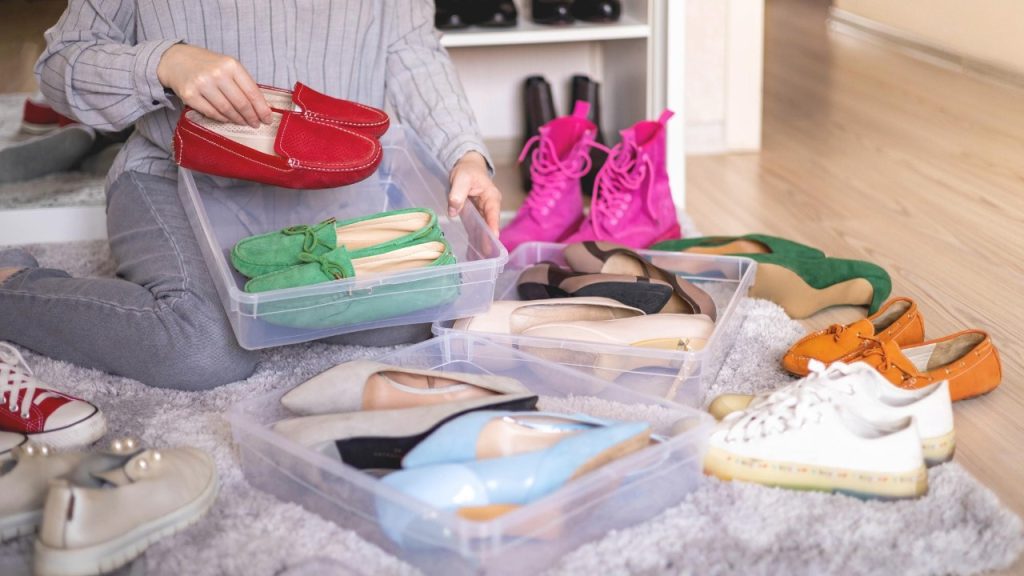
Shoes You Never Actually Wear
A shoe pile by the door often includes several pairs that haven’t been worn in ages, simply because they’re easier to kick off there than put away properly. Pull every pair off the floor and sort them into three groups: worn this week, worn this season, and everything else. Only the first group belongs at the door. A good limit is two pairs per person, which a boot tray or a low rack can hold. Shoes worn this season go back to bedroom closets. For everything else, check the soles and heels for wear, and be honest about pairs that hurt or no longer fit. Outgrown children’s shoes pile up fastest, so check sizes whenever the seasons change. Donate anything still in good shape, with pairs tied or banded together so they don’t get separated. Then set a simple house rule: when a new pair lands at the door, another pair goes back to the closet. Keep only the pairs in current rotation, and the entryway floor stays walkable.
Old Umbrellas That Don’t Open Properly
A broken umbrella rib or a canopy that won’t fully open isn’t going to protect you in an actual downpour. Test what you have on a dry day. Open and close each umbrella a few times and look for bent or detached ribs, a shaft that won’t lock in place, a button that sticks, tears along the seams and rust at the joints. Smell the fabric too, since an umbrella put away wet can turn musty. Keep one or two reliable ones per household member, and recycle or discard the ones that no longer function well. A full-size umbrella for walking and a compact one for a bag or the car covers most needs. Broken umbrellas mix metal, fabric and plastic, so check your local program’s rules before putting one in the recycling bin. To make the keepers last, leave them open to dry before storing them, and give them a fixed home such as a stand with a drip tray or a single hook.
Expired Coupons or Flyers From the Mailbox
Entryway tables and hooks often catch mail on the way in, and flyers or coupons that have passed their relevance tend to sit there afterward. Do a quick sort each time you bring in mail, recycling anything expired immediately. It works best if a small recycling bin or paper bag sits within reach of the door, so junk never touches the table. Mail is on the EPA’s list of items commonly accepted in curbside recycling, though the agency advises confirming with your local provider. Keep one slim tray for anything that needs action, and empty it weekly. Then cut the flow at the source. The FTC’s guide to stopping junk mail explains that you can opt out of prescreened credit and insurance offers for five years or permanently at optoutprescreen.com or by calling 1-888-567-8688. It also describes DMAchoice, which charges a $6 processing fee online and cuts most other promotional mail for ten years. Coupons you plan to use go straight into your wallet or car.
Coats That No Longer Fit or Get Worn
Entryway coat hooks and closets fill up fast with jackets that no longer fit, are out of season, or never get chosen over a couple of favorites. Take everything down and try each coat on over a sweater. Check that the zipper runs smoothly, the cuffs aren’t frayed, the lining is intact and the sleeves still reach your wrists. Children’s coats need this check every fall. Keep what you reach for regularly, which for most people is one everyday coat, one for rain and one for the coldest days. Out-of-season coats can move to a bedroom closet or a storage bin until the weather turns. Donate the rest while it is still cold enough to be useful to someone. One Warm Coat, a national nonprofit, lists active coat drives by zip code on its website, and it asks that donated coats be clean and wearable. Empty the pockets, clean the coat according to its label, and fix a loose button before dropping it off.
Reusable Bags in Odd Places
Grocery totes and delivery bags tend to pile up near the door since that’s where they’re used most. Gather every bag from the hooks, the closet floor and the car, and count them. Most households own far more than they use. A reasonable stash is what you’d carry home from your biggest shopping trip, plus one or two spares. Keep the sturdy ones with flat bottoms and intact handles, and include an insulated bag if you buy frozen food. Let go of bags with torn seams, broken straps or sticky linings. Wash the fabric ones you keep, since they pick up spills and crumbs. Store the keepers folded inside one tote on a designated hook or in a basket, and put a few back in the car after each trip so they are there when you need them. Ask a local food pantry or thrift store whether it can use the clean extras. For thin plastic bags, the EPA notes that many grocery and department stores accept them for recycling.
Broken or Mismatched Gloves
A basket of winter gloves often includes several without a match, or ones with holes that no longer keep hands warm. Dump the whole basket on the floor and pair up what you can. Check each pair for holes at the fingertips and seams, stretched cuffs, matted lining and waterproof shells that have started to peel. Have children try theirs on, since gloves that fit last winter may be too small now. Give single gloves a short grace period. Put them in a bag with a date on it, check coat pockets, car door bins and backpacks, and let go of any that are still alone after two weeks. Toss what’s unusable, and keep a tidy set ready for the next cold snap instead of a jumbled pile. Two pairs per person is a workable number: one everyday pair and one waterproof pair for snow. Clip pairs together with a clothespin or tuck one inside the other, and sort them into one small bin per person so mornings go faster.
Packages Waiting to Be Opened
Delivered packages set down by the door and left unopened for days can quietly stack up, especially during busier weeks. Return windows are limited, so a box that sits for weeks may hold something you can no longer send back. Make opening and putting away deliveries part of your daily routine so the entryway doesn’t become a holding zone. Keep a box cutter or scissors in a drawer near the door. Open each package the day it arrives, check the contents against the order, and decide on the spot whether it stays or goes back. Put keepers where they belong, not on the entry table. For returns, reseal the box, print or save the label, and set it by your keys or in the car so it leaves on your next errand. Break the empty boxes down right away. Cardboard is also on the EPA’s list of items commonly accepted in curbside bins, and plastic bags and film wrap can go to stores that take them.
Dead Plants or Decor That’s Seen Better Days
A once-cheerful entryway plant that’s now brown and crispy, or a seasonal decoration left up well past its season, sends the opposite message of the welcome you’re going for. Start with the plant. Scratch a stem with a fingernail. Green underneath means it may recover with pruning and a better spot, while brown and brittle all the way down means it is finished. Entryways are hard on plants because of drafts from the door and low light, so if you replace it, pick something sold for low light or use a good artificial stem. Empty the dead plant into the compost or yard waste and wash the pot before reusing it. Next, look at the decor: faded wreaths, dusty dried flowers, burned-down candles, a doormat worn flat. Swap out anything past its prime for something fresh, or simply clear the space if you’re not ready to replace it yet. For seasonal pieces, set a calendar reminder for the take-down date and store them in one labeled bin.