



A guest room has one job, but somewhere along the way it often becomes a second storage unit that just happens to have a bed in it. If your guest room hasn’t hosted an actual guest comfortably in a while because of what’s stacked in the corners, it might be time for a reset.
Here are eight things commonly found taking over guest rooms that are worth clearing out.

Boxes From an Unfinished Move
Even years after moving in, some households still have a few boxes in the guest room that were never fully unpacked. If you haven’t needed what’s inside after this long, it’s a strong sign you don’t need it. Go through each box, and let go of what you’ve clearly lived without.
Do open every box, though. Sealed moving boxes are where tax papers, photo envelopes, spare keys, and chargers for things you still own end up, so donating one unopened is a gamble. Take one box per evening and sort the contents four ways: goes to another room tonight, donate, trash, and keep in storage.
The first group matters most. Most of what is in these boxes has a home somewhere else in the house and only needs to be carried there. Whatever earns a spot in storage goes into a smaller container with a label listing the contents and the date. Flatten the empty cartons and get them out of the room before they fill up again.
Off-Season Clothes Taking Over the Closet
Guest room closets often become the default spot for off-season clothing, which can leave no space for a guest’s suitcase or belongings. Under-bed storage bins or vacuum-sealed bags in a different closet free up the guest room for visitors.
How you pack matters as much as where. Wash or dry-clean everything first. University of Kentucky entomologists note that clothes moths feed on animal fibers such as wool, fur, silk, and feathers, and that cleaning kills any eggs or larvae and removes the perspiration odors that attract pests. They recommend packing stored items in tight-fitting plastic bags or containers, and they say cedar closets and chests are seldom effective because the seal is not tight enough.
Before anything goes into a bin, pull out what you did not wear last season and donate it. Label each bin by person and season so the swap takes minutes. Lidded bins on a high shelf in your own closet, or under your own bed, keep the clothes out of a visitor’s way.
Exercise Equipment That Migrated In
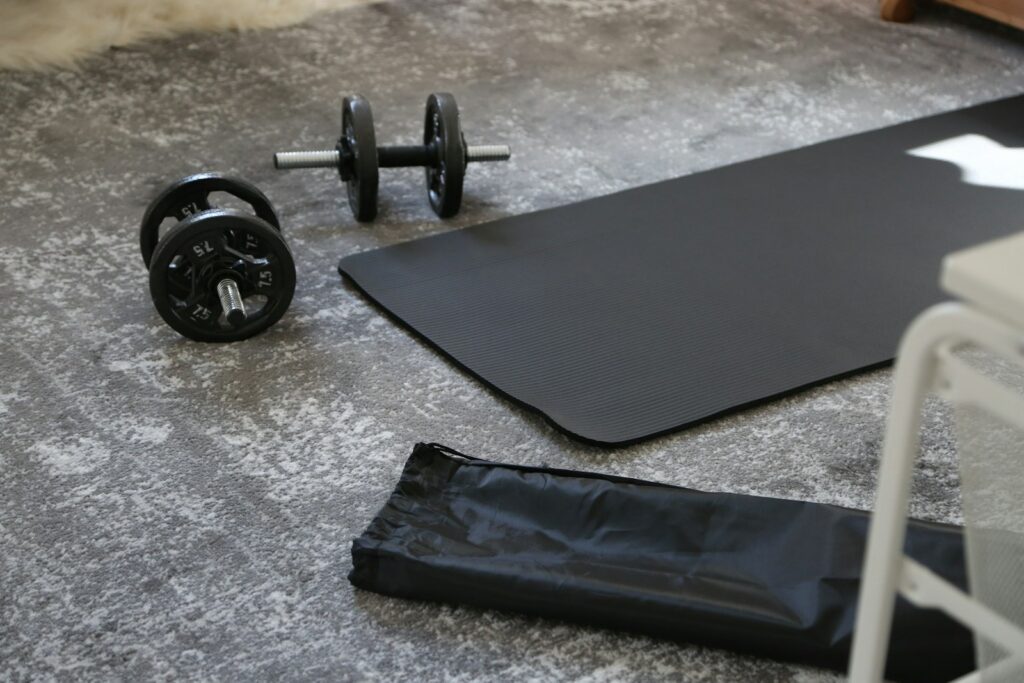
Small weights, a yoga mat, or a stationary bike often end up in the guest room simply because there’s floor space available. If the equipment isn’t being used, either commit to a workout corner that still leaves room for a bed and a guest’s belongings, or move it elsewhere.
Be honest about which case you are in. If you have used the equipment in the past month, it stays, and the job is containment: hand weights in a lidded basket, the mat rolled and standing in a corner or the closet, resistance bands on a hook, the bike pushed against one wall with nothing draped over it.
If the bike has become a clothes rack, sell it. Wipe it down, photograph it in good light, and include the brand and model in the listing, because that is what buyers search for. Before any visit, check the walking path from the bed to the door in the dark, and move loose weights off the floor if children are coming.
A Desk Piled With Miscellaneous Items
A guest room desk frequently becomes a landing pad for things with no other home, turning it into a cluttered surface when it could be a useful spot for a guest to set down a bag or charge a phone. Clear it off and keep it that way between visits.
Sort the pile fast. Mail and papers go to wherever you pay bills. Items that belong in other rooms go into a laundry basket and get delivered in one trip. What is left usually has no home at all, and that is the real decision: give it one or let it go.
Then give the desk a job so it does not fill back up. A lamp, a power strip or charging cable within reach, a card with the Wi-Fi name and password, and an empty top are all a guest needs. If clutter keeps landing there, put a tray or basket where it enters the house so it stops before it reaches the guest room.
Craft Supplies Spilling Out of Their Bins
Hobby supplies that have outgrown their original storage often spread into a guest room simply because there’s extra space. If craft supplies have taken over more than a small, contained area, it’s worth sorting through and paring down to what you use.
Bring everything to one spot first; supplies bought twice are usually hiding in separate bags. Test as you go. Dried-out markers, hardened glue, separated paint, and brittle elastic go straight in the trash. Group what is left by craft, not by container.
Be realistic about unfinished projects. One you have not touched in a year and feel no pull to pick up can go, along with the supplies bought only for it. Schools, senior centers, and creative reuse shops often accept usable materials, so call and ask.
Then let the storage set the limit: one shelf, one cabinet, or one rolling cart. A cart is the best fit for a shared room because it can be wheeled out before guests arrive.
Gift Wrap and Supplies With No Real Organization
Rolls of wrapping paper, ribbon, and gift bags often end up stashed in a guest room closet without much of a system, making them hard to find when you need them. A slim organizer or under-bed bin can contain these supplies neatly.
Pull everything out and edit before you buy an organizer. Crushed rolls, torn gift bags, wrinkled tissue, and scraps too small to wrap anything go in the recycling or trash. Keep a few rolls you like, including one plain or neutral paper that works for any occasion, and stop buying more until those are used.
Storage should fit the longest roll. A tall, narrow bin lets rolls stand upright, and a long, flat under-bed box lets them lie flat without creasing. Nest gift bags inside the largest one. Keep tape, scissors, tags, and a pen together in a zip pouch in the same container, so wrapping a present means carrying one thing to the table instead of hunting through three rooms.
An Uncomfortable or Outdated Mattress
If the guest bed hasn’t been updated in many years, it might not be giving visitors the restful stay you intend. Replacing a worn-out mattress is one of the most effective guest room upgrades you can make, even if it’s not a decluttering task in the traditional sense.
According to the Sleep Foundation, most mattresses should last between 7 and 10 years, and sagging or waking up with aches are signs one is due for replacement. Guest beds are often hand-me-downs that were retired from the main bedroom for those reasons. The simplest test is to sleep on it yourself for a night.
If a new mattress is not in the budget, a topper, a fresh protector, and new pillows are a reasonable stopgap. While you are in there, look up. The U.S. Fire Administration says smoke alarms belong inside and outside each bedroom, should be tested monthly, and need replacing every 10 years.
A Closet Nobody Can Actually Use
If a guest can’t hang up a single item because the closet is packed with your own overflow, the room isn’t working as a guest space. Clear at least a portion of the closet and a dresser drawer so visitors have somewhere to put their things.
You do not need to empty it. A stretch of open rod about as wide as your shoulders, six matching empty hangers, and a clear patch of floor for a suitcase cover most stays. Push your own things to one side and keep the cleared side nearest the door, so the open space is obvious.
Use what remains for items a guest might need: a spare blanket, an extra pillow, and a set of towels on the shelf. A hook or two on the back of the door handles robes and bags. Then test it. Pack an overnight bag, walk in, and try to unpack. If you cannot do it in two minutes without moving something of yours, keep clearing.