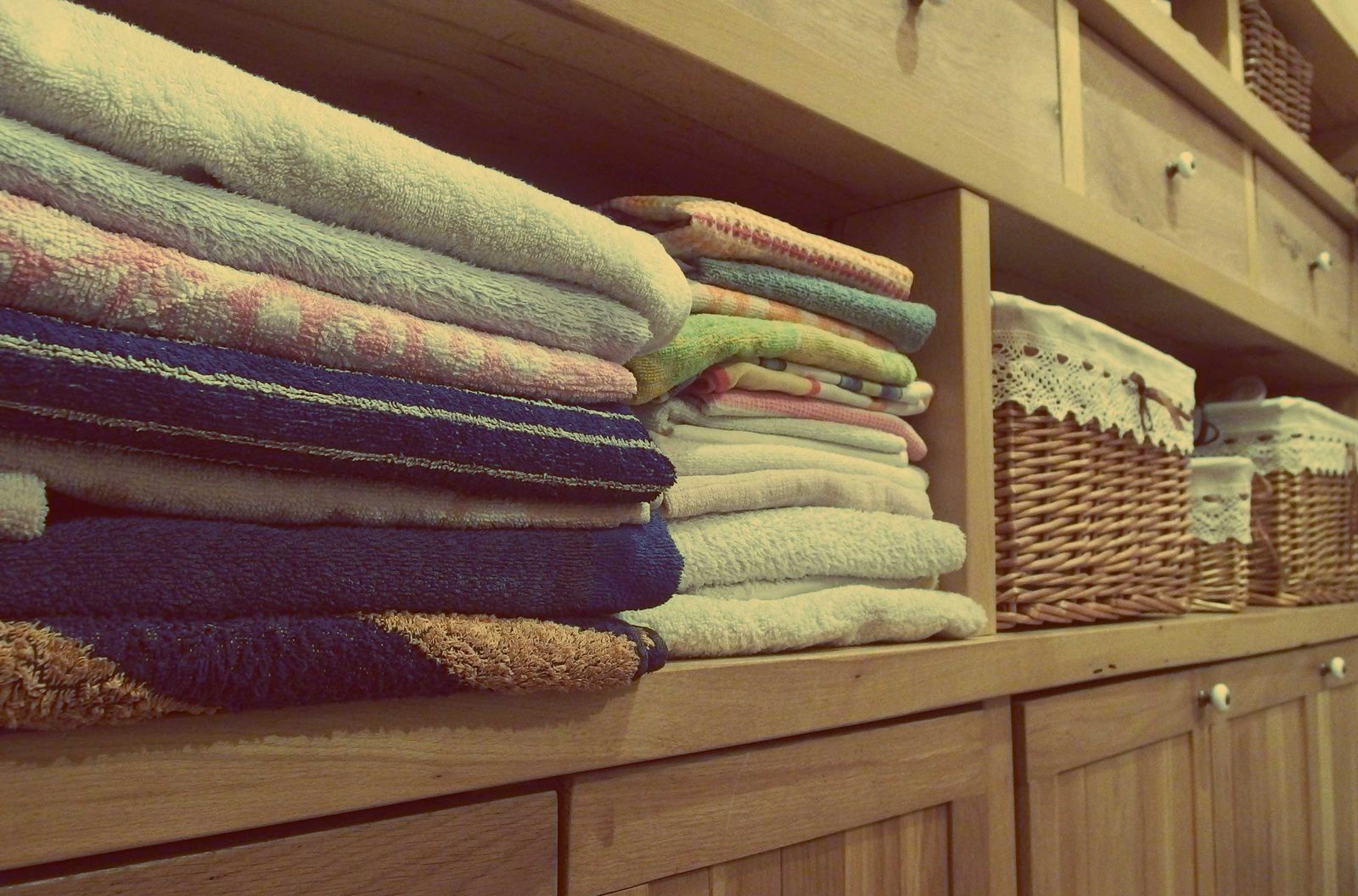
Linen closets tend to expand to whatever size they’re given, absorbing towels, sheets, and blankets until finding a matching set feels like an archaeology project. Most households have far more linens than they actually cycle through, which means a good chunk of that closet is doing nothing but taking up shelf space.
Here are eight things worth pulling out of your linen closet so you can actually see and use what’s left.
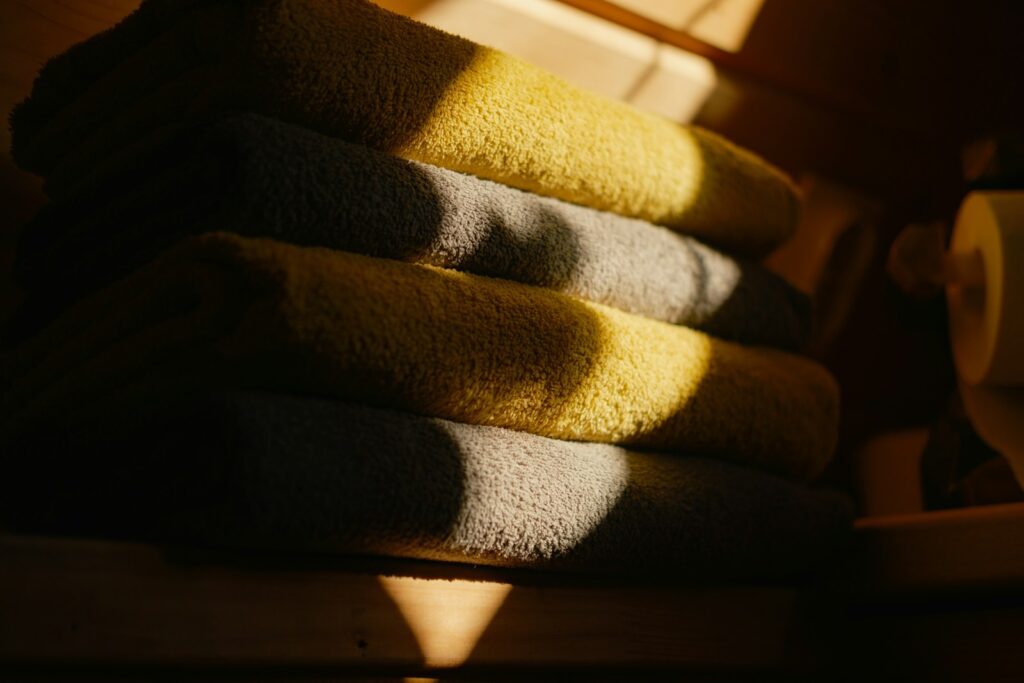
Thin, Worn-Out Towels
Towels lose their absorbency over time, especially after years of washing, and a towel that no longer dries you off effectively isn’t doing its job anymore no matter how many you own. Hold each one up to a window. If you can see light through the middle, or the edges are frayed and the loops are pulled, it is a rag now.
Before you blame age for every stiff or slick towel, check your laundry habits. The American Cleaning Institute’s guide to fabric softeners explains that softeners repel water, and that the key to keeping towels soft without hurting how they work is using the right amount. Measure to the label.
Keep your best, fluffiest sets in regular rotation, and repurpose thinning ones as cleaning rags or car-washing towels rather than keeping them stacked with the good ones. Cut the rags down to a smaller size so nobody folds them back onto the towel shelf, and store them where you clean, not in the linen closet.
Mismatched Sheet Sets
A fitted sheet with no matching flat sheet, or a pillowcase from a set you no longer have the rest of, isn’t a complete set anymore. Sort through your linens and consolidate what’s left into full, usable sets.
The fastest way is to pull everything out and rebuild each set on the floor: one fitted sheet, one flat sheet, and the pillowcases that go with them. Check the fitted sheet first, because worn elastic and thin spots in the middle are what end a set.
Fold each complete set and tuck it inside one of its own pillowcases, so a whole set comes off the shelf in one grab. Two sets per bed is enough for most homes.
Odd pieces can still work as a spare pillowcase or a cleaning cloth, and a lone flat sheet makes a good drop cloth or furniture cover, but they don’t need to take up folded shelf space pretending to be a full set.
Blankets You Never Actually Use
Extra throw blankets accumulate through gifts and impulse buys, and most households only reach for a couple of favorites regularly. Keep what you use during actual movie nights or chilly evenings, and donate the rest. Shelters and donation centers often have real need for blankets in good condition.
To decide, count the places a blanket is used. One or two throws for the couch, one extra layer per bed for cold nights, and one for the car or picnics covers most homes.
Wash and fully dry everything you plan to give away, and check for holes, pet hair, and smoke or storage odors. Call ahead before you drop off, since policies on used bedding vary. For blankets too worn to donate, ask a local animal shelter or rescue whether it accepts used blankets and towels. Guest blankets you keep can move to a labeled bin under a bed, which frees the closet shelf.
Twin Sheets After a Bed Upgrade
Once a bed size changes, whether from a kid’s growth spurt or a guest room update, the old sheet sets often get shoved to the back rather than sorted out. If you no longer own a bed that size, the sheets are just taking up space. Donate them or repurpose the fabric for craft projects or drop cloths.
Check the tag before you decide. Twin and twin XL fitted sheets are not interchangeable, and a set that fits an air mattress or a child’s future bunk bed has a real reason to stay. Write the size on a strip of masking tape and stick it to the bundle so the donation center does not have to unfold it.
Passing sheets along matters more than it seems. The EPA’s textile data estimates that landfills received 11.3 million tons of textiles in 2018, and that the recycling rate for items such as sheets and pillowcases was 15.8 percent.
Stained or Yellowed Table Linens
Tablecloths and cloth napkins that have picked up permanent stains over years of holiday dinners often get kept anyway out of habit. If a stain hasn’t come out after multiple wash attempts, it’s unlikely a future wash will do the trick.
Give each piece one proper attempt before you decide. The American Cleaning Institute’s stain removal guide says to pre-treat with a stain remover, let it soak, and then launder according to the care label, and warns not to put the item in the dryer until the stain is gone. For brown or yellow discoloration, it suggests a rust remover recommended for fabrics.
If the stain survives that, stop storing the piece. Replace heavily stained linens with a fresh set you’ll feel good using for guests. Going forward, the guide’s advice is simple: the less time a stain has to soak in, the easier it is to remove, so treat spills the same night.
Extra Pillows That Have Gone Flat
Pillows lose their loft over time, and a flattened pillow doesn’t provide the support it once did no matter how many times you fluff it. Do a quick fold test. If a pillow stays folded instead of springing back, it’s past its prime.
The spare pillows in a linen closet are usually the oldest ones in the house. Sleep Foundation’s guide to replacing pillows says most experts recommend a new pillow every 1 to 2 years, with the range depending on the fill: roughly 6 months to 2 years for polyester and 2 to 4 years for latex. It describes the fold test as a check for down pillows, and lists sagging, lumps, and excessive yellowing as other signs a pillow is done.
Keep a couple of quality options for guests and let the flat ones go. Ask a donation center before you bag them up, since policies on used pillows vary. Old pillows can also become pet bedding or packing padding.
Shower Curtains and Liners You’ve Replaced
Old shower curtain liners, especially ones with visible mildew or soap scum buildup, tend to get stored rather than thrown away once replaced. There’s rarely a good reason to keep an old liner once a new one is in use, so this is an easy toss.
A used liner is often folded away while still damp, right next to clean towels. If the one you find has dark spotting along the bottom hem, throw it out. A clean one is worth keeping only as a paint drop cloth, and it belongs in the garage.
For the liner currently in the shower, prevention is cheaper than replacement. The EPA’s guide to mold and moisture says to scrub mold off hard surfaces with detergent and water and dry them completely, and that increasing ventilation and cleaning more often will usually keep bathroom mold from coming back. Run the fan and pull the liner closed after a shower so it dries flat.
Vacuum-Sealed Bags With Nothing Useful Inside
Space-saving bags used for seasonal storage sometimes end up holding items that turned out not to be worth keeping in the first place. Open these up periodically to reassess what’s actually inside, rather than assuming everything sealed away is automatically worth the space it occupies.
A sealed bag hides its contents, which is why it gets skipped during every other clean-out. Open each one and sort it with the same rules as the open shelves: worn towels become rags, incomplete sheet sets get split up, and sizes you no longer own a bed for get donated.
For what goes back in, label the outside with the contents, the bed size, and the date. Check the seal while you’re there. A bag that has puffed back up has lost its vacuum and is no longer saving space. Replace any bag with a cracked valve or a split zipper track.