


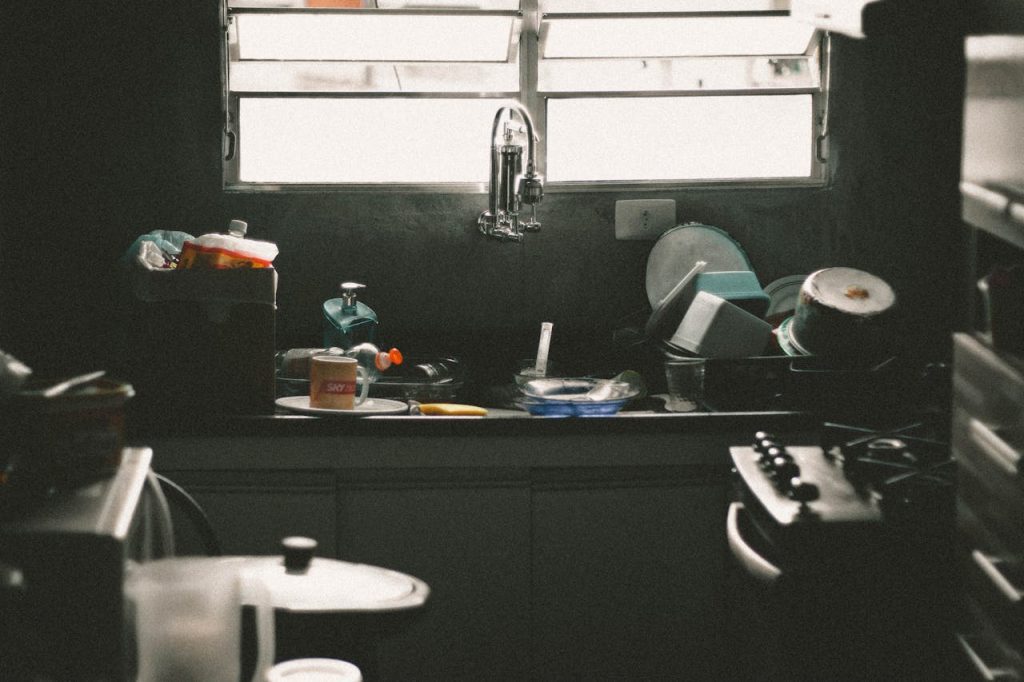
When your home feels chaotic, it is usually less about square footage and more about a handful of small choices that quietly create visual noise. By tightening up a few everyday habits and décor decisions, you can turn the same rooms into calmer, more welcoming spaces. Use these eight pressure points as a checklist to see what might be sabotaging your sense of order.
1) Crowded Kitchen Counters

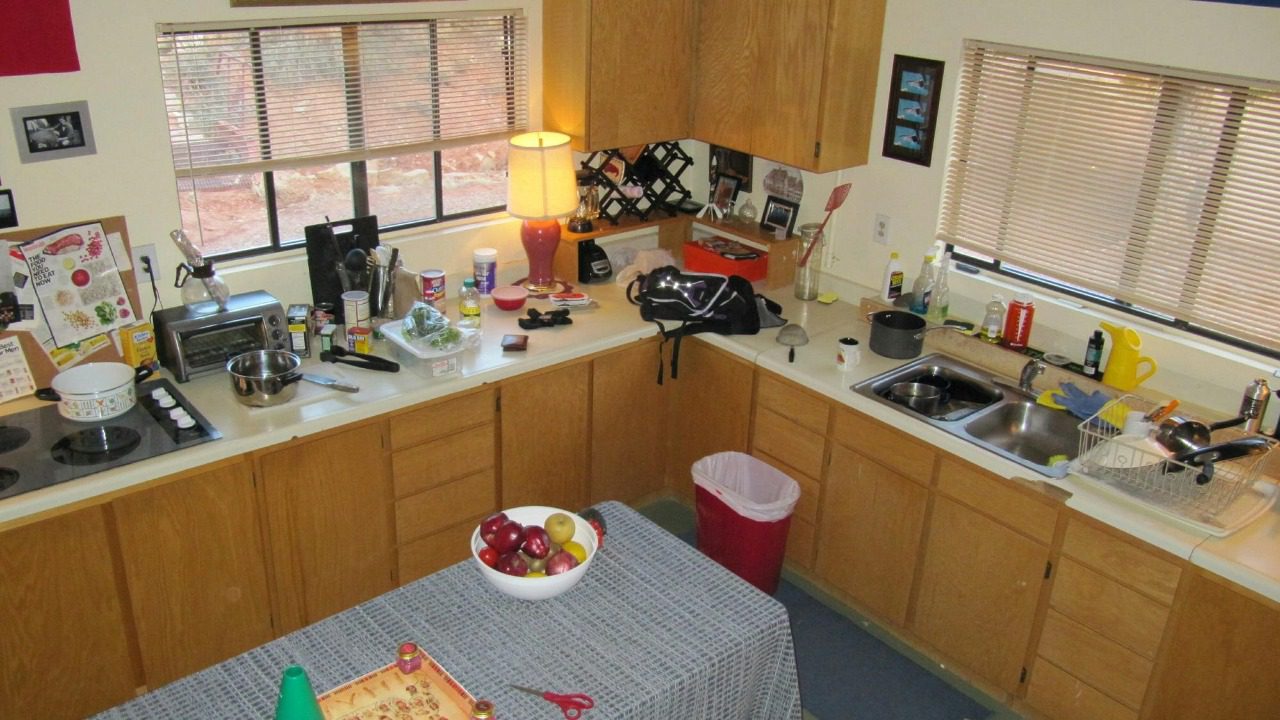
Crowded kitchen counters are one of the fastest ways to make your entire home feel chaotic, because the kitchen is often in constant use and visible from multiple rooms. When every appliance, utensil crock, and mail pile lives on the counter, your eye has nowhere to rest. Design pros who flag visually “tacky” choices in the kitchen consistently point to overstuffed surfaces as a core problem, noting that even expensive finishes look cheaper when they are buried under cluttered décor and gadgets.
Paring back to a coffee maker, a cutting board, and one or two daily-use items instantly restores breathing room. If you love decorative pieces, rotate them seasonally instead of displaying everything at once, and move pantry staples into cabinets or a single attractive canister set. This small reset not only calms the view, it also makes cleaning easier, which helps you keep chaos from creeping back in after busy weeks.
2) Trendy but Tacky Kitchen Details
Trendy but tacky kitchen details, like overly themed signs, faux-distressed finishes, or novelty hardware, can make your home feel visually loud even when it is technically tidy. Interior designers who dissect the most distracting kitchen choices warn that certain décor, such as oversized word art or fake “vintage” accessories, pulls attention away from the room’s actual architecture. When every surface competes for focus, the space reads as chaotic rather than cohesive, no matter how carefully you organize drawers and cabinets.
Swapping these items for simpler, higher quality touches has an outsized impact. Replacing a busy backsplash with a solid tile, editing down collections on open shelving, or upgrading one focal element like the faucet can instantly elevate the room. Guidance on avoiding tacky kitchen decor underscores that restraint is what makes a kitchen feel calm, which then sets the tone for the rest of your home.
3) No Clear Drop Zone for Guests
Having no clear drop zone for guests, such as a spot for coats, bags, and shoes, creates instant chaos the moment someone walks through the door. When visitors have to guess where to put their things, items end up scattered across chairs, railings, and countertops, making your entry feel cramped and disorganized. Home experts who focus on keeping spaces guest-ready emphasize that a simple, predictable landing area is one of the easiest ways to keep clutter from spreading into the rest of the house.
Adding a small console table, a row of hooks, or a lidded basket near the door gives everyone an obvious place to stash belongings. Even in a tiny apartment, a narrow wall-mounted shelf and a boot tray can contain the mess. Advice on how to keep your home guest-ready for the holidays highlights that when the entry stays orderly, the whole home feels more intentional and less chaotic, even during busy seasons.
4) Surfaces That Never Get Fully Cleared
Surfaces that never get fully cleared, like a dining table permanently covered in paperwork or a coffee table buried under remotes and half-read magazines, quietly train your brain to accept clutter as the default. Over time, you stop seeing the piles, but you still feel the mental weight of them, which contributes to a constant sense of chaos. Organizing specialists often recommend “resetting” key surfaces daily, because these flat zones act as visual billboards for how the rest of the home is functioning.
Choosing one or two anchor items for each surface, such as a tray on the coffee table or a vase on the dining table, gives you a clear standard: anything else is temporary and must be cleared by day’s end. This habit not only keeps clutter from snowballing, it also makes it easier to host on short notice, since you are not scrambling to excavate every horizontal space before someone arrives.
5) Lighting That Is Too Harsh or Too Dim
Lighting that is either too harsh or too dim can make your home feel chaotic, even if everything is in its place. Overhead bulbs that are overly bright and cool-toned create a glare that highlights every speck of dust and shadow, while dim, uneven lighting forces your eyes to work harder, which can feel stressful. Designers who focus on creating elegant, calm spaces often point to layered lighting as a key difference between rooms that feel chaotic and rooms that feel composed.
Swapping a single bright ceiling fixture for a mix of floor lamps, table lamps, and softer bulbs immediately smooths out the visual experience. Warm, consistent light helps colors read correctly and makes surfaces look more intentional. When you can see clearly without squinting, you are more likely to notice and address small messes before they spiral, which keeps chaos from building in the background.
6) Mismatched, Low-Quality Textiles
Mismatched, low-quality textiles, such as worn-out throw blankets, lumpy pillows, and thin, faded towels, add a subtle sense of disorder even when they are neatly folded. Style experts who outline small touches that make a home feel more elegant repeatedly highlight cohesive, well-chosen fabrics as a major factor. When your sofa has three different pillow styles, your bed is layered with clashing patterns, and your bathroom towels do not match, the overall effect is visual static.
Upgrading to a consistent color palette for textiles, even if you buy items slowly, calms the room instantly. A set of matching bath towels, two pairs of coordinated pillow covers, and a single high-quality throw can transform how pulled together your home feels. Advice on elegant small touches shows that these fabric choices signal order and care, which counteracts any lingering chaos elsewhere.
7) Overloaded Open Shelving
Overloaded open shelving, whether in the kitchen, living room, or home office, can make your home feel chaotic because every item is on display all the time. When shelves are packed edge to edge with books, trinkets, and storage bins, the eye reads the entire wall as clutter, even if each object is technically in a “spot.” Organizing and design pros often suggest treating open shelves like curated displays rather than storage workhorses, limiting how much you keep visible.
Editing shelves to include negative space, repeating colors, and a mix of vertical and horizontal lines instantly calms the look. You can move overflow items into closed cabinets, under-bed boxes, or labeled bins in a closet. This approach keeps daily essentials accessible while preventing the visual overload that makes rooms feel smaller, busier, and harder to relax in after a long day.
8) Decor That Lacks a Consistent Color Story
Decor that lacks a consistent color story, with every room painted a different bold shade and accessories in unrelated hues, can make your home feel fragmented and chaotic. Even if you love color, scattering too many unrelated tones across rugs, art, and furniture creates a jarring effect as you move from space to space. Designers who prioritize calm, cohesive homes often recommend choosing a limited palette that repeats in different ways throughout your rooms.
Pulling two or three main colors from a favorite rug or piece of art and echoing them in pillows, curtains, and smaller accents ties everything together. Neutral walls with colorful textiles, or vice versa, keep things lively without feeling scattered. When your eye can trace the same shades from the entry to the bedroom, your home reads as one intentional environment instead of a series of disconnected, chaotic zones.
More from Decluttering Mom: