Attics are where things go to be forgotten rather than sorted. Boxes get stacked, labeled vaguely if at all, and left for someone else to deal with years later, usually during a stressful move or cleanout.
When that day comes, resist the urge to haul everything straight to a dumpster. These eight attic staples are worth a closer look first.

Steamer Trunks and Vintage Luggage
Large trunks with metal hardware and wooden slats, often plastered with old travel stickers, are frequently seen as bulky storage rather than collectible pieces. In reality, well-preserved trunks from established luggage makers, especially those with original hardware and interesting travel history reflected in their stickers, appeal to both collectors and decorators. Start with the maker. Check the interior lining, the lock plate, and the hardware for a manufacturer’s name or a paper label, and photograph whatever you find. Then look at how much is original. Intact canvas or leather covering, matching handles, a working lock with its key, and the removable trays that fitted inside all raise a trunk’s appeal. Mold, a strong musty smell, rusted-through metal, missing trays, and replacement handles lower it. Refinishing can count against a trunk too, so don’t strip, repaint, or reline it before you know what you have. Resist the urge to scrub off old travel stickers, since they often add rather than detract from a trunk’s appeal.
Comic Book Collections
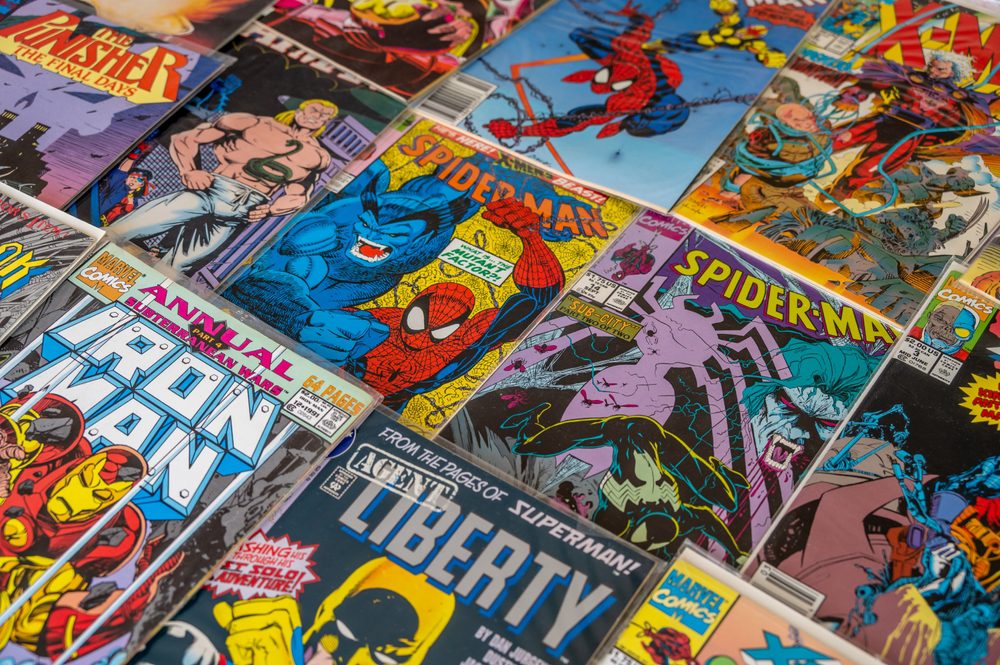
Stacks of old comics are commonly assumed to be worthless unless they’re extremely rare, but certain vintage issues, especially early appearances of well-known characters, can carry serious value, according to comic collecting guides. Two things drive the price: which issue it is and what shape it’s in. Collectors call an issue with a major first appearance a key issue, and the guide’s examples include New Mutants #98, the first appearance of Deadpool. Condition is scored on the CGC grading scale, which the guide describes as 22 tiers running from 0.5 (Poor) to 10.0 (Gem Mint). On key issues the price climbs steeply rather than evenly as the grade rises, so creases, spine wear, tears, water stains, and missing pages all cost real money. Check publication dates and issue numbers before assuming a stack is worthless, and pull out first issues and first appearances for a closer look. Store any promising finds flat in protective sleeves rather than stacked loosely, and don’t tape, press, or clean them yourself.
Vinyl Record Collections
Boxes of records stored in an attic for decades sometimes suffer heat damage that affects value, but many survive in surprisingly good shape. Slide each record out and hold it level with your eye. A warped disc rises and dips along the edge, and a bad warp makes it unplayable. Then tilt it under a bright light and look for deep scratches you can feel with a fingernail, which matter far more than faint scuffs. Look at the cover as well. Split seams, water stains, mold, and writing lower the price, while original inner sleeves, inserts, and posters raise it. Checking the dead wax area near the label for a matrix number can help identify whether a record is an early pressing worth researching further, according to pressing identification guides. Write down those etched characters along with the catalog number on the label, then compare both against listings for that album. Store records upright rather than flat to prevent warping while you sort through what’s worth keeping.
Vintage Clothing
Old clothing packed away for decades is often assumed to be worthless, but certain vintage pieces have real resale value to collectors and resellers. Check inside collars, waistbands, and side seams for union labels or brand tags. The International Ladies’ Garment Workers’ Union label, sewn into women’s clothing, changed design over the years, and vintage fashion identification guides use it to date a garment. In one guide’s timeline, a scalloped crest with a needle, thread, and AFL-CIO lettering points to 1955 to 1963, a registered trademark symbol was added for 1964 to 1973, and a red, white, and blue version marked Made in U.S.A. ran from 1974 to 1995. A union label dates a piece but doesn’t make it valuable on its own. Era, a recognized designer tag, and condition do that. Moth holes, underarm stains, and fabric that tears under a gentle tug count against a garment. Handle delicate fabric carefully and don’t wash anything, since even garments with some wear can appeal to buyers focused on specific eras.
Military Memorabilia
Uniforms, medals, ID tags, and letters from family members who served are frequently discovered in attic boxes, and these items carry both historical and collector value beyond their sentimental worth, according to military collecting resources. Military Trader’s guide to pricing a WWII collection says the value of military items lies in variation: a difference in manufacturing technique, material, or markings determines what a piece is really worth. It also notes that the highest prices are generally realized in an item’s nation of origin or that of a direct wartime opponent. So the details matter. Photograph every stamp, maker’s mark, patch, and inked name before you move anything. Keep everything that belonged to one person together, including photographs and paperwork. Named, documented pieces are typically more sought after than unmarked items. Don’t polish medals or launder uniforms. Handle any old medals or insignia carefully, and research specific unit or campaign markings before assuming their worth. Ask the rest of the family before anything is sold.
Boxed Holiday Decorations
Christmas ornaments, decorations, and lighting stored away for years accumulate in attics right alongside everything else, and it’s easy to assume they’ve simply aged out of relevance. Certain vintage ornament brands, blow mold figures, and lighting styles remain genuinely collectible, so it’s worth sorting through holiday boxes with the same scrutiny as anything else in the attic rather than assuming decorations are automatically low-value clutter. Start with the packaging. Original boxes with their dividers and graphics intact raise the appeal of a set, and a maker’s name on the box or on an ornament’s metal cap gives you something to search. Complete sets do better than loose singles. For glass ornaments, look for chips at the neck, flaking paint, and dark spots in the silvering. For blow molds, the hollow plastic figures lit from inside, check for cracks, dents, faded paint, and a missing light fixture. Old light strings with brittle or cracked cords shouldn’t be plugged in to test them. Sell or display those as they are.
Old Photographs and Postcards
Boxes of family photographs and postcards rarely seem valuable individually, but certain categories, particularly “real photo” postcards printed directly onto photographic paper rather than mass-produced lithographs, can be genuinely collectible depending on subject matter and location, according to postcard valuation guides. British auction house Warwick & Warwick puts the golden age of postcards at 1902 to 1918, when local photographers often produced real photographic cards in very limited numbers. Its guide says lively examples, such as children playing in a village centre or a close-up of an early motorcar, can sell for £15 to £30 each, while printed versions lack the definition of a real photograph and bring much less. Most cards issued after the 1960s have very little value. Condition counts as well: the guide prices a Good card 40 to 50 percent below an Excellent one. Street scenes with trams, steam trains at the local station, and village shops draw the most collector interest, so sort by subject and location before recycling old paper ephemera.
Vintage Suitcases and Hat Boxes
Smaller cases and round hat boxes, often made of stiffened cardboard or leather with distinctive hardware, are frequently used today purely as decorative storage, which has created real demand among buyers decorating in a vintage style. Because most buyers want them for display, the outside matters most. Look for interesting exterior patterns, original interior linings, and manufacturer stamps on the hardware or lining, since well-preserved examples in interesting colors or patterns tend to sell for considerably more than plain, damaged cases. Open and close every latch, check that the hinges hold and the handle is firmly attached, and look for a key tied to the handle or tucked into a pocket. Matching sets in graduated sizes are more appealing than a single case. Smell the inside before you decide. Mildew is hard to remove and puts buyers off, as do peeling coverings, crushed corners, and water-stained linings. Empty each case completely, wipe it with a dry cloth, and leave it open in a dry room for a few days.