


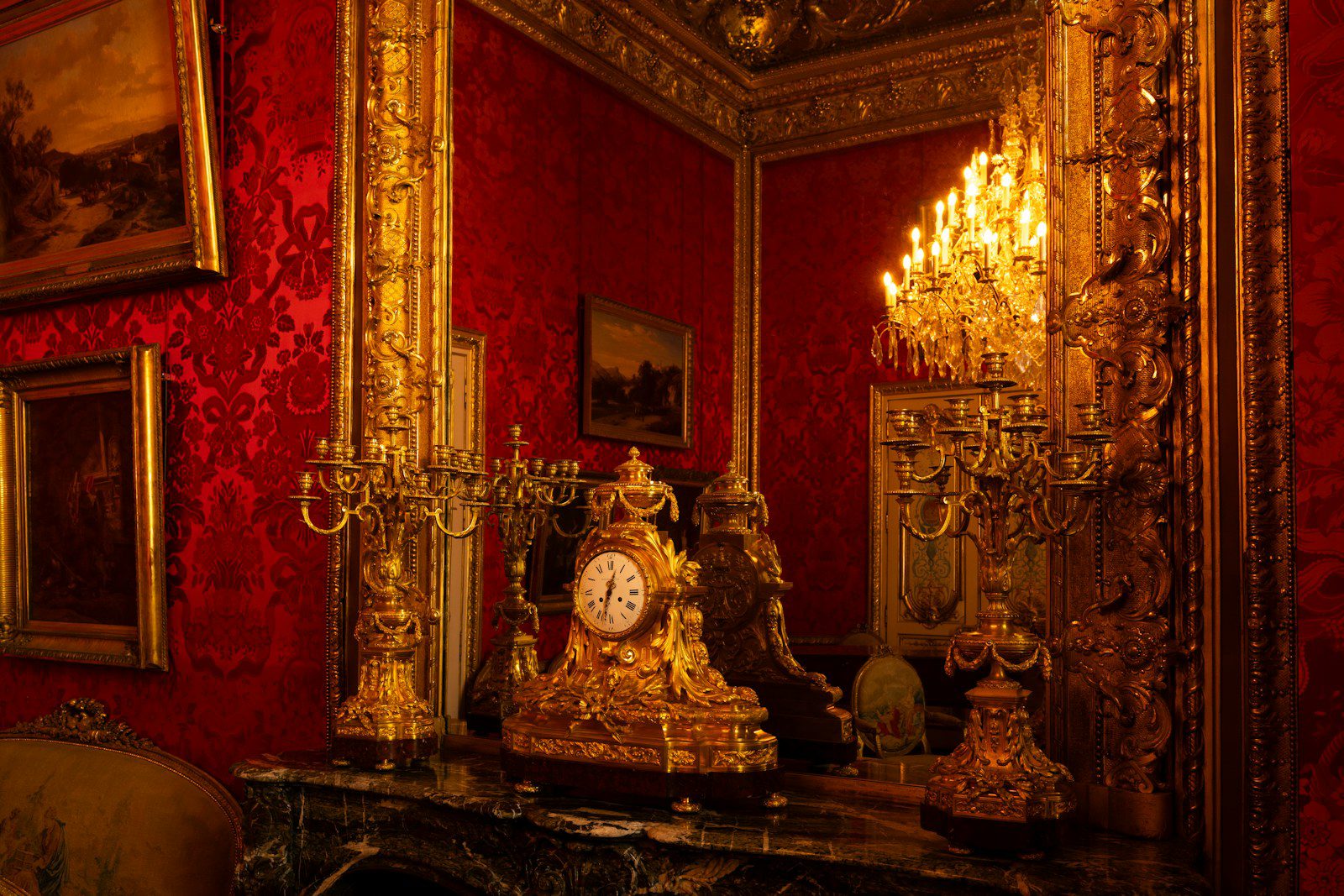
When a room gets updated, the big furniture pieces usually get the most attention during a purge. Smaller decor items — mirrors, clocks, vases, and the like — often get swept out with far less consideration, treated as accessories rather than assets.
In plenty of cases, though, those smaller pieces are worth more than the sofa or dresser they’ve been sitting next to for years. Here are eight to evaluate carefully.


Gilt-Framed Mirrors
Ornate mirrors with elaborately carved and gilded wood frames were a hallmark of formal decorating for generations, and well-preserved examples remain genuinely desirable to collectors and decorators alike. Look closely at the gilding technique; hand-applied gold leaf has a subtly uneven, warm quality that differs from the flatter look of modern gold paint. A heavy wood frame with intact, detailed carving is typically worth considerably more than a lightweight, mass-produced imitation of similar style.
Turn the mirror around before you judge it. Older frames are built from wood, and the backboards are usually rough, darkened planks held with old nails. A chip that shows a white plaster-like layer under the gold points to traditional gilding, while a chip that shows plastic or resin points to a modern cast copy. Old mirror glass often has gray spots, which buyers expect, so do not replace it. Never wipe gilding with water or household cleaner. Dust it with a soft, dry brush.
Mantel Clocks
Decorative clocks meant for display on a mantel or shelf, especially those with visible mechanical movements rather than simple battery-powered quartz mechanisms, hold real appeal for antique clock collectors. Check the back or base for a manufacturer’s name, and listen for a steady, even ticking sound if the clock still runs, since a functioning mechanical movement generally adds significant value over a purely decorative case with no working parts.
Open the back door and look inside the case for a paper label. The National Association of Watch and Clock Collectors keeps a database of early clock labels that records the clockmaker, the address and the printer of each label, which can help date a clock. Also check the dial and the movement for a stamped name. Look for the winding key and the pendulum, since both are often lost. Cracked glass, a repainted dial and replaced hands lower the value. Never spray oil into the movement.
Solid Brass Decorative Objects
Candlesticks, andirons, bookends, and other decorative brass objects are often tarnished to the point of looking like dull, unremarkable metal, which leads many people to underestimate them entirely. A quick polish on an inconspicuous spot can reveal whether a piece is solid brass throughout or simply brass-plated over a lesser metal, and solid brass pieces generally carry both decorative and modest scrap value that plated versions don’t.
A refrigerator magnet is the quickest test. Brass is not magnetic, so a magnet that sticks means steel or iron under a thin brass coating. A magnet that falls off is not proof, because some plated pieces have a zinc base. Weight is the next clue; solid brass feels heavy for its size. Look underneath for a foundry name, a country of origin or a pattern number. Keep pairs of candlesticks, andirons and bookends together. Do not machine-buff or lacquer an old piece before selling, since many buyers prefer the aged surface.
Original Artwork and Signed Prints
Paintings and prints inherited along with furniture are frequently treated as an afterthought, hung mostly for sentimental reasons rather than evaluated for potential worth. A signature in the corner, even an unfamiliar one, is worth researching before assuming a piece is simply decorative. Limited edition prints, in particular, often include a numbered edition size printed in pencil beneath the image, which can help establish scarcity and, in turn, value.
The numbering follows a set form. Tate explains that an edition of twenty-five is numbered 1/25, 2/25 and so on, that editioned prints are usually signed by the artist, and that impressions marked AP are artist’s proofs. Use a magnifying glass on the image. A regular pattern of tiny dots means a photographic reproduction, such as a poster. On a painting, check the back for gallery labels, exhibition stickers and framers’ tags, which help trace its history. Do not clean the surface.
Art Pottery Vases
Hand-thrown or hand-finished vases from dedicated art pottery studios, as opposed to mass-produced decorative vases, often carry a distinctive glaze technique and a small incised or stamped studio mark on the base. These marks are the key to identifying whether a vase came from a well-regarded pottery studio or a generic manufacturer, and that distinction can mean a considerable difference in value for pieces that otherwise look quite similar at a glance.
Turn each vase over and photograph the base in good light. Besides the studio mark you may find a shape number, a date code or a decorator’s initials, and each one gives you something to look up. Slight asymmetry and glaze that pools unevenly suggest hand work. Run a fingertip around the rim and base for chips, and hold the vase under a bright light to spot hairline cracks or the dull patch of an old repair. Cracks, repairs and a hole drilled in the base for a lamp cord all lower the price.
Hand-Knotted Area Rugs
Large area rugs are frequently treated as disposable once they show wear, but genuinely hand-knotted rugs, as opposed to machine-made equivalents, represent a significant amount of skilled labor and can retain real value even with visible wear in high-traffic areas. Checking the underside of a rug can reveal the knotting structure, since hand-knotted rugs show visible individual knots rather than the uniform woven backing typical of machine-made rugs.
Flip a corner over. On a hand-knotted rug the design shows on the back almost as clearly as on the front, and the rows of knots are slightly uneven. The fringe is the end of the rug’s own foundation threads, not a strip sewn on afterward. A canvas or latex backing glued over the underside means the rug is tufted, not knotted. Check for moth damage, pet stains, cut-down edges and a foundation that cracks when folded. Do not steam clean an old rug before a rug dealer or appraiser has seen it.
Decorative Compotes and Centerpiece Bowls
Large decorative bowls and pedestal compotes, often made of cut glass, silver, or fine ceramic, were once a staple of formal dining room displays and are now frequently relegated to storage once entertaining styles shift. These pieces remain popular with collectors who specifically seek out serving and display pieces to complete sets, so it’s worth checking for a maker’s mark and matching pattern to any other tableware already identified in the same household.
Start with the material. Cut glass is heavy and its pattern has sharp edges you can feel with a fingertip, while pressed glass has rounder edges and visible mold seams. On silver, look underneath for the word “sterling” or the number 925; “EPNS” or “silverplate” means a plated piece. On ceramic, the maker’s backstamp is usually on the underside of the foot. Check the join between bowl and pedestal, where cracks and old glue repairs hide, and feel the rim for chips. Keep any lid, liner or underplate with the bowl.
Wall Sconces
Decorative wall-mounted light fixtures, particularly those with brass, crystal, or hand-painted glass elements, are often removed during a renovation and discarded rather than reused or sold. Matching pairs are considerably more desirable than single sconces, since these fixtures were traditionally installed and sold in sets. A sconce with its original wiring, even if it needs updating for safety, is generally more valuable than one that’s been heavily modified from its original design.
Look on the backplate for a maker’s name, a foundry stamp or a paper label. Cast brass and bronze are heavy and show crisp detail, while thin stamped metal with a gold-colored wash is lighter and worth less. Count the crystal drops and check that they match, because missing or replaced ones are a common fault. Keep every chain, shade and mounting screw with the fixture. Old cloth-covered wire can be brittle, so have a licensed electrician rewire a sconce before anyone uses it again. Do not polish or spray paint the metal before selling.