


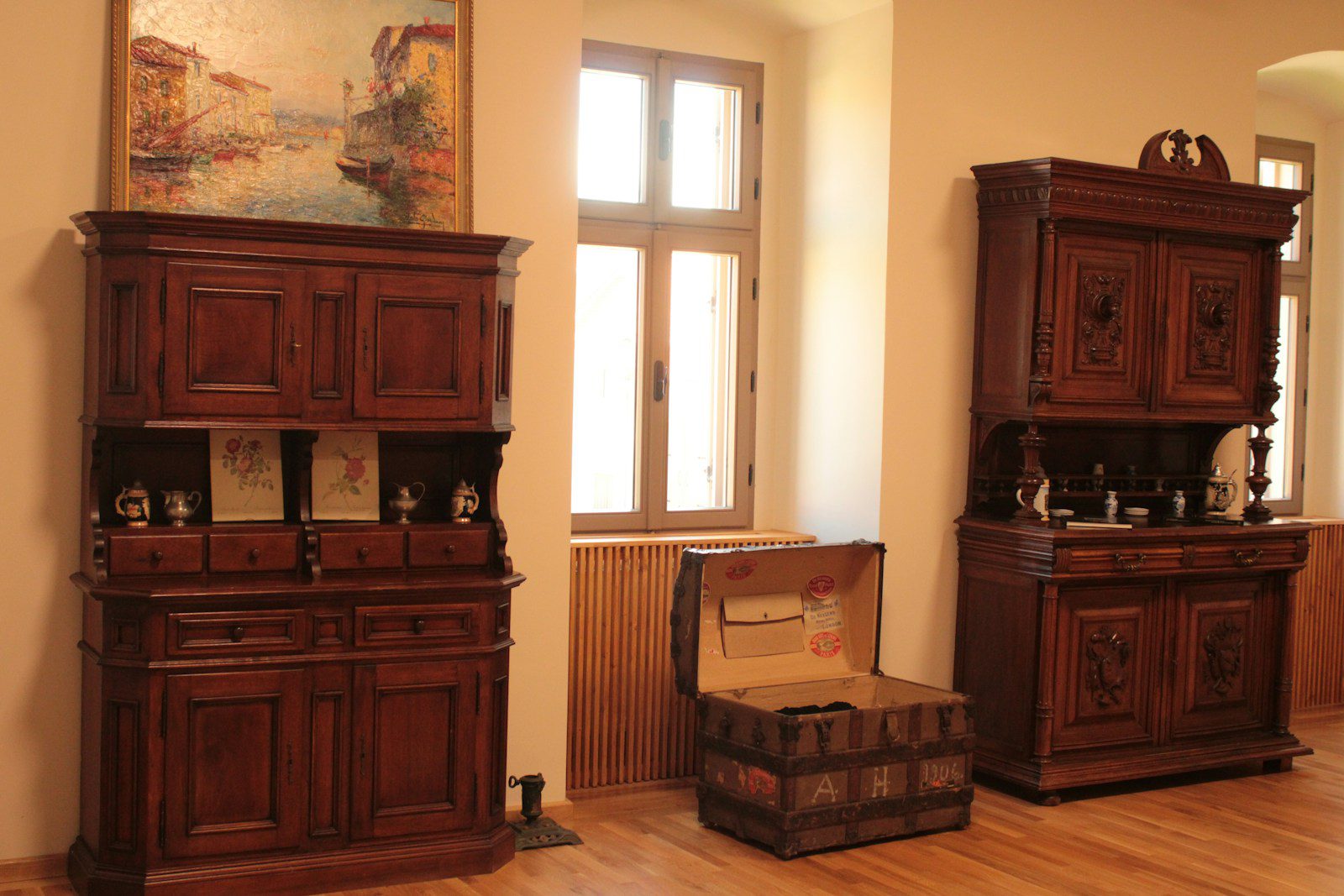
Old furniture gets a bad reputation fast. A dresser with dated hardware or a chair with worn upholstery looks like something better suited to a landfill than a living room, especially when it’s competing with sleek, inexpensive modern pieces.
But the details that make a piece look old are often exactly what makes it valuable. Here are nine things worth checking before grandma’s furniture heads to the curb.
Hand-Cut Dovetail Joints
Pull a drawer all the way out and look at the corners where the sides meet the front. Hand-cut dovetails are slightly irregular, with joints of varying width and spacing, while machine-cut dovetails from mass production are perfectly uniform, according to antique dating resources. Uneven, hand-cut joinery generally signals an older, more labor-intensive piece, which tends to carry more value than later mass-produced construction.
The same guide gives a rough timeline. Hand-cut dovetails were standard until about 1870. A round “pin and cove” joint, cut with a jig, then shows up on late Victorian and Eastlake furniture into the 1890s. Identical machine-cut dovetails have been the norm on better American furniture since the late 1890s.
Two cautions apply. European cabinetmakers kept cutting dovetails by hand into the 1930s, so irregular joints do not prove a piece predates 1870. And simple country furniture often has only a few large dovetails, or a single one, which is a sign of how it was made, not of poor quality.
A Manufacturer’s Label or Stamp
Check the back panels, the underside of drawers, and the inside of doors for a paper label, ink stamp, or branded mark. A legible maker’s name can immediately tell you whether a piece came from a well-regarded furniture maker, according to furniture identification guides. Even a faded or partial label is worth photographing and researching, since furniture tied to a known manufacturer or workshop usually draws more buyer interest than unmarked furniture of similar style and age.
The same guide lists other hiding places: the sides of drawers, the inside or underside of the frame, and the inner faces of the legs. Marks also vary in form. Besides paper and ink, look for small embossed metal tags, ivory-colored “ivorine” plates, and names burned or stamped into the wood.
Never scrub, oil, or peel a label to read it better. A missing mark is not a verdict, either. Many craftspeople never signed their work, so joinery, materials, and style still have to carry the identification.
Solid Wood Versus Veneer
You do not need to scratch anything to find out whether a piece is solid wood or a thin veneer over another material. Look at the edge of a tabletop or drawer front. On solid wood, the grain pattern on the top carries over the edge, and the ends of the board show end grain. On veneer, you will see a thin line where the surface layer stops, and the pattern on the face will not match the edge.
Solid wood construction generally holds more value and is easier to refinish, while lifted, bubbled, or chipped veneer can be difficult and costly to repair. That said, quality veneer over solid wood was common in fine furniture for centuries, so veneer alone doesn’t mean low quality. It’s the material underneath that matters most.
Check the back, the underside, and any chipped corner. Real boards beneath the veneer are a good sign. Particleboard or fiberboard, which looks like compressed crumbs or dense cardboard, points to later mass production.
Original Hardware and Hinges
Drawer pulls, hinges, and locks made of solid brass or iron, especially with hand-forged irregularities, are a strong indicator of age and quality. Perfectly uniform, lightweight hardware often signals later replacement parts. Check whether the hardware shows wear consistent with the rest of the piece, since mismatched or suspiciously shiny pulls can lower a piece’s value to buyers who prize completely original examples.
The inside of the drawer front tells the story. One set of holes that lines up with the current pulls suggests they have always been there. Extra holes, plugged holes, or a faint outline of a different-shaped backplate in the finish mean the hardware was swapped at some point.
If the pulls are original, leave them alone. Do not polish them bright, and do not replace them because the style feels dated. If you do change them for everyday use, pick new ones that fit the existing holes, and keep the originals in a labeled bag taped inside a drawer so they stay with the piece.
Construction Method: Nails, Screws, or Pegs
The fasteners holding a piece together can help date it. Wooden pegs and hand-forged square nails generally point to older construction, while modern round wire nails and machine screws suggest either a newer piece or repairs made well after the original build. Look at the least visible parts of the furniture, like the underside of a tabletop or the back of a cabinet, where original construction is more likely to have survived decades of use and repair.
Shape is the thing to study. A nail with a square or rectangular shank and an uneven, hammered head was not made on modern equipment. A round shank with a flat, perfectly circular head was. With screws, look at the slot and the threads: handmade examples tend to be slightly off-center and uneven, and a cross-shaped Phillips head is a twentieth-century fastener wherever it appears.
Mixed fasteners are normal. One modern screw in a drawer runner means somebody fixed something, not that the whole piece is new.
Natural Patina and Finish
An authentic aged finish develops a depth and warmth over decades that’s difficult to fake convincingly. Look for a finish that’s slightly uneven, with wear concentrated in logical spots like armrests, drawer edges, and tabletops, where hands and daily use would naturally cause it. A uniformly distressed finish often signals a newer piece made to look old, which typically carries less value than naturally developed wear.
Ask where the wear makes sense. Chair arms should be smoother at the front, where palms rest. Lower stretchers should be scuffed by shoes. Wear on places nobody touches, such as the back of a leg, is a reason for suspicion.
Whatever you find, do not strip it. Collectors generally want an original surface, and sanding one away cannot be undone. For care, the National Park Service’s museum guidance recommends paste wax on stable clear finishes such as shellac, lacquer, and varnish, and warns that most liquid and aerosol polishes contain silicones that could harm a finish.
Upholstery Tack and Webbing Style
On upholstered pieces, turn the chair over and look underneath at how the fabric and supports are attached to the frame. Hand-hammered tacks and jute webbing generally indicate older, traditional upholstery, while staples and synthetic webbing point to more recent reupholstering. Even if the current fabric is dated or worn, an older frame with quality construction underneath is often worth professional reupholstering instead of replacement.
The stuffing is another clue. A National Park Service guide to upholstered furniture lists grasses, animal hair, feathers, moss, and cotton batting among historical padding materials, with polyester and synthetic foams as the modern ones. It also notes that coil springs have been used in upholstered seats since the 1830s.
Rows of empty tack holes along the frame rails mean the piece has been recovered before, possibly several times. The same guide points out that metal tacks and springs can corrode and stain the fabric and stuffing around them, so rust marks are worth mentioning to an upholsterer.
Leg and Foot Styles
The shape of a piece’s legs and feet can help identify both its era and its style lineage. Distinctive foot carvings, tapered legs, or turned spindle work often correspond to specific design periods, and recognizing them can help you research a piece’s approximate age even without a maker’s mark. Compare the leg style and overall proportions to reference photos of known furniture periods before assuming an unfamiliar design is generic or without collector interest.
Museum references make this easier. The Metropolitan Museum of Art’s essay on Queen Anne and Chippendale styles describes the S-curved cabriole leg of the Queen Anne period, 1730 to 1760, ending in smooth pad or pointed slipper feet. In the Chippendale era, 1755 to 1790, claw-and-ball feet with sharply cut talons took their place.
Keep one limit in mind. Popular styles were copied for generations afterward, so a claw-and-ball foot identifies the design, not the date. Treat the legs as a starting point and confirm with joinery, fasteners, and wear.
Mortise and Tenon Joinery
Where legs meet aprons or rails on chairs and tables, older furniture typically uses mortise and tenon joints, where one piece is cut to fit precisely into a matching slot in another, instead of being simply glued, screwed, or doweled together. This method takes more time to produce but is significantly stronger and longer-lasting. A piece built this way, especially if it’s still tight after decades, generally reflects craftsmanship worth preserving.
To spot one, look for a joint with no visible screws or metal brackets. Sometimes a small wooden peg crosses the joint to lock it. Then set the piece on a flat floor and rock it gently. Good joints do not shift.
A wobble does not condemn the piece. Old glue dries out, and a restorer can take a loose joint apart, clean it, and reglue it. The lasting harm comes from quick fixes: nails, drywall screws, or steel brackets driven through the joint.