


Garages absorb decades of accumulation faster than almost any other space in a house, which is exactly why they’re often the first thing families call a junk hauler for. Grease-stained boxes and rusty shelving don’t inspire much hope for hidden value.
But garages are also where a surprising number of genuinely collectible items end up stashed. Check for these nine before the hauler shows up.

Vintage Hand Tools
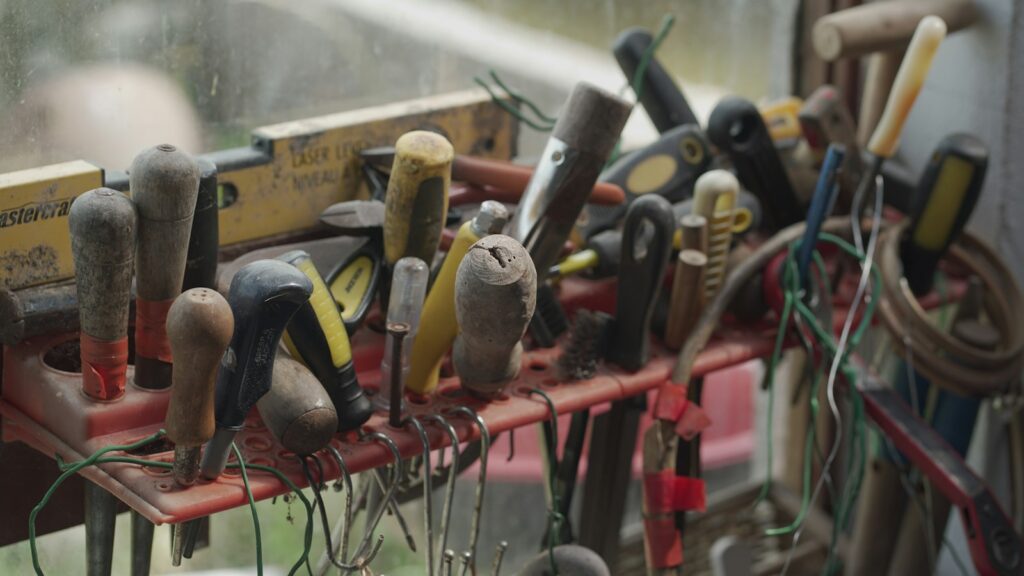
Hand planes, wrenches, and chisels from well-regarded manufacturers hold real collector interest, especially when they still bear a legible cast or stamped brand name, according to tool collecting resources. Stanley planes are the ones to check first. That guide puts common Bailey bench planes at roughly $25 to $120 and block planes at $20 to $90, while the heavier Bed Rock series runs $150 to $600 or more and the tiny No. 1 brings $600 to $1,500. It lists a crack-free rosewood handle, a clean casting, and a complete original cutter among the things that push a plane toward the top of its range.
Rust rarely disqualifies a tool from being worth keeping, since most surface corrosion can be cleaned off without damaging the underlying steel. Hold off on the wire wheel or grinder until you know what you have, because aggressive cleaning cannot be undone. Sort tools by brand before boxing them for donation, since certain names are worth considerably more than generic, unbranded equivalents.
Fishing Tackle and Lures
An old tackle box is easy to write off as a jumble of rusty hooks, but certain vintage fishing lures, particularly early wooden lures with detailed glass eyes and original paint, are genuinely valuable to collectors, according to fishing collecting guides. The same guide is blunt that most common old lures bring about five dollars at best, so the job is spotting the exceptions. Makers it singles out include Heddon of Dowagiac, Michigan, Creek Chub of Garrett, Indiana, whose Pikie Minnow dates to 1919, South Bend, and Paw Paw.
Original boxes for individual lures add considerable value, especially picture boxes printed with graphics, so sort through a tackle box by hand rather than dumping its contents wholesale. Keep each lure with its box and any paper insert, and do not repaint, polish, or swap out hooks. For wooden lures you cannot identify, the National Fishing Lure Collectors Club, founded in 1976, exists to help members identify and trade vintage tackle.
Gas Station and Automobilia Signs
Old metal signs advertising gas brands, motor oil, or auto parts are a well-established niche within advertising collectibles, and even rusted or faded examples can attract serious buyer interest depending on the brand and design. The type to watch for is porcelain enamel. From the 1880s until the 1950s, porcelain signs were made by fusing layers of powdered glass, color by color, onto heavy rolled iron, which is why they feel heavy for their size and keep a glassy shine after decades outdoors.
To tell porcelain from painted tin, pick the sign up and look at a damaged spot. Porcelain chips the way a dinner plate does, leaving a hard edge around bare dark metal, while painted tin scratches, fades, and rusts through. Original paint and legible branding matter most, so photograph both sides and research any old automotive signage found leaning against a garage wall before assuming its condition makes it worthless. Do not touch up missing color or scrub with anything abrasive.
Vintage Oil Cans
Metal oil cans with colorful branded graphics from defunct or classic petroleum companies are collected specifically within a niche called petroliana, according to petroliana collecting resources. They are scarcer than you might expect for a simple reason: station attendants poured the oil into the engine and threw the can away, so relatively few survived. Dents and rust reduce value, but a can with sharp, legible original graphics can still be worth real money even if it’s empty and no longer usable for its original purpose.
Judge the graphics first. Strong color, a clear brand name, and pictorial artwork draw more interest than a plain text label. Then note whether the can is still sealed, how it was opened, and whether the bottom has rusted through. Wipe dust off with a dry cloth and stop there, since solvents and scouring pads can lift printed ink. Check the brand name and can style against reference photos before recycling old metal containers.
Model Train Sets
Boxes of model train track and cars stored on a garage shelf are frequently overlooked entirely. Certain vintage sets and individual cars from well-known model train manufacturers are genuinely valuable to collectors, according to train collecting resources. Check locomotives and cars for a stamped model number, and keep original boxes together with matching pieces whenever possible.
Condition decides most of the price, and collectors describe it in shared terms. The Train Collectors Association publishes grading standards for prewar and postwar trains, along with a separate guide to grading boxes and paper, which tells you how seriously buyers take the cardboard. It also keeps a guide to reproduction postwar Lionel items, a reminder that not every piece in a set is necessarily original. Before selling, write down every number you find and note chipped paint, missing couplers, and bent or rusted track. Do not plug in an old transformer with a brittle cord just to see whether the engine runs.
Vintage License Plates
Old license plates nailed to a garage wall for decorative purposes are more collectible than most people realize, with certain years, states, and low serial numbers commanding real premiums among plate collectors, according to license plate collecting coverage. That report cites a 1915 Vermont porcelain plate once valued at around $15,000 and a 1906 West Virginia plate at roughly $25,000, while cautioning that most old plates do not sell for much. Age, rarity, and material are the factors it names, and it suggests checking recent sales of similar plates.
Rust and fading affect value, but even well-worn plates from certain eras can be worth researching before they’re scrapped as metal. Set aside anything that feels heavy and glassy, which points to porcelain rather than painted steel, and keep matching pairs together. Do not repaint or wire-brush a plate. The Automobile License Plate Collectors Association offers guides to grading and cleaning plates, plus one on misleading plates.
Hood Ornaments and Car Emblems
Standalone hood ornaments, grille emblems, and other salvaged car parts sometimes end up in a box of miscellaneous garage hardware. Certain vintage automotive ornaments, especially those from classic car brands with distinctive sculptural designs, are collected separately from the vehicles they once adorned, according to automobilia collecting guides. That guide gives wide ranges by make, such as $100 to $3,500 for Mercedes-Benz stars, $500 to $4,000 for Cadillac ornaments, and $30 to $1,000 for the leaping Jaguar. Material matters too, with chrome-plated bronze and glass listed above pot metal and plastic.
Check for a maker’s mark or model-specific design before scrapping any old metal car parts. Turn the piece over and look for a part number or foundry mark on the underside or the mounting stud. Weight is a quick clue, since bronze and brass feel dense while pot metal is lighter and tends to pit under the chrome. Do not rechrome or polish through the plating before you know what it is.
Machinist Tool Chests
Tool chests with multiple shallow drawers, used by machinists and hobbyists to store precision tools, are collectible in their own right beyond whatever tools they contain. Some are steel, and many of the most recognizable are wood. H. Gerstner & Sons, founded in 1906 in Dayton, Ohio, has built wooden chests in oak, cherry, and walnut for more than a century and is still in business, so an old one with its badge intact is easy to identify.
Check for a manufacturer’s badge on the front, and keep the chest’s original key if it’s still around, since a complete, well-organized chest with intact drawer labels is worth more than one that’s been stripped down or damaged over the years. Look for the lid mirror, the front panel that covers the drawers, original drawer pulls, and felt lining. Go through every drawer before anything leaves the house, because micrometers, calipers, and gauges in fitted cases are often worth selling separately. Do not refinish the wood or repaint the steel.
Vintage Bicycles
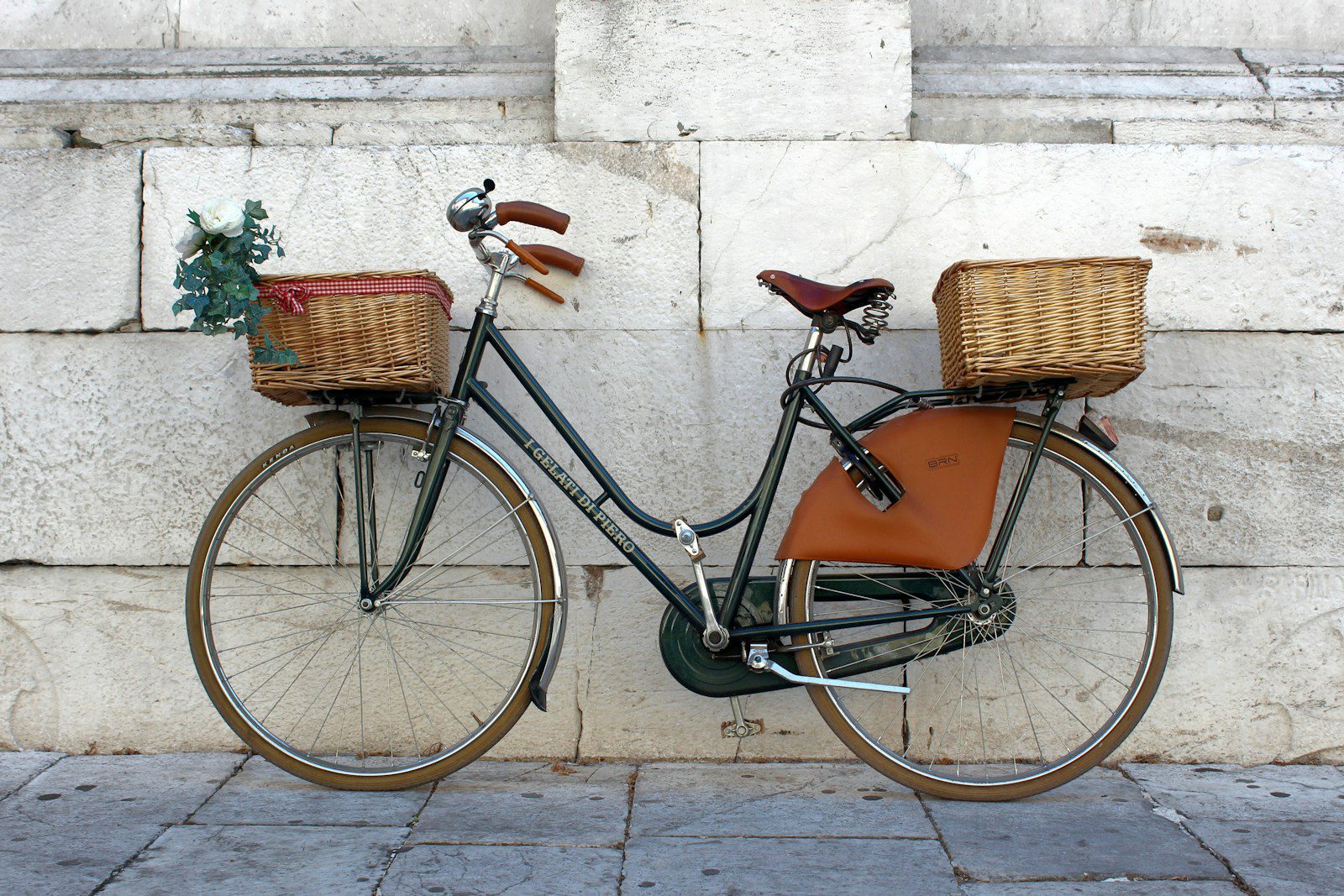
An old bicycle rusting in the corner of a garage is easy to assume is scrap metal, but certain vintage bicycle brands and styles, particularly those with original paint, decals, and unrestored components, have a dedicated collector following. Check the frame for a manufacturer’s badge, usually riveted to the tube below the handlebars, and for a serial number, which is often stamped on the underside of the frame where the pedal cranks attach or near the rear axle. Photograph both before you do anything else.
Completeness counts for a lot. Fenders, chain guard, rack, headlight, horn tank, original seat, and matching wheels are the parts that go missing, and each one is harder to replace than a tire or a chain. Avoid the temptation to repaint or heavily restore a bike before researching it, since originality often matters more to collectors than a fresh coat of paint. Sanding rust, stripping decals, and swapping in modern parts are the mistakes that cannot be reversed.