


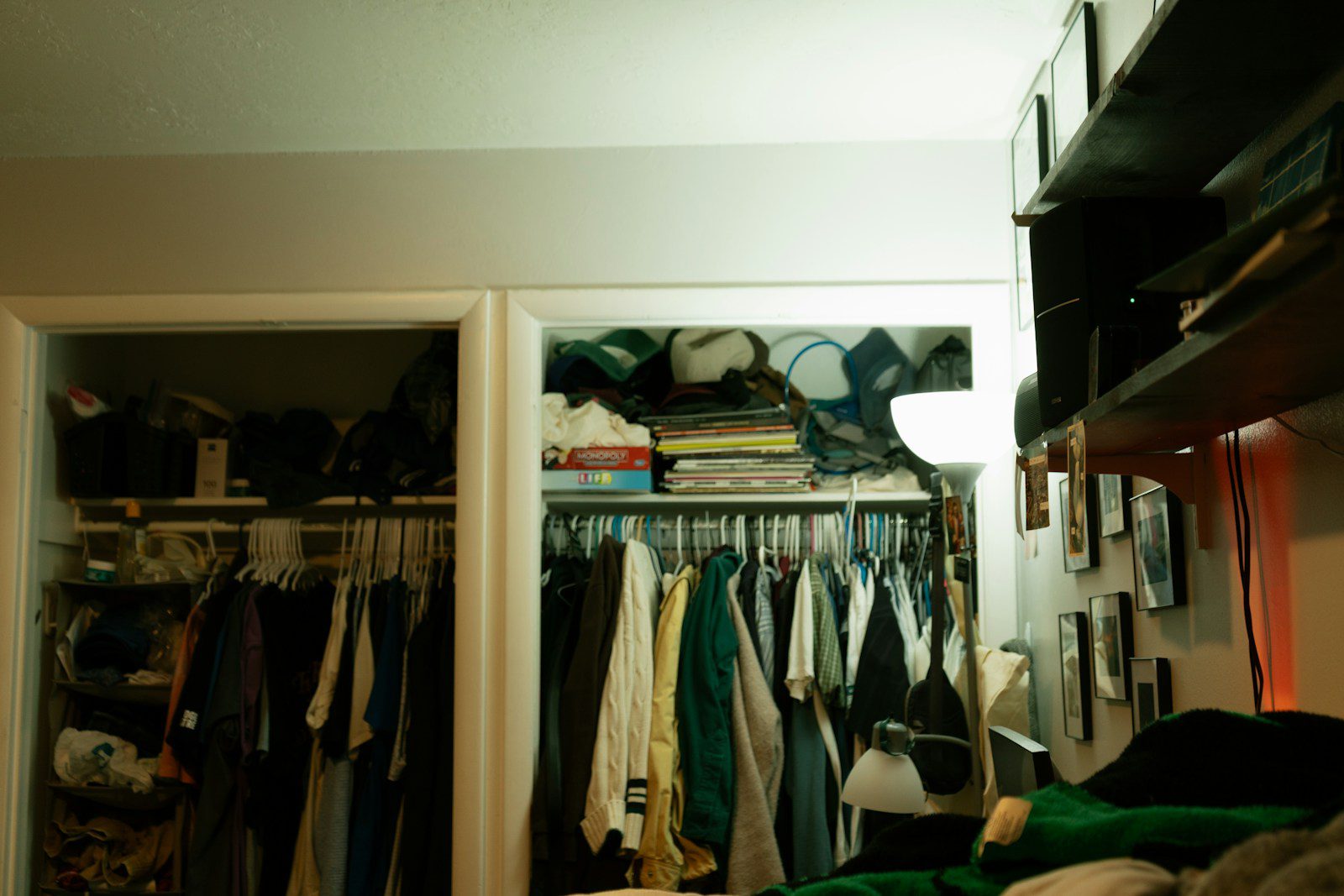
There’s a particular kind of clutter fatigue that comes from shuffling the same clothes around your closet season after season without ever actually wearing them. You push them left, then right, then to the back, then bring them forward again during a cleanout — but they never make it onto your body.
If your closet has become a rotation of things you move rather than wear, these nine categories are worth a hard, honest look.

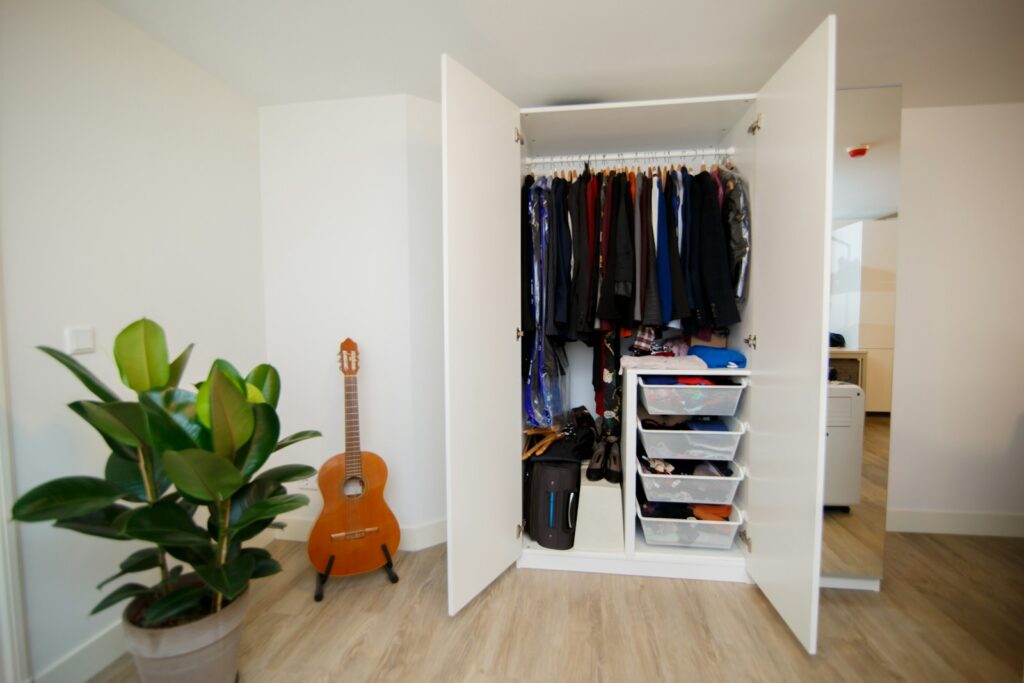
Clothes That No Longer Fit
Whether your body has changed or the item just never fit quite right, clothing kept “for when I fit into it again” often sits as a source of quiet guilt instead of motivation. Start with a quick try-on session in front of a mirror, and be specific about what is wrong. A waistband that digs in, buttons that gap, shoulders that pull and hems that ride up are all signs the piece will keep getting skipped. Sort what fails into two piles. The first is for things a tailor can fix simply, like a hem that needs taking up or a waist that needs taking in. The second is for things that would need rebuilding, which is rarely worth paying for. Keep a couple of true favorites if you like, stored in a labeled bin on a high shelf so they stop competing for hanger space. Clothes that fit the body you have now will always get more wear than clothes waiting for a hypothetical future.
Special Occasion Outfits From Events Long Past
A bridesmaid dress, a specific holiday outfit, or something bought for a one-time event tends to hang unused long after the occasion has passed. Ask two questions about each one. Is there a real date on the calendar when you would wear it again, and would you choose it over buying or borrowing something new? If both answers are no, it is just taking up hanger space. Formal wear is bulky, so a few gowns or suits can fill the room a dozen everyday pieces would use. Before you let a piece go, see whether part of it can join your regular rotation. A sequined top can work with jeans, and a suit jacket can be worn as a blazer. Consider consigning or donating pieces that are still in good condition. Buyers look for formal wear ahead of prom, wedding and holiday party seasons, so time it accordingly. Clean the garment first, check for deodorant marks and loose beading, and include any matching belt, wrap or garment bag.
Shoes That Hurt to Wear
Beautiful shoes that give you blisters within twenty minutes rarely become suddenly comfortable no matter how many times you try them again. Orthopedic surgeons back that up. The American Academy of Orthopaedic Surgeons’ shoe fitting guidance says not to buy a shoe that needs to be stretched or needs pads to stop your foot slipping, and it recommends half an inch of space between your longest toe and the tip of the shoe. Use that as your test at home. Put each questionable pair on late in the day, since the same guidance notes that feet swell as the day goes on, and walk around the house for ten minutes. Pay attention to both feet, because one is often slightly larger. Pairs that pinch, rub the heel or crowd the toes go in the donation bag. Wipe them down, tie or band each pair together so they stay matched, and donate them to someone whose feet might be a better match. Keep the shoes you reach for.
Clothes You’re Keeping Out of Guilt
An expensive item you regret buying, or a gift from someone that never suited your style, can linger in a closet purely out of guilt. The money is already spent either way. Keeping an unused item doesn’t get that value back, and it takes up space you could use for things you will wear. The IRS says in its guide to valuing donated property that used clothing is usually worth far less than you paid, and that its fair value is what buyers pay in consignment or thrift shops. So the loss happened at the register, not on the day you let it go. For a pricey mistake, try resale first and set a deadline of thirty days. If it has not sold by then, donate it. For a gift, remember that the giver wanted you to have something you would enjoy. Pass it to someone who will wear it, and keep the card or a photo if the sentiment matters.
Clothes You’re Saving for a Future Version of Yourself
Aspirational pieces bought with a specific goal in mind, such as a fitness milestone or a style change you keep meaning to make, often sit untouched because they don’t match your life as it is right now. This is different from clothes that used to fit. These were bought for a life you have not started yet: the blazer for a job you have not applied for, the hiking pants for trips you have not booked, the bold dress for a bolder version of you. Give each piece a concrete test. Name the next step that would put it to use and a date for taking that step. If you can’t name either, the piece is occupying space. A fair limit is one small group of aspirational items, kept together on a few hangers where you can see them. Review them when the seasons change. If you love the piece, keep it, but be honest about whether it’s motivating you or reminding you of a plan you have dropped.
Worn-Out Basics
Stretched-out t-shirts, thinning leggings, and stained basics tend to get shoved to the back instead of being replaced, because they still technically function. Check them in daylight. Hold leggings and tees up to a window to spot thin patches, and look at collars, underarms, cuffs and inner thighs for pilling, yellowing and holes. If the item has visible wear that makes it look tired instead of comfortably lived-in, it’s time to let it go. Keep it out of the donation bag, which is for clothes someone else can wear. Cut cotton tees into cleaning rags, or take the rest to a textile recycling program. It is worth the extra step. The EPA’s textile waste data shows landfills received 11.3 million tons of textiles in 2018, and the recycling rate for clothing and footwear was 13 percent. Then write down what you removed, such as three white tees or two pairs of black leggings, so you replace only what you used.
Trendy Pieces From a Passed Moment
A trend-driven item that felt essential a season or two ago can quickly feel dated once the trend moves on. The tell is how you treat it when you get dressed. You pull it out, hold it up, and put it back because it feels like a costume from a specific year. Try the three-outfit test before deciding. If you can build three outfits around the piece using things you already own and would wear this month, it has earned its hanger. If you can only make it work with other items you also never wear, it hasn’t. If you haven’t worn it in the current season and it doesn’t feel timeless to you, it’s a good candidate to pass along instead of hoping the trend cycles back. When a look does return, it usually comes back with a different cut, length or fabric, so the original rarely feels current the second time. Pass it along while someone else still wants it.
Duplicate Basics in Slightly Different Shades
Multiple black t-shirts or nearly identical cardigans in barely different shades tend to accumulate without anyone noticing. It happens because you can’t find the one you own, or it is in the wash, so you buy another. Pull every item in the category out at once and lay the pieces side by side on the bed. Line them up together and you’ll likely find you can consolidate to your two or three best versions. Compare them on fabric weight, neckline, length and how faded the color is. Fading shows clearly when dark shirts sit next to each other. Keep the ones you grab first when everything is clean. A workable number depends on your laundry routine: if you wash weekly, you need enough to get through a week and no more. Move the extras out, then store the keepers together in one spot so you can see at a glance what you own before you shop again.
Hangers Holding Nothing but Tags
Unworn items still sporting their original tags are some of the easiest closet decisions to make, even though they can feel the hardest emotionally because of the money spent. Start by working out why each one was never worn. Usually it was bought on sale, bought for an event that didn’t happen, or bought in a size or color that looked better in the store. If it’s been hanging tagged for over a year, it’s unlikely to suddenly become part of your rotation. Return it if you still can. Check the receipt or your order history for the purchase date, and look up the store’s return policy before assuming it is too late. If a return is off the table, an item with tags is a strong candidate for resale, since buyers can see it is unworn. Leave the tags attached and photograph them. Otherwise donate it so it gets worn by someone else, and note what triggered the purchase so you can catch it next time.