


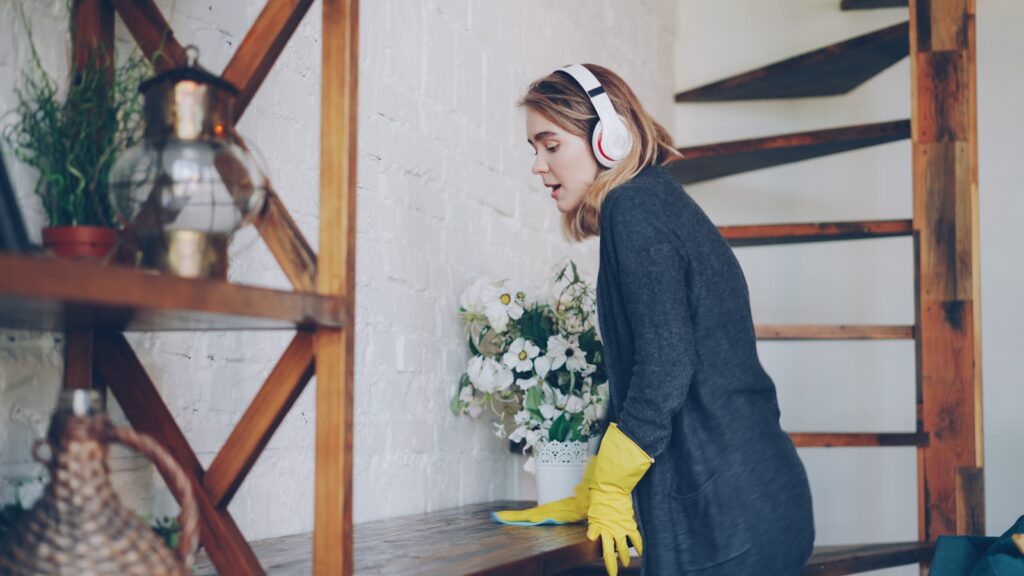


The spotless daughter and the hoarding mother
Mar describes keeping her home “very clean” because any hint of disorder triggers the dread she felt as a child. That reaction is well documented in clinical literature. Fugen Neziroglu, a psychologist who has treated hoarding cases for decades, has noted that adult children of hoarders frequently develop rigid cleaning habits or, conversely, replicate the chaos they grew up in, because they never learned what a baseline level of household mess looks like. In a Psychology Today overview, clinicians describe how these adult children often feel they were less important than the objects that filled their bedrooms, bathrooms, and kitchen tables, a sense of being physically displaced by a parent’s possessions.
Mar’s mother, meanwhile, reportedly uses her daughter’s home as a decoy. Whenever she cannot or will not open her own door to relatives, she tells them Mar’s place is too dirty for company. For a daughter who has spent years building the opposite of the home she grew up in, the claim is not just inaccurate. It recasts the one person trying to break the cycle as the source of the problem, while the hoard itself stays safely behind a locked door.
How hoarding rewires blame and loyalty
That blame-shifting is not unique to Mar’s family. In a Psychiatric Times review of the psychological toll on children raised in hoarded homes, researchers describe the household as an “ultimate uncontrollable environment” where children have no say over what enters the home, what leaves, or who is allowed to see the truth. As the disorder intensifies, family members report feeling “devalued, broken-hearted, angry, helpless, and exhausted,” and many say they feel “misunderstood, unloved, and judged” by extended relatives who never see behind the closed front door.
One of the most corrosive dynamics is the hoarder’s tendency to assign fault outward. In online communities where adult children compare notes, a recurring theme is the parent who accuses family members of moving, hiding, or stealing items that are simply buried in the hoard. One poster describes a mother who insists someone stole her clothes, even though no one else enters her room. Another writes that hoarders “always blame somebody” and almost never acknowledge the disorder itself, a pattern visible across dozens of accounts in forums dedicated to parents who blame their children for the state of the home. When Mar’s mother tells the family that her daughter’s house is the problem, she is running the same script: redirect attention, protect the hoard, and make sure the conversation never turns inward.
The long aftermath of growing up in a hoarded home
The shame that follows these children into adulthood is persistent and specific. Jessie Sholl, whose 2010 memoir Dirty Secret chronicled her childhood in her mother’s hoarded home, has described hiding her background from friends for years, convinced that the filth she grew up in said something permanent about her. In interviews, Sholl has talked about the shock of discovering that other children of hoarders carried nearly identical memories: blocked hallways, kitchens too cluttered to cook in, and a constant fear that someone from school might see inside.
Therapists who specialize in hoarding-related family trauma say that shock of recognition is often the beginning of recovery. Randy Frost, a Smith College psychologist whose research helped define hoarding disorder as a clinical diagnosis, has written that children raised in these environments frequently struggle with perfectionism, difficulty discarding objects, and complicated grief over a childhood home that was never truly livable. For someone like Mar, the compulsive cleaning is not just a preference. It is an attempt to prove, room by room, that she is not what the hoard made her.
That effort gets harder every time a parent rewrites the story. When Mar’s mother tells relatives the apartment is too messy for company, she is not offering a casual excuse. She is denying the reality her daughter lived through and still works to overcome. For the thousands of adults who share versions of this experience in support communities every week, the most painful part is rarely the clutter itself. It is the insistence, maintained for years or decades, that the clutter was never there at all.
Resources for adult children of hoarders
The Children of Hoarders website maintains peer support resources, reading lists, and links to therapists familiar with hoarding-related family dynamics. The International OCD Foundation’s hoarding center offers a provider directory and educational materials for families affected by the disorder.
More from Decluttering Mom: