


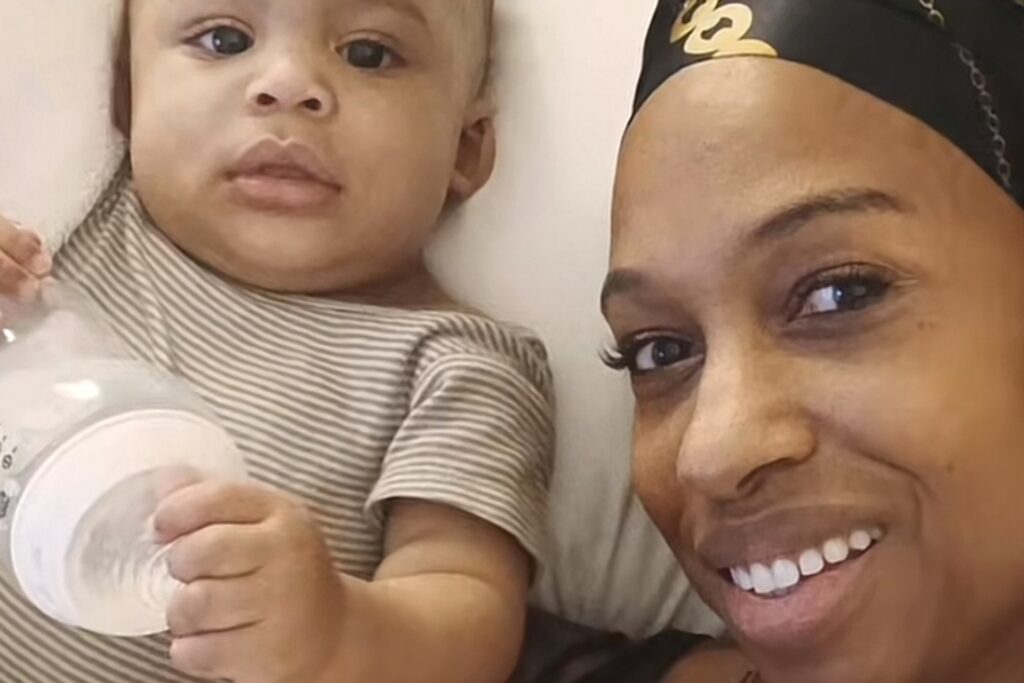
When a woman decides to become a first-time mother at 50, strangers often jump straight to judgment before they even ask how or why. For one British woman named KIA, the answer runs through embryo adoption, a path that let her carry a pregnancy herself while welcoming a child who was not genetically related to her. She insists that choosing midlife motherhood through donated embryos was not a selfish act, but the most grounded decision for her and the baby she longed for.
Her story sits at the intersection of medical science, ethics, and shifting ideas about what family can look like. It also shows how embryo adoption, which began as a quiet niche within fertility care, is becoming a practical option for people who feel caught between traditional adoption and more familiar fertility treatments.

The personal leap into embryo adoption at 50
KIA describes years of wanting a child and feeling that the right partner never quite materialized. Rather than give up, she turned to fertility treatment and ultimately chose to adopt an embryo that had been created by another couple and stored after their own IVF cycle. By the time she finally became pregnant, she was 50, an age that invites instant commentary about energy levels, life expectancy, and whether it is fair to a child. She pushes back on that script, arguing that her age came with stability, financial security, and a clear sense of why she wanted to parent, and that those factors mattered more to her than the number on her birthday cake, which was 50.
That confidence did not come out of nowhere. KIA points to years of reflection on what single motherhood would mean, along with conversations about the realities of older parenting. She also watched a broader cultural shift unfold in real time. Celebrities were quietly rewriting expectations about the upper limit for first-time mothers, and she noticed. When she saw Celebrities like Janet have children at 50 and 54, it signaled that later motherhood was no longer unthinkable. For KIA, those examples did not erase the risks, but they did make it easier to imagine a different timeline for family life that still felt legitimate.
Why embryo adoption appealed more than other routes
Embryo adoption offered KIA something she could not find in traditional adoption or egg donation. With a donated embryo, she could experience pregnancy and birth herself, including the prenatal bonding and physical milestones she had imagined since childhood. At the same time, she would be parenting a child who already existed in frozen storage, created by another family during IVF and now waiting for a chance at life. For people who feel uneasy about unused embryos remaining in limbo, that aspect can carry real emotional weight. Educational videos that walk through the pros and cons describe it as a middle ground between donor egg IVF and adopting an infant, a way to build a family while also resolving what can feel like an unfinished chapter for the original parents.
Cost and logistics also played a role. Embryo adoption is often framed as more accessible than starting a full IVF cycle from scratch or pursuing a lengthy domestic adoption. Advocacy groups point to Reduced Costs and as two of the biggest practical advantages. Oftentimes the total price comes in lower than traditional adoption, egg donation, or fresh IVF, and the matching process can move faster because the embryos already exist. For someone like KIA, who had already spent years watching the calendar, that combination of affordability and speed mattered. It meant she could move from paperwork to transfer without losing more time to long waiting lists or repeated, expensive cycles.
Older single motherhood and the quiet community behind it
KIA is not the only woman choosing midlife motherhood without a partner. In another widely shared story, a 50-year-old woman explained that she pursued an IVF pregnancy alone after what she described as a long run of romantic disappointment. She talked about always wanting to be a mom and about the shock of seeing a positive test after so many setbacks, describing how she had been really unlucky in love but unwilling to let that define the rest of her life. In that account, captured on video, the emphasis falls less on age and more on agency, the decision to stop waiting for the perfect relationship and instead build the family she wanted on her own terms.
Behind those individual stories sits a larger, quieter network of people navigating infertility, loss, and complicated choices. In one account from a fertility benefits platform, a woman named Noel described being on an infertility journey for five years and having already completed a round of IVF before finally moving forward with a different plan. Her experience, shared through Carrot support for, shows how long and draining the process can be before a family lands on something like embryo adoption. Many of those would-be parents connect through online platforms run by groups such as NRFA, which maintains member portals like NRFA accounts and social sharing tools that link to the Benefits of Embryo. That ecosystem gives older parents and single parents a way to compare notes, swap legal advice, and push back against the idea that there is only one acceptable script for starting a family.
More from Decluttering Mom: