


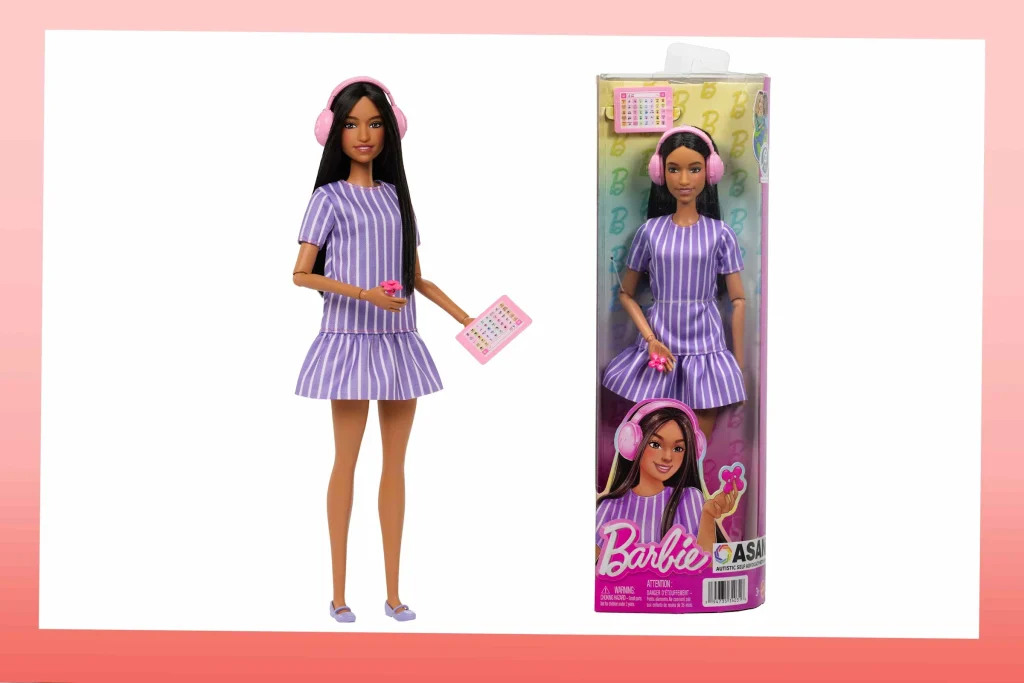
The first autistic Barbie has arrived, and for a lot of families it feels less like a new toy and more like a long overdue mirror. By putting autism spectrum disorder directly into its flagship lineup, Barbie is turning a plastic fashion icon into a shorthand for visibility, pride, and everyday understanding.
The launch is being greeted as a major milestone because it treats autistic kids not as side characters but as the main story. Representation is landing right in the toy aisle, where children make sense of who belongs in the world and who gets to be the hero.

Inside Mattel’s big autism moment
At the company’s headquarters in EL SEGUNDO, Calif, Mattel, Inc used its global spotlight to confirm that Barbie is now officially autistic, positioning the doll as part of a broader push to let more children “see themselves in Barbie.” The new figure is presented as a fully fledged character rather than a one off novelty, with Mattel, Inc, listed on NASDAQ, tying the move directly to its core brand strategy. Company leaders describe the autistic Barbie as part of a long term effort to normalize disability and neurodivergence through play, not a limited edition experiment.
The rollout is also carefully coordinated with autistic advocates rather than built in a corporate vacuum. Mattel worked with the Autistic Self Advocacy Network to shape the doll and its messaging, a partnership highlighted in coverage of where to buy the Barbie and how much it costs. That collaboration signals that the company is trying to move past surface level inclusion, listening to autistic people on what feels respectful, what feels stereotyped, and what kids actually need from a toy that claims to represent them.
Design details that actually listen to autistic people
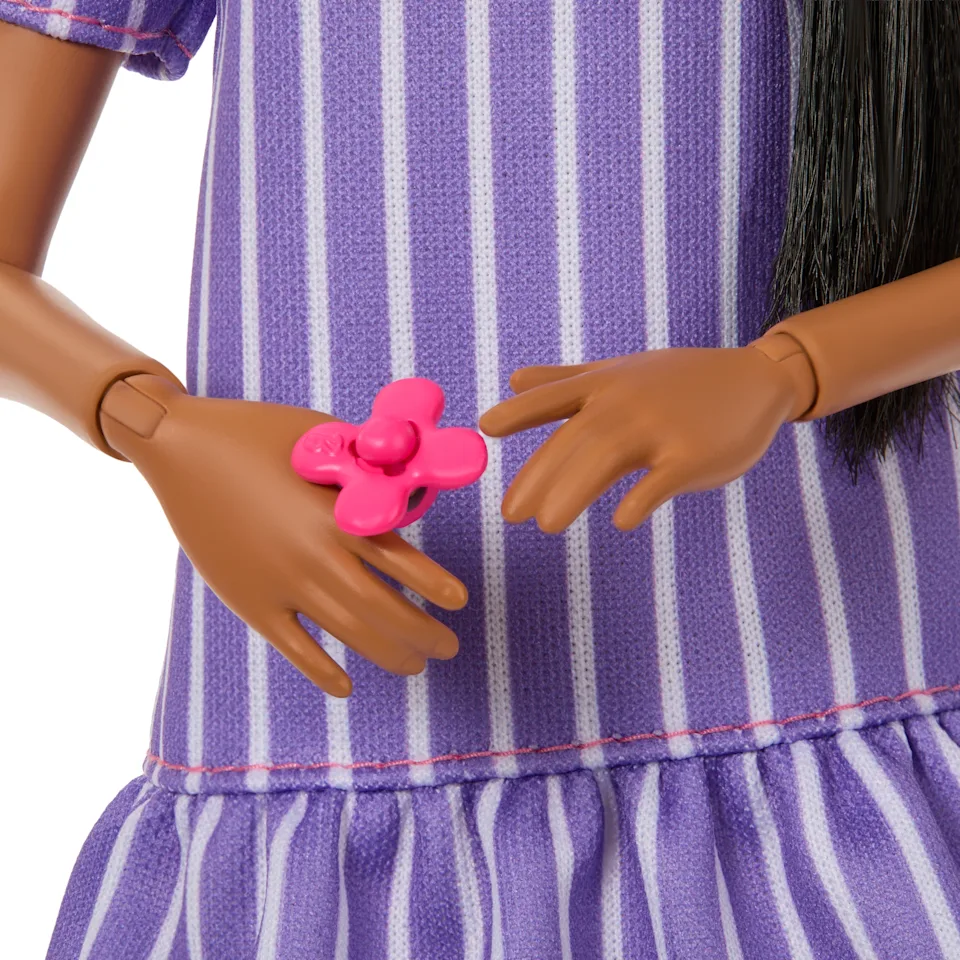
What makes this doll stand out is not just the label but the details that quietly nod to real autistic experiences. Reporting on the launch notes that Barbie is shown with tools like a fidget accessory and noise protection, items that many autistic people use to manage sensory overload in daily life, which are highlighted in breakdowns of the doll’s unique features. Those choices quietly tell kids that stimming and sensory supports are normal, not something to hide. The figure also joins a wider Fashionistas line that already includes a Barbie with Down syndrome and a Barbie representing a person with Type 1 diabetes, a progression that coverage of Down and other conditions frames as a deliberate expansion of who gets to be “fashionable.”
Clothing and texture are just as intentional. Her outfit is a loose fitting purple dress paired with flat shoes, a combination described as chosen with comfort and sensory needs in mind in reporting on how Her clothes were designed. Another account of the same doll stresses that the outfit is flowy and A line, again centering comfort over glam, and notes that the autistic Barbie comes with a fidget spinner and noise canceling headphones as part of a set of Barbie accessories. Those touches may look small on a shelf, but for kids who live with sensory sensitivities, they read as a rare sign that a mass market toy actually understands how their bodies move through the world.
Why families and advocates are calling it a milestone
Autistic adults and parents are not just applauding the doll’s existence, they are calling it a cultural marker. One advocate quoted in coverage of the launch says plainly that “representation is powerful and Barbie is an iconic toy,” adding that they hope autistic children feel pride when they see a Barbie that reflects their lives, a sentiment captured in analysis of how Barbie is broadening its stories. Another detailed rundown of the project notes that Mattel spent 18 months developing the autistic Barbie with input from autistic people and that the doll joins previous Fashionistas representing vitiligo, Down syndrome, and blindness, a set of Key Points that underline how long the company has been rethinking its lineup.
That is why groups that support autistic people are already talking about how the doll might show up in classrooms and therapy rooms as well as bedrooms. Reporting from EL SEGUNDO, Calif notes that the Toy maker Mattel is pitching the autistic Barbie as a way to spark conversations about how autistic people interact with the world, a framing that runs through coverage of the Toy and its impact. Another story from NEW YORK, where Mattel Inc is introducing the doll as the newest member of a line meant to capture a wide range of bodies and experiences, notes that the autistic Barbie is part of a push to make its fashion dolls more inclusive, a point underscored in coverage of the Mattel Inc strategy.
From toy shelf to everyday life
The autistic Barbie is not arriving in a vacuum, it is landing in a toy ecosystem where parents are already hunting for products that match their kids’ realities. Online listings for the new product are already circulating, and guides are walking shoppers through how to find the doll on mainstream shelves. One breakdown of where to buy it spells out that Mattel is working with the Autistic Self Advocacy Network and positions the autistic Barbie as a standard retail option, not a niche specialty item, in its overview of Mattel distribution. Another report notes that the autistic Barbie joins the Fashionistas collection alongside a Barbie with Down syndrome, reinforcing that this is now part of the default lineup, as detailed in coverage of how Fashionistas has evolved.
Advocates are also clear that the doll is not perfect, but they still see it as a turning point. One widely shared piece describes the Autistic Barbie doll launch as a “milestone” in representation and notes that the figure includes specific design choices that reflect experiences autistic people might relate to, a framing captured in analysis of the Autistic Barbie features. Another report by Aine Fox describes the Autistic Barbie doll launch welcomed as a “milestone” in representation and notes that autistic people were consulted on what features the doll should have, with the piece time stamped at 43 minutes past the hour and filed on a Sun evening in GMT, details that appear in coverage of Autistic Barbie reactions. For families who have spent years scanning toy aisles for someone who looks and lives like their child, that kind of mainstream validation is exactly why this small plastic figure feels so big.
Supporting sources: Untitled, Barbie® Introduces the, Barbie launches 1st, Barbie® Introduces the, Barbie launches first, New Barbie doll, New Barbie doll, Mattel launches first, First Autistic Barbie, First Autistic Barbie, Mattel introduces first, Mattel launches its, Mattel Unveils First, Mattel releases new, Autistic Barbie doll, Autistic Barbie doll.
More from Decluttering Mom: