

A baby named Bryson was born without hands, but that detail has never really gotten in the way of what he wants to try. After watching his mom play a drum, he figured out his own way to join in, turning a quiet family moment into a viral snapshot of pure determination. His story is simple, short, and loud in all the right ways, and it is reshaping how strangers think about limb difference, parenting, and what kids can do when nobody tells them they “can’t.”
Instead of being framed as a tragedy, Bryson’s life is unfolding as a kind of joyful experiment in possibility. His parents film the small wins, from standing up on his own to working those drumsticks with his arms, and the internet has responded with a mix of awe, encouragement, and a lot of self-reflection about what real limits look like.

The Moment Bryson Picked Up The Sticks
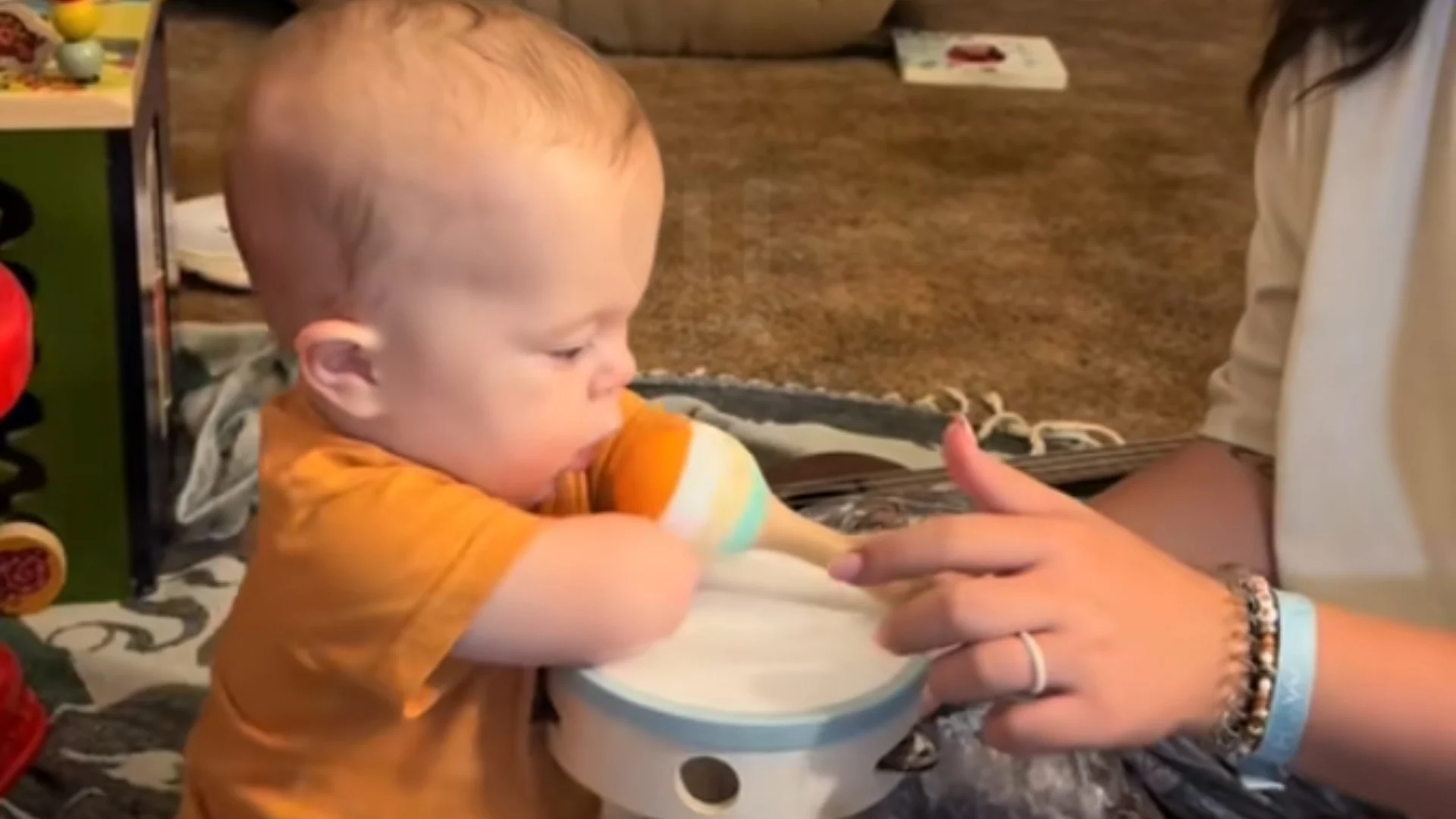
The heart of Bryson’s story is that first time he decided he was not just going to watch his mom play, he was going to play too. In the clip that has been shared across platforms, his mom is casually drumming when Bryson, who was born without hands, studies what she is doing and then leans in to copy the motion. He does not pause to calculate what is “supposed” to be possible for a baby with a limb difference, he just angles his arms, grabs for the sticks, and starts to hit the drum in his own way.
Viewers see a tiny kid who has every reason to be cautious instead choosing curiosity and rhythm. The narration in one short video spells it out plainly, describing how “this is Bryson born without hands but born with something even stronger determination,” as he watches his mom drumming and then joins in on the same set of drums, turning that living room into his first stage, a moment captured in a widely shared clip.
“Limb Difference” And What It Really Means For Bryson
In the coverage around Bryson, his condition is described as a “limb difference,” a phrase that sounds clinical until it is paired with his everyday reality. Bluntly put, that means his hands never fully formed, so he navigates the world with arms that end earlier than most people’s. The language might be medical, but the way his family treats it is anything but detached, they talk about it as one part of who he is, not the headline of his life.
Writers who have followed his journey point out that Bryson is just like any other kid, except he is not, because he has to figure out tasks like gripping, balancing, and playing in ways that most toddlers never think about. As he watched his mom hit the drum with the sticks, he did not see a barrier, he saw a pattern to copy, and that instinctive problem solving is exactly what one detailed profile of Bryson highlights as the core of his story.
Inside The Cox Family’s World
Behind the viral clips is a family that has chosen to live very publicly with a purpose. The Cox family introduces themselves openly on social media, explaining that they are here to share their journey, talk about limb difference, and show what day to day life looks like when your child’s body does not match the default image in most parenting books. They speak directly to the camera, not as polished influencers, but as parents figuring things out in real time.
In one video, they lay it out simply, “We’re the Cox family, and we’re here to introduce ourselves and share our journey with you,” with mom Bonnie sitting beside Tyler and their child, thanking viewers for the support they have received and inviting people into their world of appointments, milestones, and music. That introduction, posted on their account as part of a longer clip about limb difference awareness and even future Paralympics dreams, is captured in a TikTok where Bonnie and Tyler and their child sit together and frame Bryson’s story as a shared family mission, not a solo struggle.
From Watching Mom To Owning The Beat
What makes Bryson’s drumming moment so sticky in people’s minds is how quickly he moves from spectator to participant. At first he is just watching his mom tap out a rhythm, eyes locked on the sticks, body still. Then there is a visible shift, the kind of tiny decision kids make all the time, when he leans forward, reaches with his arms, and starts to imitate the motion he has been studying. The drum is not scaled down for him, the sticks are not specially adapted, yet he finds a way to make contact and create sound.
That sequence is described in detail in one account that notes how, as Bryson watched his mom hit the drum with the sticks, he decided he would do it too, a choice the writer flatly calls “determination.” His mom’s reaction is a mix of surprise and pride, because she had not expected him to pick it up so quickly, a reaction echoed in a separate write up that also emphasizes how one was more when he started drumming along.
“Kiddo There’s Nothing You Cannot Do”
Once the videos of Bryson drumming started circulating, the comment sections filled up fast, and the tone was strikingly consistent. People were not pitying him, they were cheering him on, talking directly to him through their screens. One follower summed up the mood with a line that has been quoted repeatedly, “Kiddo there’s nothing you cannot do,” a simple sentence that lands differently when you are watching a baby without hands slam out a beat like it is the most natural thing in the world.
Another viewer tried to explain why the clip hits so hard, writing that he does not know he “can’t do” something, so he just does it, a reminder that a lot of limits are learned rather than built in. Those reactions are captured in a feature that pulls together the most telling comments, highlighting how strangers are using Bryson’s video as a mirror for their own excuses and fears, and that piece links directly to the original post about an inspiring baby with a limb difference who is learning to drum without hands.
Standing Tall: Bryson’s Other Big Milestones
The drum is not the only place Bryson is rewriting expectations. In another viral moment, his parents filmed him standing himself up, all by himself, using his legs with a confidence that caught even them off guard. The caption spells out their amazement, saying he is so good with these legs that it is blowing them away, a mix of pride and disbelief that any parent of a fast developing toddler would recognize instantly.
In that same clip, the family leans into their casual, chatty style, with a voice greeting viewers, “What’s up guys? It’s Bryson. Welcome,” before the camera cuts to his latest feat and then signs off with a warm “Night everybody.” The reel, which shows Bryson’s balance and strength as he stands and moves, is shared on an Instagram reel that treats his limb difference as a given and his progress as the real headline.
Why These Short Clips Hit So Hard
Part of the reason Bryson’s story has traveled so widely is that it fits perfectly into the language of short form video. The clips are quick, visually clear, and emotionally direct, a baby without hands drumming or standing is instantly understandable without any narration at all. In a feed full of polished dance trends and product hauls, a raw moment of a child figuring out his own body cuts through the noise.
The drumming video in particular has been reposted across platforms, including a YouTube Short that introduces him with the line about being born without hands but with stronger determination, then shows him watching his mom and joining in on the same drum. That short, which has been shared as a standalone YouTube clip, sits alongside other snippets of his life, and together they build a narrative that is less about a single viral moment and more about a kid steadily expanding what his body can do.
Changing How People See Disability
For many viewers, Bryson is their first real look at limb difference outside of a medical context, and that matters. Instead of charts and diagnoses, they see a baby banging on a drum, a toddler standing up, parents laughing in the background. The disability is visible, but it is not the only thing in the frame, which quietly challenges the idea that a body like his is defined only by what it lacks.
Writers who have followed his journey emphasize that he is “just like any other kid, except he isn’t,” a framing that holds both truths at once, he faces real physical differences, and he also loves noise, movement, and attention like any other child. One detailed piece about his decision to drum after watching his mom underlines that as he watched her hit the drum with the sticks, he simply decided he would too, and that choice, captured in a story that has been widely shared, is what is slowly nudging viewers to rethink what disability looks like in everyday life.
What Bryson’s Beat Means For Other Families
For parents of kids with limb differences, stories like Bryson’s are more than feel good content, they are a kind of roadmap and reassurance. Seeing the Cox family talk openly about appointments, adaptations, and big dreams, while also posting silly drumming videos, sends a clear message that there is room for both realism and joy. When Bonnie and Tyler sit together and say they are grateful for the support they have received, they are also signaling to other parents that they do not have to walk this path alone.
That is why the Cox family’s introduction, where they explain that they are here to share their journey and raise awareness, lands so strongly with viewers who might be watching from hospital waiting rooms or therapy lobbies. Their TikTok about limb difference awareness and Paralympics hopes, which features the line “We’re the Cox family, and we’re here to introduce ourselves and share our journey with you,” has become a touchpoint for families looking for community, and it sits alongside the drumming and standing clips as part of a growing archive of moments that say, in different ways, that kids like Bryson are not defined by what they are missing, but by what they decide to try next.
More from Decluttering Mom: