Of the 17 million tons of textiles Americans threw away in the most recent year the EPA tracked in detail, 11.3 million tons went straight into a landfill. Only 14.7% got recycled in any form, according to the EPA’s own Facts and Figures report. That means the bag of old clothes sitting by the front door, the one bound for a donation bin with the comforting assumption that someone else will wear it, is statistically far more likely to end up buried than folded into another closet.

The Number That Undercuts the Donation Story
Textiles made up 5.8% of everything Americans generated as municipal solid waste that year, and 7.7% of everything that ended up in a landfill specifically, per the EPA’s national breakdown. Only 2.5 million tons were recycled in any form, while another 3.2 million tons were combusted for energy recovery rather than reused. The comforting mental model, that a garment either gets worn again or gets recycled into something useful, doesn’t match what actually happens to the bulk of America’s discarded clothing.
Where the “It’ll Get Reused” Belief Comes From
The used-clothing industry does have real capacity to reuse and recycle textiles, which is part of why the donation instinct isn’t baseless. The Secondary Materials and Recycled Textiles Association, the trade group representing textile recyclers, estimates that of what actually reaches their processing channels, roughly 45% gets resold as wearable clothing, another 30% is downcycled into industrial wiping and polishing cloths, and about 20% becomes fiber for insulation, carpet padding and similar products. On paper, that adds up to a system capable of reusing nearly all of what it receives, and the same group estimates textiles and clothing still make up about 81 pounds of trash thrown away per person, per year, in the United States.

The Gap Between What’s Recyclable and What’s Recycled
The disconnect isn’t that clothing can’t be reused, it’s that most discarded clothing never reaches those specialized recycling channels in the first place. A garment that’s stained, torn, or simply not in demand at a donation center’s local market often gets diverted before it ever reaches a sorter who could route it toward resale, wiping-rag production or fiber recycling. Once it’s mixed into general trash or rejected at the donation point, it becomes part of the 11.3 million tons landfilled rather than the roughly 2.5 million tons that actually get recycled. The theoretical recyclability of a shirt and its real-world fate are two different statistics, and the EPA’s landfill number reflects the latter.
What This Means for the “Just Donate It” Instinct
None of this means donation bins are pointless. It means the decluttering advice to “just donate it and stop worrying” oversimplifies where clothes actually go once they leave a closet. Donation centers routinely receive more clothing than local resale markets can absorb, and items that don’t sell within a set window are frequently baled and shipped overseas, downcycled, or discarded, none of which matches the mental image of a garment finding a new owner in the same city.
A Better Way to Declutter a Closet
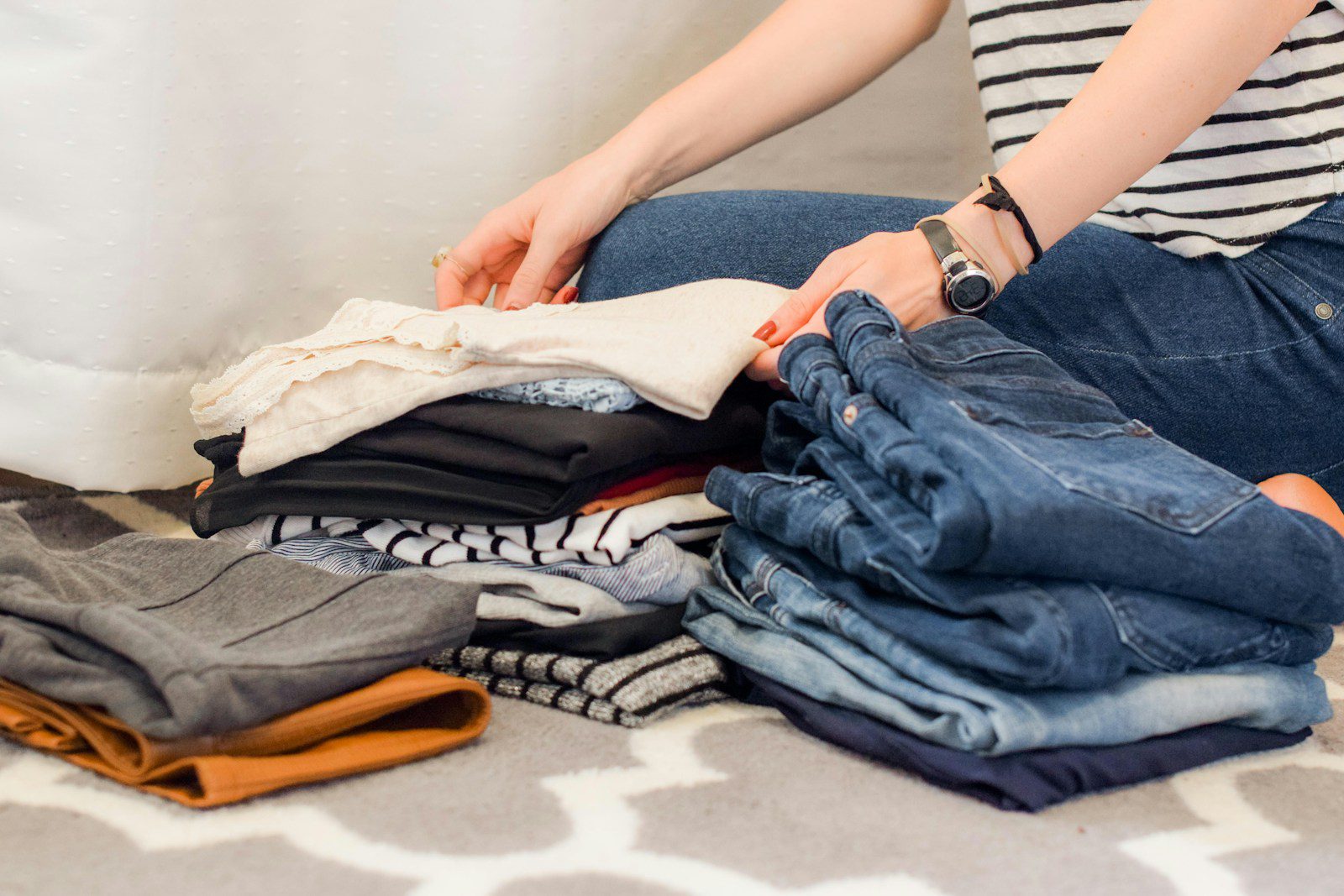
Homeowners trying to clear out clothes with a lighter environmental footprint have better options than a single anonymous donation bag. Textile-specific recycling programs, sometimes run through municipal waste departments, accept torn or stained items that donation centers would otherwise reject, routing them toward the wiping-cloth and fiber-recycling channels the industry already has in place. Consignment shops and resale apps handle wearable items directly, cutting out the sorting bottleneck entirely. And buying less in the first place remains the only step that reduces the 17-million-ton starting number rather than just reshuffling where those tons end up.
The Uncomfortable Bottom Line
The EPA’s data doesn’t say clothing donation is a scam. It says the assumption behind it, that a bag left by the door is basically the same as a bag safely diverted from a landfill, isn’t supported by the national numbers. Only about one in seven tons of textile waste actually gets recycled, and the rest is buried at a rate that hasn’t moved much in years. For anyone decluttering a closet this fall, that gap between intention and outcome is worth sitting with before the bags go out the door, and it’s worth asking a donation center directly what happens to items that don’t sell, rather than assuming the bin is the end of the story.