

You can stop towels from turning musty by storing them so they dry quickly and get plenty of air. Use open shelving, vented cabinets, or a wide towel bar placed where humidity clears fast so towels spend less time damp and more time fresh. Simple changes in where and how you hang or fold towels prevent mildew and keep the whole bathroom smelling clean.
Think about airflow and space when you plan towel storage: single-layer hanging, slatted shelves, or a folding drying rack all speed drying and cut mold risk. Combine practical storage with small habits—run the fan after showers, avoid stacking damp towels, and let clean towels fully dry before folding—to lock in freshness longer.
Practical Towel Storage Solutions for a Fresh Bathroom
Keep towels dry, accessible, and separated by use to prevent mildew and odors. Prioritize airflow, easy laundering rotation, and storage that keeps clean and used towels distinct.
Choosing the Right Towel Storage Ideas for Your Space
Pick towel storage that fits the room size and your routine. In small bathrooms, use narrow vertical shelving or a slim linen cabinet to store folded bath towels and spare hand towels without blocking traffic. In larger bathrooms, designate one shelf or basket per person so you can rotate linens and clearly separate clean from used items.
Materials matter: choose metal or coated wire shelves, ventilated baskets, or open wood with gaps to allow airflow. Avoid enclosed, damp cupboards unless they have vents. Measure before you buy: the average folded bath towel stack needs about 12–14 inches of shelf depth. Labeling baskets or using different colors helps you keep clean towels distinct and speeds up laundry cycles.
Wall-Mounted Options: Shelves, Hooks, and Racks

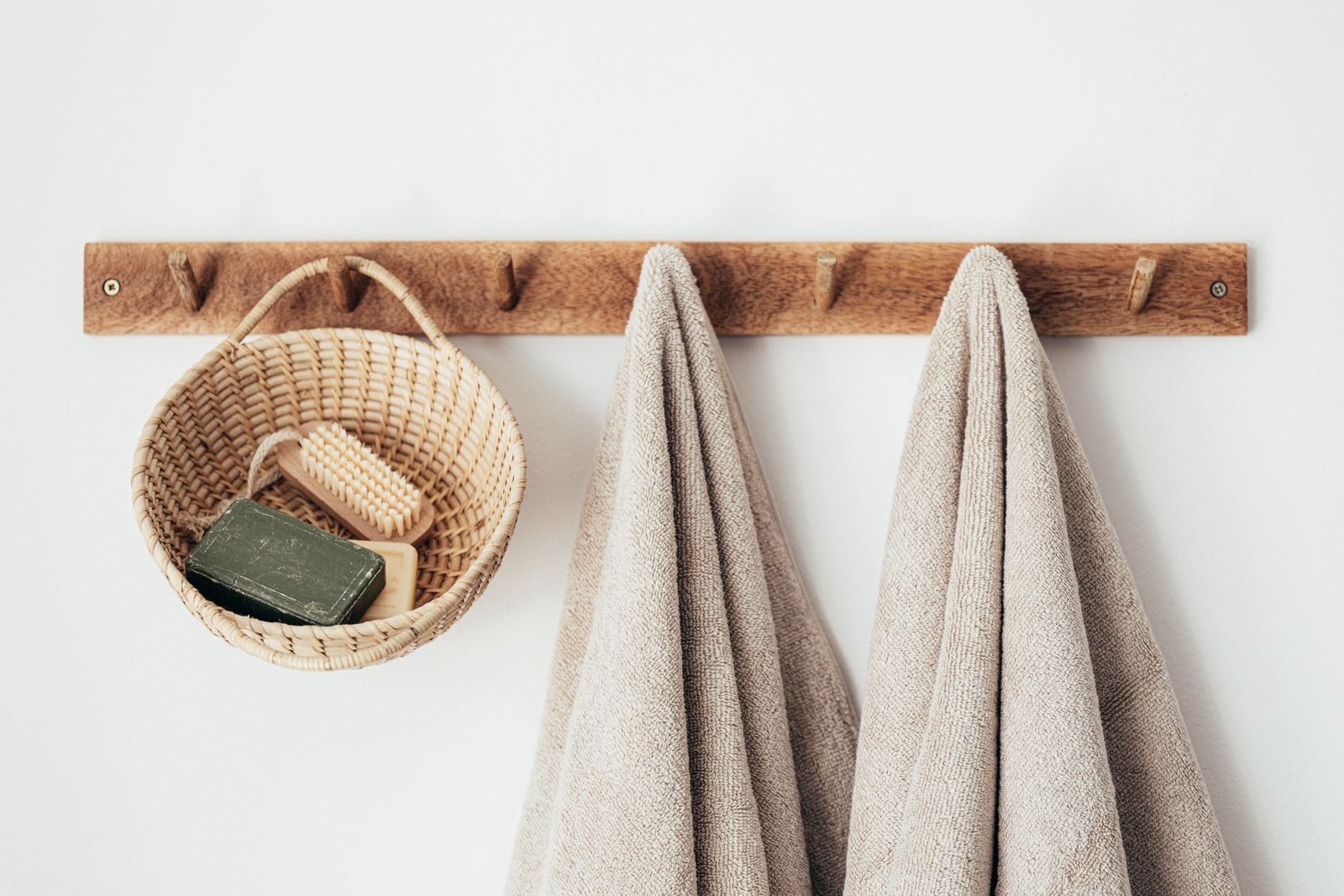
Wall-mounted solutions save floor space and encourage fast drying. Install towel bars or racks at 48–52 inches for adults, and add a lower hook or ring for children’s towels. Use multi-bar racks or double rails to spread towels flat — this reduces moisture buildup and mildew.
Hooks and towel rings work well for hand towels and used bath towels when paired with open shelving for spares. Choose rust-resistant finishes (stainless steel, brass with lacquer) in humid bathrooms. For over-the-door or cabinet-top bars, ensure they clear door movement and won’t pinch fabric. If you need visual order, combine a narrow open shelf above hooks to store folded towels and keep the wall tidy.
Modern Ladder Towel Rack and Towel Ladder Alternatives
A ladder towel rack gives you vertical storage without drilling multiple holes. Leaned ladders let you drape towels on separate rungs so each towel gets air on both sides, which aids drying. Choose a metal ladder for tight bathrooms or a treated wood ladder for a warmer look.
If you can’t lean a ladder, install a wall-mounted towel ladder or a compact tiered rack that provides the same staggered rungs. For renters, consider a freestanding towel ladder that fits behind a door or next to the vanity. Keep at least 2–3 inches between rungs for airflow, and rotate the top and bottom rungs regularly to avoid damp spots.
Creative Rolled Towel Display and Open Storage Concepts
Rolled towel displays look tidy and double as quick-access storage for guests. Use cubby shelving, woven baskets, or recessed niches to stack rolled washcloths and hand towels. Rolling reduces visible clutter and encourages you to store only what you’ll use frequently.
Open storage—like floating shelves, glass-front cabinets, or under-sink cubbies—works when you prioritize airflow. Place used-towel hampers out of the display area to avoid mixing clean and dirty linens. For a spa-like touch, keep a labeled basket for guest towels and a separate ventilated bin for laundry; this preserves freshness and simplifies restocking.
Tips to Stop Towels From Smelling and Extend Freshness
Keep towels fully dry between uses, store them where air can circulate, and use simple tools that speed drying and reduce bacteria growth.
Proper Drying and Airflow Strategies
Always shake out your towel after use to separate fibers and speed evaporation. Hang towels flat and spread out on a bar or over a wide towel rack so each square inch gets airflow. Avoid folding damp towels on a towel shelf or in a heap; trapped layers stay wet and encourage mildew.
Run the bathroom fan during and for 15–30 minutes after showers to lower humidity. If your bathroom lacks ventilation, open a window or keep the door ajar to let moisture escape. For small bathrooms, add a small circulation fan or a dehumidifier to maintain relative humidity below 50%.
If you hand towels stay damp frequently, swap them to a heated towel rack or a drying rack outside the bathroom between uses. Microfiber towels dry faster than thick terrycloth; consider them if drying time is a persistent problem.
How to Store Damp Towels to Prevent Mildew
Never put a towel away until it feels bone-dry. Folded towels retain any leftover moisture; instead, store only fully dry linens in cabinets. If you must store towels in a bathroom cabinet, leave the door cracked or install louvered doors to allow airflow.
Use hooks for active towels so they hang in a single layer; towel hooks and multi-rod towel racks reduce folds and speed drying. For short-term storage between uses, a ventilated basket or open shelving works better than a closed bin. Rotate towels frequently so the same items aren’t left unused for long periods.
For long-term storage, add silica gel packets or a small moisture absorber to the linen closet. Avoid plastic bags or airtight containers for towels, as they trap humidity and encourage mold growth.
Boosting Drying Power: Using Wool Dryer Balls and More
Wool dryer balls reduce dryer time by separating towels and improving hot-air circulation inside the drum. Toss in two or three balls with a medium load to shave several minutes off drying cycles and reduce musty odor risk. Replace balls when they become flattened or heavily felted.
Combine dryer balls with a 10–20 minute high-heat finish for thick towels, then remove and hang briefly to cool and re-fluff. Don’t overuse fabric softener; it leaves residue that decreases absorbency and increases drying time. Instead, add a half-cup of white vinegar during the wash to remove residue and neutralize odors.
For stubborn dampness, run a short re-dry cycle with just the towels and wool balls, or air-dry on a folding drying rack in a well-ventilated room. Portable towel warmers can also speed drying for single towels while doubling as a storage solution that keeps them ready and fresh.