

Twenty four days into motherhood, a new mom sat down to narrate her morning routine with her newborn, and most of it boils down to one running joke: the baby monitor has become an unreliable narrator of her own daughter’s life. She describes glancing at the screen, seeing movement or hearing a rustle, bolting across the house convinced her baby is awake, and arriving to find her still sound asleep, exactly where she left her minutes earlier.

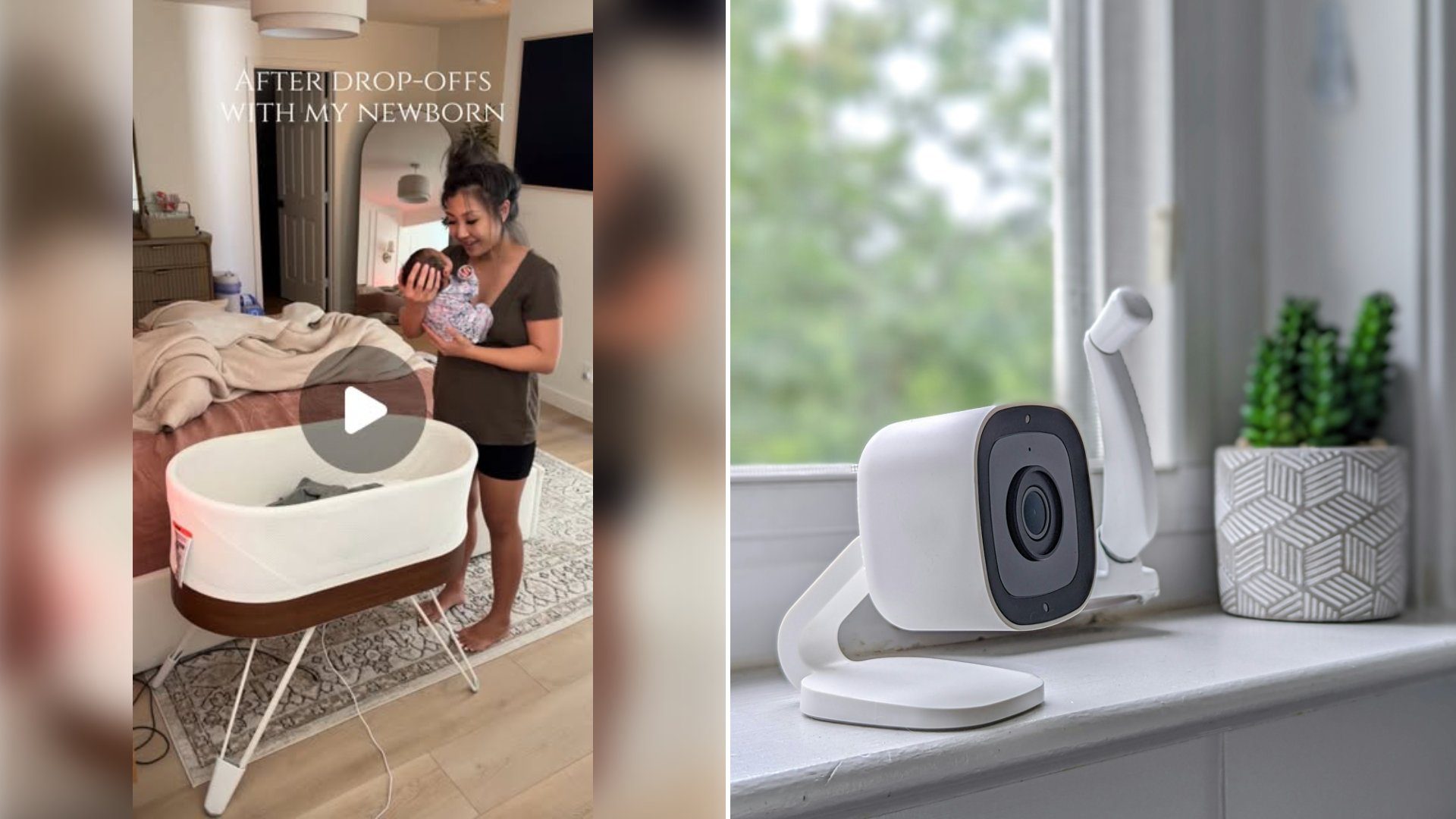
The creator, @jamiesyang, films the whole thing with the slightly delirious humor unique to the first month postpartum — she’s laughing at herself, but it’s the laugh of someone who has genuinely lost count of how many times she’s sprinted down a hallway for nothing. Viewers in the comments recognized the exact scenario immediately, several admitting they’ve done the same sprint for a monitor glitch, a sibling walking past the camera, or simply their own anxious brain filling in a sound that wasn’t there.
What’s happening to her isn’t a malfunctioning monitor so much as a malfunctioning sleep cycle, and the data backs up just how disorienting the first month really is. Research on postpartum sleep consistently finds that new mothers lose roughly the equivalent of one to two hours of nightly sleep compared to before pregnancy, and that loss is heavily fragmented rather than consolidated — meaning it’s not just less sleep, it’s sleep broken into unpredictable stretches of 90 minutes or less for weeks at a time. Newborns typically wake every two to three hours around the clock to feed in the first month, since their stomachs are small and breast milk or formula digests quickly, which means there is effectively no such thing as a full, uninterrupted night yet.
That level of chronic interruption does something measurable to the brain beyond ordinary tiredness. Sleep-deprived parents commonly report heightened startle responses and a kind of hypervigilance toward their baby — the brain stays partially on alert even during the moments it does get to rest, scanning for any sign the baby needs something. A rustle on a monitor speaker, a shadow crossing the screen, even static, can trigger that alert system exactly the same way a real cry would, because the nervous system of a new parent is primed to treat any ambiguous signal as urgent. It’s not that she’s imagining things; it’s that her brain, running on fragmented sleep, is doing exactly what it’s built to do during this stretch — erring hard on the side of checking rather than missing something.
A few adjustments tend to help parents in that exact first-month fog, even though nothing fully fixes it until the baby’s sleep naturally consolidates around three to four months. Switching a monitor’s sensitivity settings down slightly, if the device allows it, can cut back on false alarms triggered by normal background movement or noise. Splitting monitor duty with a partner or another caregiver for defined blocks — even two or three hours at a stretch — gives one adult’s nervous system an actual chance to power down instead of staying on alert nonstop. And simply naming the pattern, the way this mom does on camera, matters more than it sounds like it should; recognizing “this is my sleep-deprived brain, not an emergency” can shorten the panic response the next time the monitor does something ambiguous.
The video works because it isn’t dramatizing new parenthood — it’s just logging one small, specific, repeated absurdity that almost nobody warns new parents about before they live it. The monitor isn’t broken. Her exhausted, hyper-alert brain is doing exactly what twenty four days of fragmented sleep trains it to do, and she’s choosing to laugh about the sprinting instead of just quietly losing her mind over it.
More from Decluttering Mom
- Mom Says She Was Already in Early Labor While Filming Herself Caring for Her Baby Chicks and Did Not Realize It Until Hours Later, Then Shares How Her Unmedicated Midwife Birth Went
- Mom Lying in a Hospital Bed Beside Her Newborn Twins Looks at a Photo of Her Toddler on Her Phone and Says No One Prepared Her for the Grief of Her Firstborn Not Being Her Baby
- Mom Says She Called Her Husband Crashing Out After Waking Up Soaked, Then Held Up a Screw She Found on the Sheets and Reset the Whole House on Day 2 of 17