


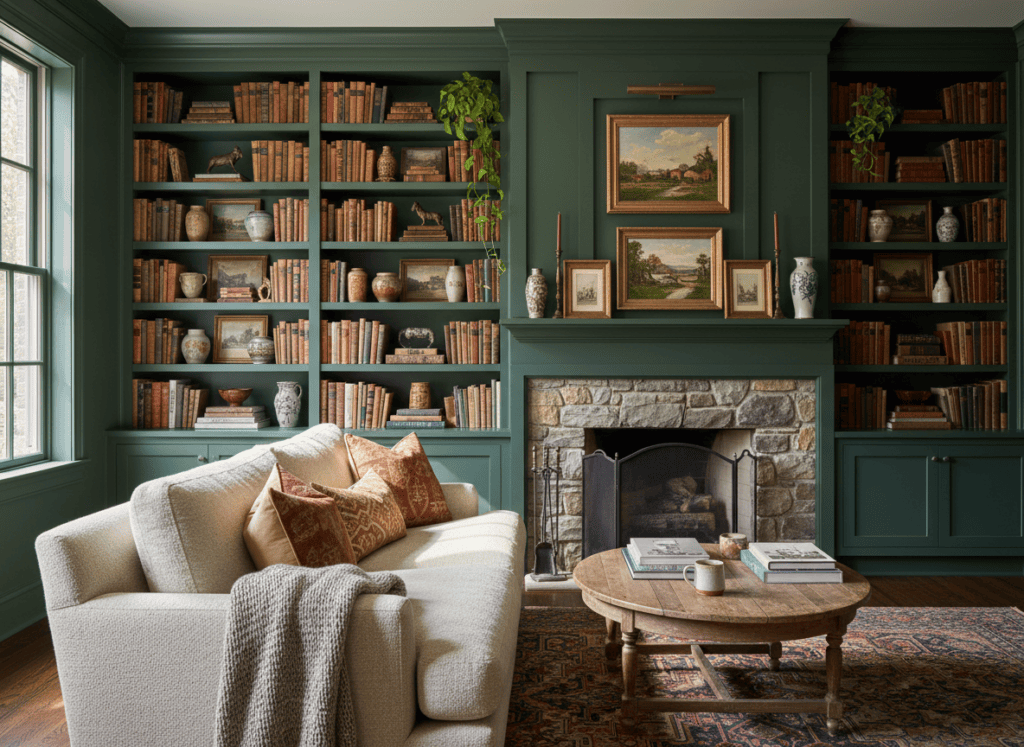
Ask a designer what clients are requesting for their living rooms right now and a surprising number will say shelving before they say paint, art, or furniture. Built-in bookshelves — the kind framed into the wall on either side of a fireplace or window rather than bought as freestanding furniture — are showing up in more renovation requests, and the shift is less about how many books a household owns than about what a permanent, architectural feature does for a room that a temporary accent wall can’t.
What’s Actually Driving the Numbers
The clearest data point comes from character and provenance, not book counts. 1stDibs’ 2026 interior design trends survey found that 63% of designers now regularly work with antiques predating 1920, up from 56% just a year earlier, and that 85% of designers are incorporating vintage pieces into projects overall. That swing toward collected, layered-looking interiors is the same instinct pushing built-ins over accent walls: both are attempts to make a room look like it has history, but only one of them actually gains function and resale-relevant square footage while it does it.

Why This Is Replacing the Accent Wall
Accent walls had a good run because they were fast and cheap: paint one wall a bold color, add some peel-and-stick wallpaper or a slab of shiplap, and a room reads as “designed” without touching the layout. But an accent wall doesn’t do anything besides look at you. A built-in does the same visual job of drawing the eye to one wall and giving a room a focal point, while also adding real storage and display space that a flat painted surface never could. Interior designer Meg McSherry, writing for Homes & Gardens, described the appeal directly: built-in shelving “instantly creates character and brings a sense of intimacy to a room, plus who doesn’t love extra storage?” That combination — character plus function — is difficult for a painted wall to compete with once a client is comparing the two side by side in a renovation budget.
It Was Never Really About the Books
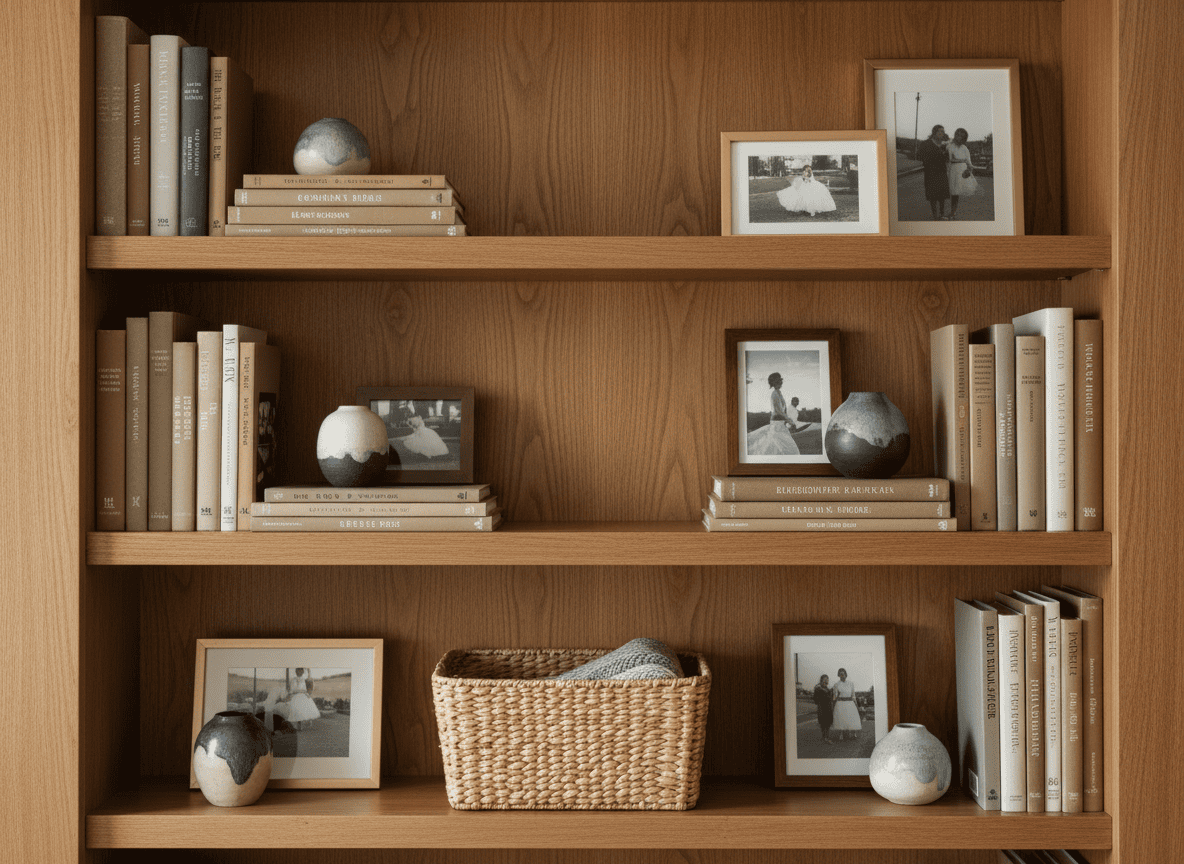
Walk into most of these newly built-in living rooms and the shelves aren’t dominated by novels stacked spine-out. They’re doing double duty as display cases: framed photos, ceramics, small sculptures, a scattering of design books turned cover-forward rather than shelved for reading, woven baskets hiding the household’s actual clutter on the lower shelves out of eye line. Designers refer to this styling approach as creating “vignettes,” and it explains why a household that owns maybe thirty books total can still fill a wall of built-ins convincingly. The shelving is a display system for a curated version of the room’s personality, and books are just one prop among several rather than the entire point.
What Homeowners Are Actually Paying For
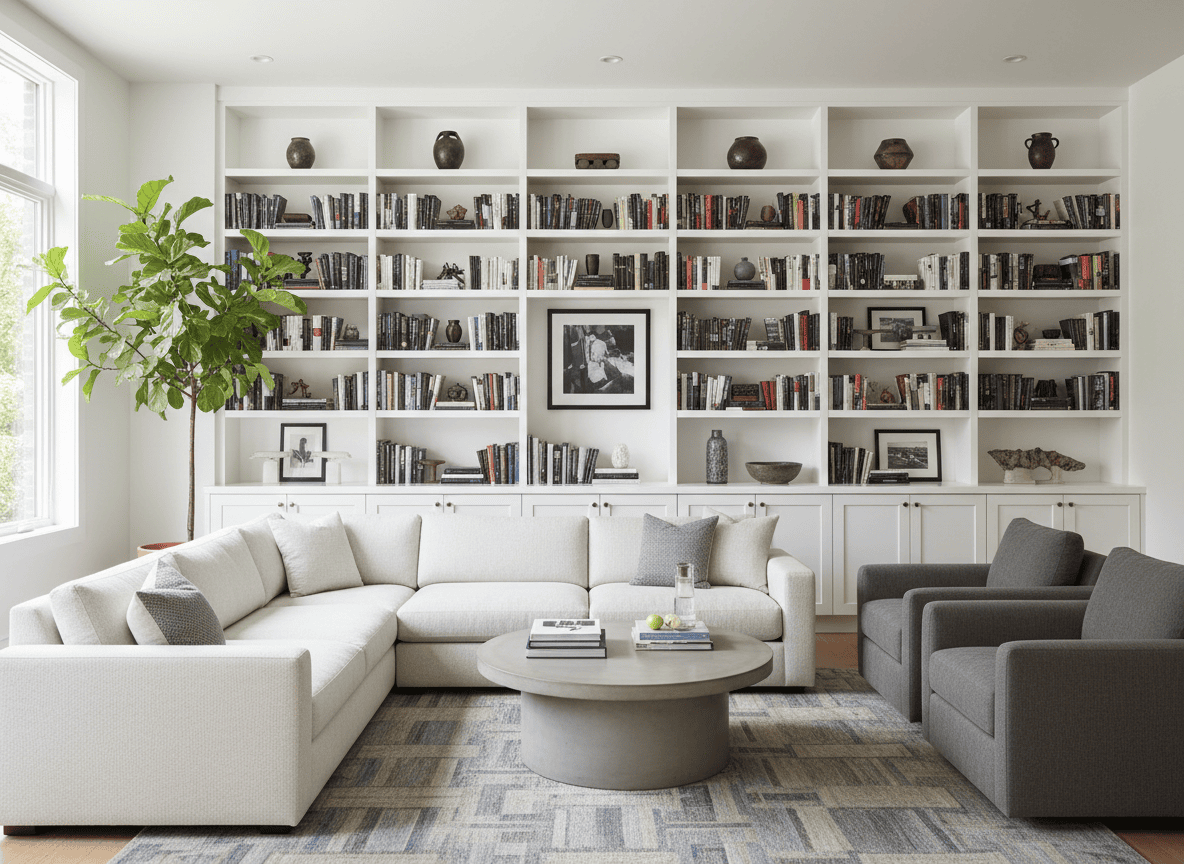
Because a built-in is constructed into the wall rather than applied to its surface, it reads to buyers and appraisers as part of the house’s permanent architecture rather than decor a new owner might rip out. That’s a meaningful distinction from an accent wall, which can look dated or overly personal within a few years and typically gets painted over by the next owner. A carpenter-built shelving unit, by contrast, tends to get restyled rather than removed, which is likely part of why designers are steering clients toward the more expensive, more permanent option even when a can of paint would technically solve the same “boring blank wall” problem for a fraction of the cost.
The Color Choices Are Doing Extra Work Too
Part of why built-ins photograph so differently from a decade ago comes down to paint. White built-ins used to be the automatic choice because they blended into a room instead of competing with it. Now designers are painting the interior backs of the shelving units — and sometimes the entire unit, trim included — in a saturated color: deep forest green, ink navy, warm terracotta-adjacent clay tones. That colored backdrop makes whatever sits on the shelves pop visually the same way a gallery wall uses a dark paint color to make framed art stand out. It also means the shelving unit itself functions as the room’s statement color choice, which is precisely the job an accent wall used to have before the shelves took it over.
The Bigger Picture
A blank wall and a bold paint color used to be the fastest way to make a living room look finished. Now the room that reads as finished is the one with shelving built into its bones, whether or not anyone in the house has cracked a book in months.