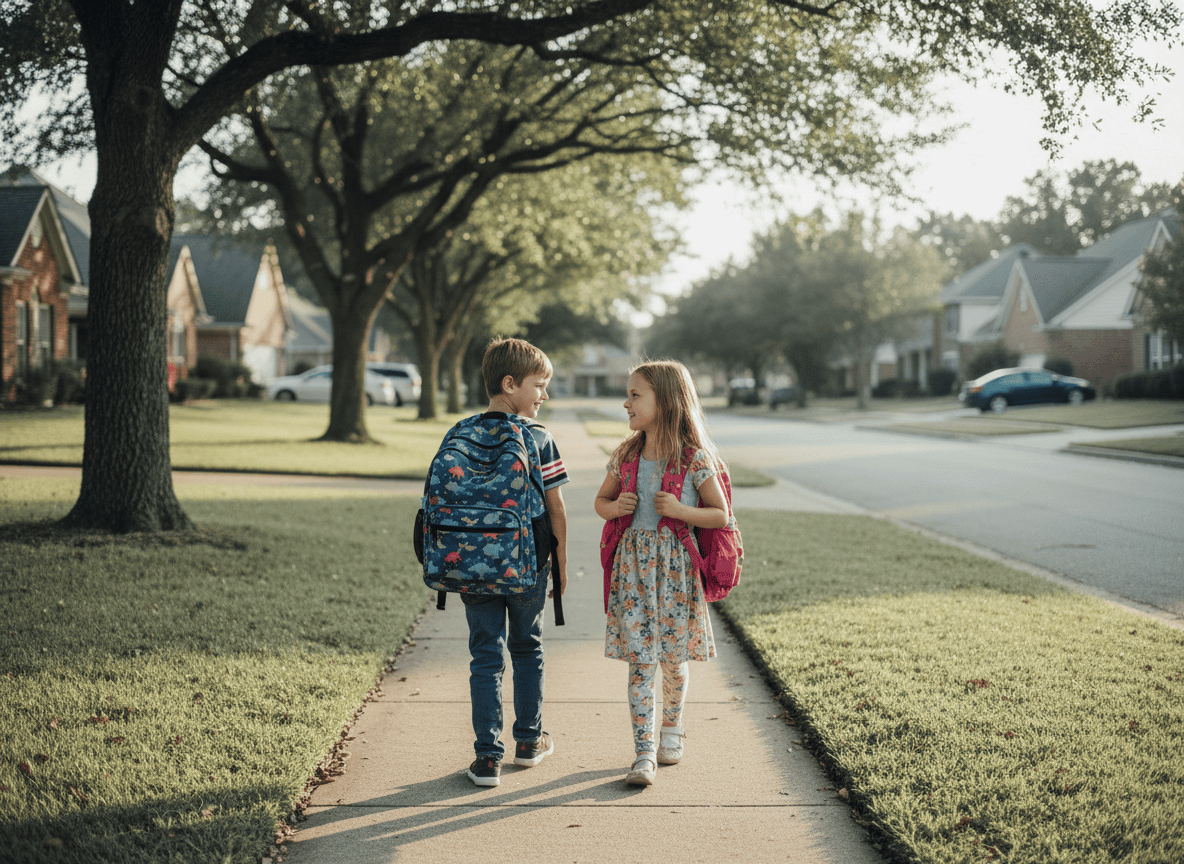
In 1971, 86 percent of British seven- and eight-year-olds were allowed to walk to school without an adult. By 2010, that number had fallen to 25 percent, and researchers who just finished tracking nearly 9,000 English children and teenagers say the drop is not just nostalgia bait for parents who remember riding bikes alone until the streetlights came on. It is a measurable shift with real consequences for how kids feel about themselves, though not in the simple way you might expect.
A number that keeps showing up
The 86-to-25 figure comes from decades of British social research into what’s called children’s independent mobility, and it resurfaced this month in a new study out of the University of Exeter’s Outdoor Play Research Centre, published in the journal Wellbeing, Space and Society. The research team, led by deputy director Dr. Paul McCrorie, wanted to know something more specific than whether kids have lost the ability to roam: they wanted to know whether giving children more independence, letting them walk somewhere alone, take a bus by themselves, or come home from a friend’s house unsupervised, actually makes them happier and healthier as a matter of course.
Independence alone doesn’t do it
The answer complicates the usual argument that simply handing kids more freedom will fix what decades of supervision have worn away. Across the nearly 9,000 participants, independence only tracked with better wellbeing when children also felt safe in their own neighborhood. Teenagers who were given the same amount of unsupervised freedom but lived somewhere they perceived as unsafe reported lower wellbeing, not higher. Neighborhood socioeconomic conditions moved the needle too, meaning the benefit of independence was not evenly available to every child regardless of what block they lived on.
“Simply giving children independence isn’t enough,” McCrorie said. “We need to think about the conditions in which that independence happens.”
The study also flagged age 11, the typical jump from primary to secondary school in England, as a pressure point where independence levels shift abruptly, often faster than a child’s actual readiness for it.
Why this lines up with what pediatric groups have said for years
The findings track with a broader body of research on unstructured, child-directed activity. The American Academy of Pediatrics has described play, including the kind that happens without adult direction, as central to building executive function, resilience, and social skill in young children, distinct from structured or supervised activities. What the Exeter data adds is the missing variable: independence and free play are not interchangeable with safety, and pushing a child into more autonomy in an environment that does not support it can backfire.
What changed between 1971 and now
Nobody in this field claims parents got softer for no reason. Traffic volume, real and perceived crime concerns, longer commutes that leave less flexibility for kids to be picked up on short notice, and a cultural shift toward scheduled, adult-supervised activities have all been cited by researchers over the decades as contributing factors to the decline documented since the original 1971 baseline. The Exeter study does not attempt to relitigate why the drop happened. It focuses on what to do given that it already has.
What this means for a family deciding how much rope to give a kid
The practical takeaway is less about a magic age for a first solo walk to school and more about matching independence to the actual environment a family lives in. A ten-minute walk on a quiet residential street with sidewalks and low traffic is a different proposition than the same walk along a busy arterial road with no crossing guard, even if the distance and the child’s age are identical. The Exeter team’s framing suggests parents weighing independence should ask two separate questions: is my child ready, and does this specific street, block, or route actually support that readiness. Answering only the first one, the data suggests, is how well-meaning freedom ends up backfiring instead of building the confidence it was supposed to.
Fifty years of decline did not happen because parents stopped caring about resilience. It happened because the built and social environment around kids changed, and this latest research suggests the fix has to happen at that same level, not just inside individual households one walk to school at a time.