


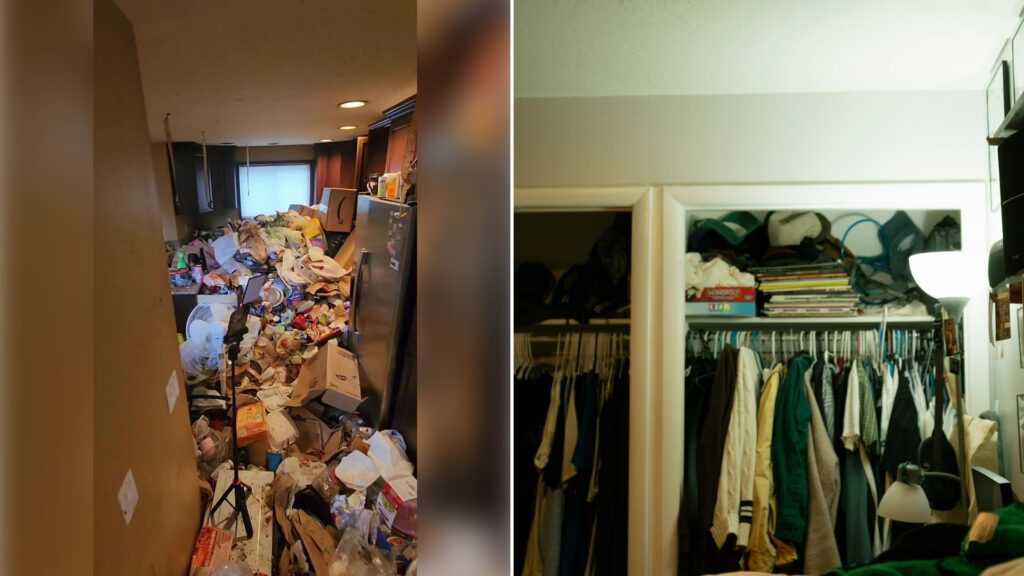
A video from the account taefreecleans documents a job unlike the usual cleaning-hack content that fills most feeds: a free, full cleanout for a family struggling with an extreme accumulation of trash and belongings, performed by Tanika and the team at Toni’s Cleaning Co. The footage shows a kitchen and hallway buried under waist-high debris, boxes, and discarded items, with barely a path to walk through. Captioned simply “Free Clean For a Family In Need,” the clip pulled in 50,400 likes, 2,000 comments, nearly 2,000 saves, and almost 5,000 shares.
@taefreecleans Free Clean For a Family In Need 🫂
Scenes like this one draw huge engagement online, but the reality behind them deserves more care than a before-and-after transformation reel typically gives it. The International OCD Foundation, which maintains a dedicated hoarding disorder resource hub, is clear that hoarding is a recognized mental health condition, not a character flaw or simple laziness, and that the accumulation itself is often tied to difficulty discarding possessions regardless of their actual value, frequently accompanied by genuine distress at the thought of letting things go. A home in the condition shown in this video typically didn’t get that way overnight, and a single cleanout, however generous and well-intentioned, addresses the physical accumulation without necessarily addressing what caused it.
That’s part of why hoarding specialists and organizations that study the condition consistently recommend that a cleanout be paired with, rather than substituted for, some form of ongoing support, whether that’s a mental health professional experienced in hoarding disorder specifically, or a peer support structure, since research in this area has found that cleanouts performed without any follow-up support often see the accumulation return, sometimes within months, because the underlying pattern was never addressed alongside the physical space. None of that takes away from the genuine value of an act like the one shown here. A family that can’t physically move through their own kitchen gets a usable home back immediately, which matters regardless of what happens afterward, but the most effective version of this kind of help tends to be one connected to resources that support the family beyond moving day.
Professional cleaning crews who regularly take on this kind of job also follow some basic safety standards that distinguish it from a normal deep clean: biohazard materials, spoiled food, and pest infestations are common enough in extreme accumulation cases that professional gloves, masks, and sometimes full protective suits are standard practice, not an overreaction. Structural issues, weakened floors under sustained weight, blocked exits, and pest damage behind piles that haven’t been moved in years, are also routinely flagged during cleanouts like this one, since the visible mess is often only part of what years of accumulation left behind.
Acts of generosity like this one are genuinely good news, and the people doing the work deserve credit for taking on jobs most people would walk away from. The fuller picture, though, is one where the cleanout is the visible, shareable part of a problem that usually needs more than one visit to actually solve.
More from Decluttering Mom
- Homeowner Clearing the Hoarded Condo She Inherited From Her Late Dad Says She Was Punished as a Child for Throwing Things Away and Stopped Visiting to Keep Them Close
- Cleaning Company Owner Suits Up in White Coveralls to Clear a Bedroom Buried in Trash for Free, Films Cobwebs She Says Hold Hundreds and Hundreds of Eggs, Then Makes a New Bed in Blue
- Woman Who Does Free Cleans of Badly Cluttered Homes Says Cleaning Does Not Cure Depression and Asks Viewers to Swap How Could Someone Live Like This for What Might Have Happened