


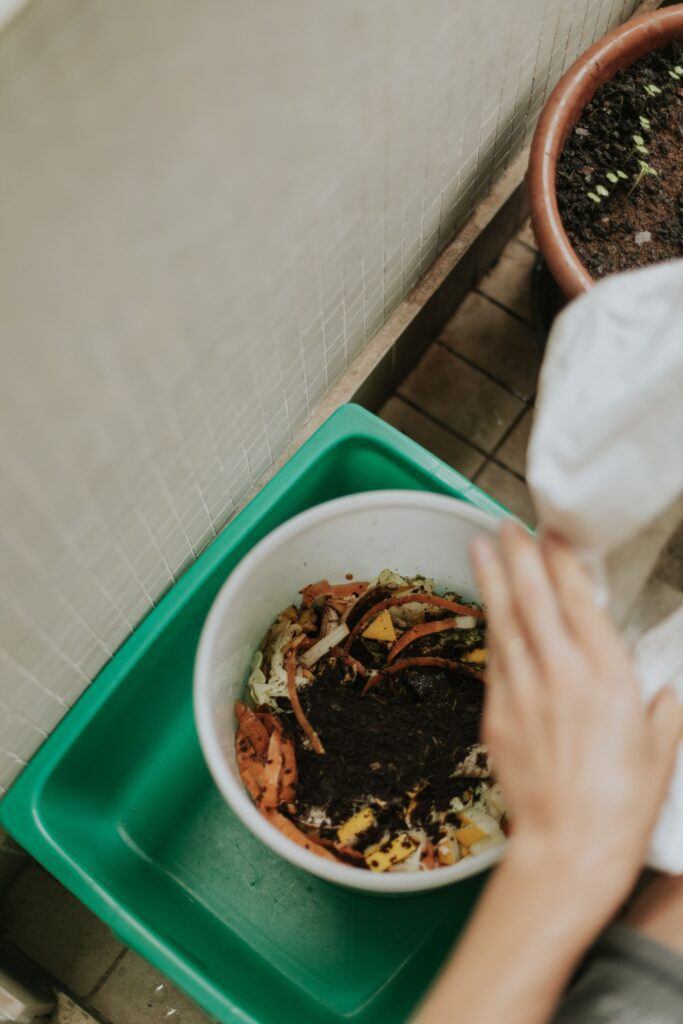
Scroll through any home and garden feed lately and you’d think half the country has a tidy little countertop crock feeding a lush backyard pile, turning banana peels into black gold every few weeks. Composting has become something of a lifestyle signal, the kind of quietly virtuous habit that shows up alongside sourdough starters and cut flower gardens. And yet the numbers tell a very different story. According to the Environmental Protection Agency’s own waste data, roughly 60 percent of the food Americans throw away ends up in a landfill, while only about 5 percent gets composted. If composting really is everywhere right now, almost nobody is actually doing it. That gap between the aesthetic and the reality is worth sitting with, because it turns out the barrier isn’t interest. It’s know-how.
The Real Numbers Behind the Green Bin
Let’s start with what the EPA actually measured. In its most recent national accounting of food waste across the residential, food service, and retail sectors, the agency found Americans generated about 66 million tons of wasted food in a single year. Of that, only about 5 percent was composted, while close to 60 percent, nearly 40 million tons, was landfilled outright, according to the EPA’s Food: Material-Specific Data report. To put that in terms you can actually picture, imagine a full grocery cart of food. For every twenty carts’ worth America wastes, one gets composted. The other nineteen go to the dump, where food doesn’t break down cleanly the way it would in your backyard. It gets buried under layers of other trash, starved of oxygen, and releases methane as it decomposes, a greenhouse gas that a joint federal strategy from the USDA, EPA, and FDA notes largely escapes capture at most landfill sites, according to the National Strategy for Reducing Food Loss and Waste and Recycling Organics. That same report puts a number on what all this wasted food costs a household directly, estimating that the average family of four spends about $1,500 a year on food that never gets eaten. So this isn’t just a landfill problem. It’s a grocery budget problem too, and one that composting only addresses at the margins, since composting is really the last step for scraps you were always going to trim away, not a fix for buying too much in the first place.
The federal government has actually set a real target here: cut food loss and waste in half by 2030, a goal the USDA, EPA, and FDA committed to jointly. But that same strategy is candid about why progress has been slow, pointing to what it calls insufficient organics recycling infrastructure nationwide. In plain terms, the system hasn’t caught up to the goal, and neither, for the most part, has the average household’s routine.

What’s Actually Stopping People From Composting
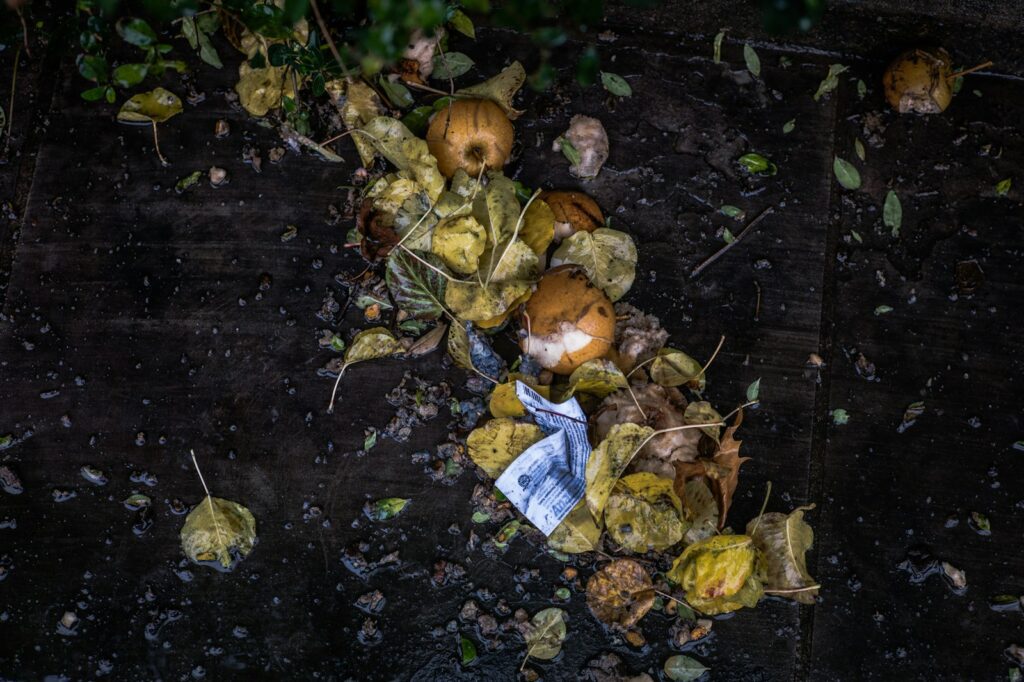
If you’ve ever thought about composting and then quietly let the idea drop, you’re in good company, and there’s usually a specific reason behind it rather than a lack of caring. The most common one is the smell and mess factor. People picture a slimy, fly-attracting heap in the corner of the yard, when a properly balanced compost pile actually smells like damp earth, nothing more. The imbalance usually comes down to too many wet food scraps and not enough dry material to offset them, which is a fixable ratio problem, not an inevitable outcome.
Space is the second big one, and it’s a legitimate concern if you’re working with a balcony or a shared building rather than a yard. A lot of people simply assume composting requires a plot of land they don’t have. Then there’s the confusion factor: most people have a rough sense that fruit and vegetable scraps are fair game, but they genuinely don’t know where the line is after that, so they either compost the wrong things and end up with a mess, or they compost nothing at all out of caution. And for apartment dwellers specifically, there’s often a real logistical wall. No yard means no traditional pile, and not every city has made composting as easy as putting a bin at the curb. Every one of these obstacles is real. None of them is permanent.
The Simplest Way to Actually Start
Here’s the good news: you don’t need a sprawling backyard system or a farming background to divert your food scraps from the trash. You need one method that matches your actual living situation, and a little patience while you find your rhythm.
If you’re short on outdoor space, a countertop bin is your entry point. These small, often charcoal-filtered containers sit right by your cutting board and hold a few days’ worth of scraps without odor, so you’re not making a trip outside every time you peel a carrot. Once it’s full, the scraps need somewhere to go, which is where your local setup comes in.
That’s worth checking before you assume you’re on your own. A growing number of cities and counties now run curbside organics collection, essentially a compost pickup that works like recycling day, and some states have gone further and made diversion mandatory. Vermont, for instance, passed a Universal Recycling Law that bans food scraps from the regular trash altogether, requiring residents to compost or otherwise divert them, according to EPA’s directory of wasted food programs across the country. Cities from Seattle to Eugene run their own residential collection programs too. A quick search of your city or county’s website, using terms like “organics collection” or “food scrap drop-off,” will tell you fast whether this option exists where you live. Many towns without curbside pickup still run drop-off sites at farmers markets or transfer stations, so it’s worth a look even if a truck at your curb sounds unlikely.
If you do have even a small patch of yard, a simple backyard bin is genuinely the easiest physical system to maintain. You don’t need anything elaborate. A basic enclosure made from wire mesh, wood pallets, or a plastic tumbler will do the job, and a lid with no gaps larger than a quarter inch keeps rodents from treating it like a buffet. The general rule for keeping it balanced and odor-free is roughly two to three parts dry “browns,” think dead leaves, shredded paper, or twigs, for every one part wet “greens,” meaning your fruit and vegetable scraps, coffee grounds, and eggshells. Turn it occasionally to add oxygen, and if it starts to smell, that’s your pile telling you it needs more browns, not a sign you’ve failed. Given consistent care, finished compost typically takes about three to five months to develop, according to the EPA’s home composting guide.
What Not to Compost, Ever
Knowing what to leave out is just as important as knowing what to put in, and it’s the piece that trips up most beginners. Meat, fish, bones, cheese, and other dairy products should stay out of a backyard pile, along with fats, oils, and grease. The reason isn’t squeamishness, it’s chemistry: a home compost pile simply doesn’t get hot enough to safely break these down the way an industrial composting facility can, and adding them is the fastest route to a rotten smell and an unwelcome visit from local wildlife, per the EPA’s guidance on composting at home. Also skip pet waste and cat litter, diseased or pest-infested plants, treated or painted wood, glossy or coated paper, and produce stickers, which don’t break down at all. Stick to fruit and vegetable trimmings, coffee grounds and paper filters, plain paper tea bags, crushed eggshells, and yard materials like leaves and grass clippings, and you’ll avoid nearly every beginner mistake before it happens.
Closing the Gap Between Feed and Follow-Through
The distance between composting’s online popularity and its real-world adoption isn’t really about motivation. Plenty of people want to do this. It’s about the small, specific pieces of information that never quite make it past the pretty photo: which bin fits your space, which city programs already exist, and which two or three items to keep out of the pile. Once those blanks get filled in, composting stops being an aspirational habit you associate with other people’s kitchens and becomes just another small, doable part of how you already handle food. The 5 percent isn’t a ceiling. It’s just where things stand before more people get the plain, practical version of the story.