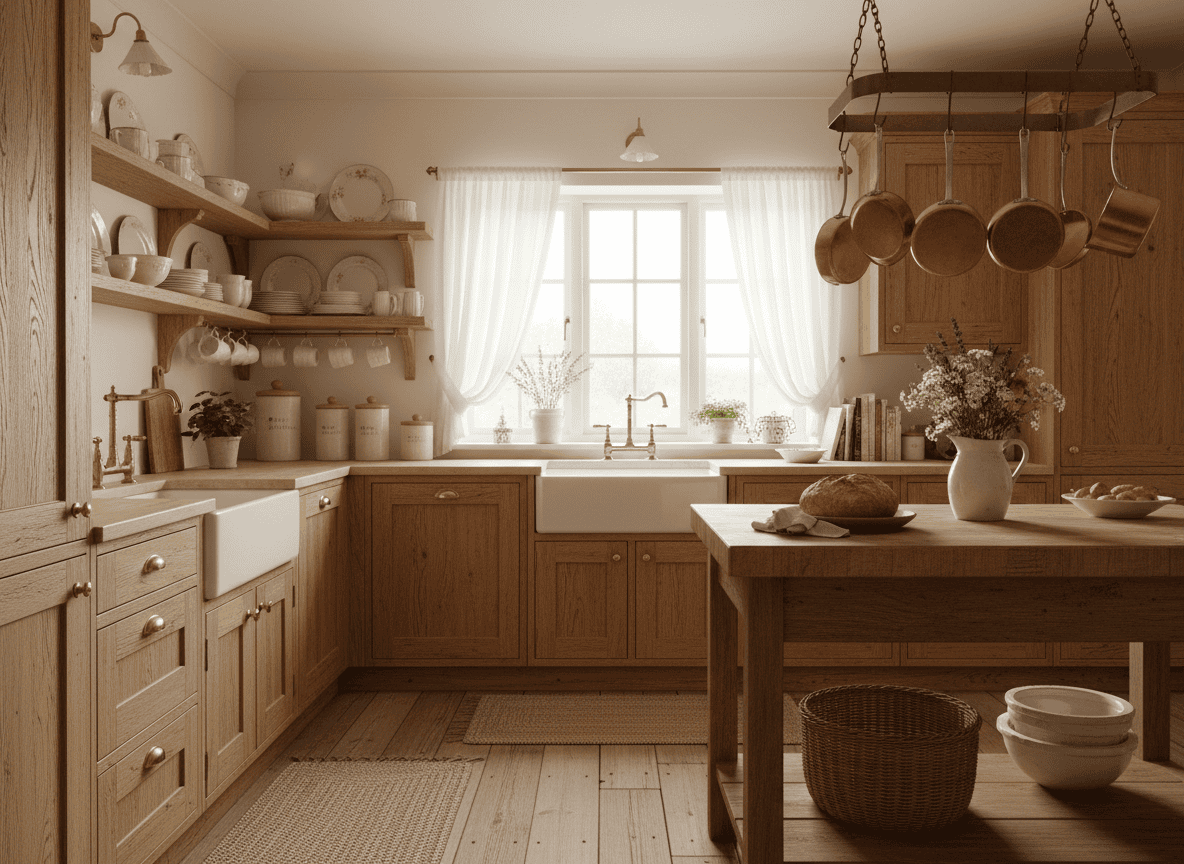
For most of the last decade, the safe answer to “what color should we paint the kitchen cabinets” was white. Bright, all-white kitchens dominated renovation photos, real estate listings, and paint store displays alike. That streak may have quietly ended: in Houzz’s 2026 Kitchen Trends Study, wood-toned cabinets edged out white for the first time, chosen by 29% of homeowners compared with 28% who stuck with white, according to reporting on the survey by AOL. It’s a one-point gap, but it’s the first time in years wood has come out ahead at all.
The Numbers Behind the Shift
That cabinet-color flip isn’t happening in isolation. The National Kitchen and Bath Association’s 2026 Kitchen Trends Report found that 96% of the designers it surveyed pointed to neutrals as the most popular color family right now — but the report’s broader findings describe those neutrals trending warmer and earthier, not the stark, cool white that defined the last decade. Buyers appear to be rewarding the shift financially, too. Zillow’s 2026 analysis of roughly two million home listings found that homes with “cottage” in the listing description sold for 3.2% more than expected, part of a broader pattern the company’s economists tied to buyers paying a premium for character and personality over the sleek, showroom-white finishes that once signaled a move-in-ready kitchen.
Open Shelving Replaces the Wall of Uppers
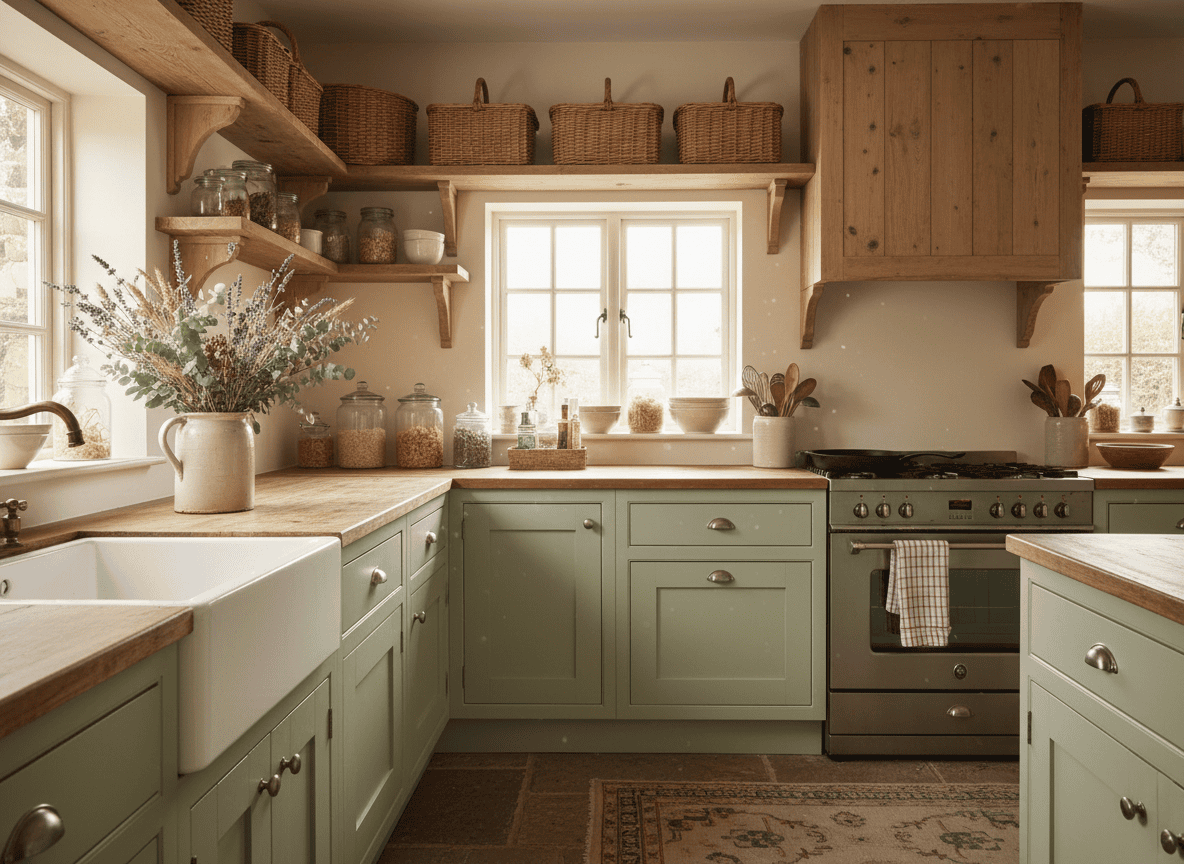
Part of what makes a cottagecore kitchen read differently from the all-white version it’s replacing is what’s missing: a full run of matching upper cabinets. Homeowners are swapping at least a section of those uppers for open wood shelving, which forces the kitchen to actually look lived-in — stacked plates, a row of glass jars, a pitcher that doesn’t match anything else in the room. Designers describe it as a deliberate reaction to a decade of kitchens engineered to hide every trace of daily use behind flat, handle-less cabinet fronts. Open shelving does the opposite: it puts the dishes, the cookbooks, and the odd inherited teapot on display instead of tucking them away.
Hardware Is Doing More Work Than People Realize
The other giveaway is on the drawers and doors themselves. Sleek, brushed-nickel or matte-black pulls — the default finish through most of the all-white era — are giving way to unlacquered brass, iron, and other hardware finishes that are meant to change color and develop a patina over time rather than stay perfectly uniform. Some of it is genuinely old, pulled from architectural salvage yards or flea markets; a lot of it is new hardware manufactured to look aged from day one. Either way, the goal is the same: hardware that looks collected over years rather than ordered in bulk from a single catalog page.
The Details That Complete the Look
Cabinets and hardware set the frame, but a handful of smaller choices are what actually push a kitchen into cottagecore territory rather than just “not white.” Farmhouse sinks — the deep, apron-front style that all but disappeared during the stainless-and-quartz years — are back on renovation wish lists, often paired with a bridge faucet instead of a single-lever fixture. Textiles matter more than they used to as well: a checked or striped linen towel hung on the oven handle, a gingham cafe curtain instead of a roller shade, dried flowers or herbs hanging near a window. None of these are expensive changes individually, but layered together they’re what makes a kitchen photograph as warm and collected rather than simply outdated.
Why This Look Took Over So Fast
All-white kitchens had a practical selling point — they photographed well and offended no one, which made them a safe bet for resale. But that same neutrality is exactly what’s making them feel dated now. A kitchen with open shelving and hardware that looks like it has a history reads as personal in a way a uniform white box never could, and after years of matching finishes, buyers and homeowners alike seem to be craving a kitchen that looks like someone actually lives in it.
What This Means Going Forward
None of this requires gutting a kitchen down to the studs. Swapping cabinet hardware and opening up one run of uppers are both weekend-scale projects, which is likely why the look is spreading faster than a full renovation cycle would normally allow.