


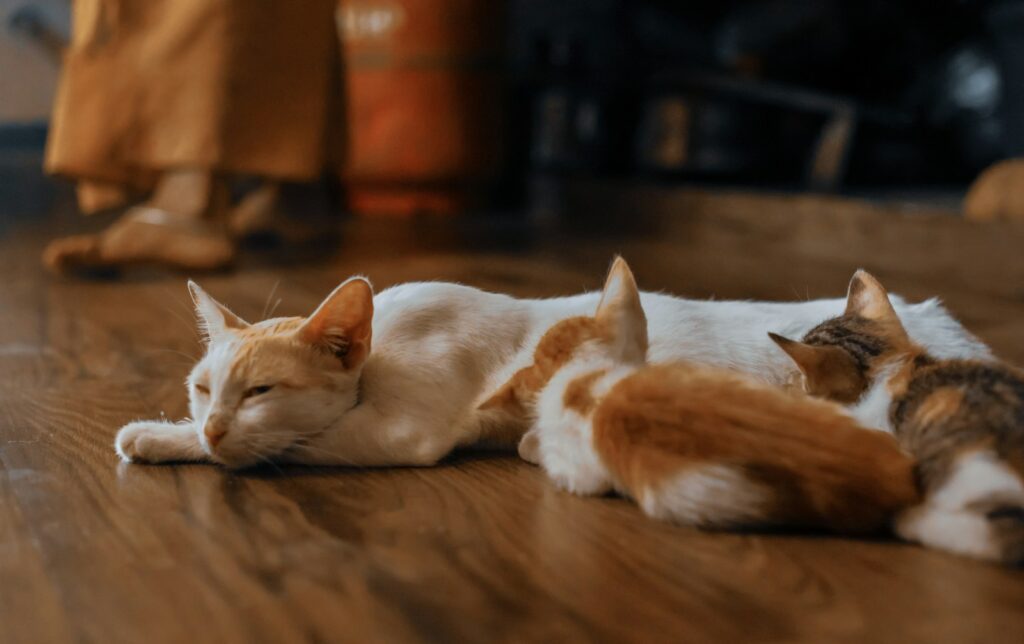
One mom was caught off guard when she returned home from Mother’s Day celebrations to find three cats lounging inside her house. It was a surprising discovery, especially since the back door was ajar, likely from a hasty exit earlier. The cats seemed welcoming, purring and eager to snuggle, which made it hard to resist forming a quick bond with them. This unexpected furry trio changed everything in an instant.
Two of the cats were about six months old, while the third was a bit older. The older one had even visited her home before, but at that time, she hadn’t been prepared to care for a cat. Now, with the cats settled in and happy, the mom took the responsible step of checking for microchips at the local vet. To her surprise, none of the cats were microchipped, and no missing reports matched their descriptions. With the vet’s encouragement, she made appointments to ensure they received the care they needed.


A few days in, everything appeared to be going smoothly until the mom’s partner’s grandmother shared a Facebook post claiming the trio was missing. The post was odd, relying on an AI-generated tone that raised immediate red flags. It referred to the cats in a confusing manner, calling them two instead of three, and included a sentimental note about a heartbroken four-year-old who mourned their disappearance. Alarm bells went off—this was not a straightforward situation.
Curiosity led the mom to dig deeper. She discovered the original poster’s social media account and found unsettling details. The woman had reportedly left her cat door unlocked, which felt unusual. Moreover, she had multiple previous posts about lost pets, casting doubt on her reliability as a pet owner. To complicate matters, it was clear from security footage that the cats were inside the mom’s home when they were last seen on camera, raising more concerns about the woman’s timeline.
The mom noted that the cats lacked microchips, which seemed odd for someone claiming ownership for a significant amount of time. The woman’s post implied she had cared for these cats long before the youngest were born, yet it appeared she hadn’t taken appropriate steps to secure them. People often get pets and don’t prepare for their care, but this was a glaring example of negligence in pet ownership.
As she pondered returning the cats, the mom faced moral pressures. Her partner’s mother felt that since the cats were now comfortable in their new home, it would be wrong to return them. This perspective left the mom grappling with doubt. Was it fair to hand them back to someone who seemingly lacked proper care for them? Legally, she had the right to keep them, but the ethical implications were fuzzy at best.
People had very different reactions to the mom’s dilemma when she shared her story online. Some thought the mom should definitely keep the cats, emphasizing the importance of their well-being over the owner’s questionable claims. Others pointed out the need to give the original owner a chance, suggesting that perhaps the post was just poorly written but genuine. This sparked a heated debate about pet ownership responsibility, abandonment, and the emotional side of losing a pet.
In the midst of all this, questions loomed over the mom’s head. Was it right to assume the woman’s negligence based on flimsy evidence? Or should she give the benefit of the doubt and return the cats? The tension created by the unknown and the ethical dilemma left the mom, and those following her story, with unresolved feelings about what to do next. It’s a complex issue that revealed not only the challenges of pet ownership but also how easily things can become muddled when emotions and responsibilities collide.
More from Decluttering Mom: