

Most decluttering advice assumes a person has a free weekend, a full tank of motivation, and the executive function to push through an entire closet or garage in one sitting. Creator @home.uncluttered built her method for everyone who does not have any of that. Her approach is designed specifically for people with ADHD, or really anyone who simply has little energy or time left over after a long day, and it runs on a single, deliberately small commitment: fifteen minutes a day.

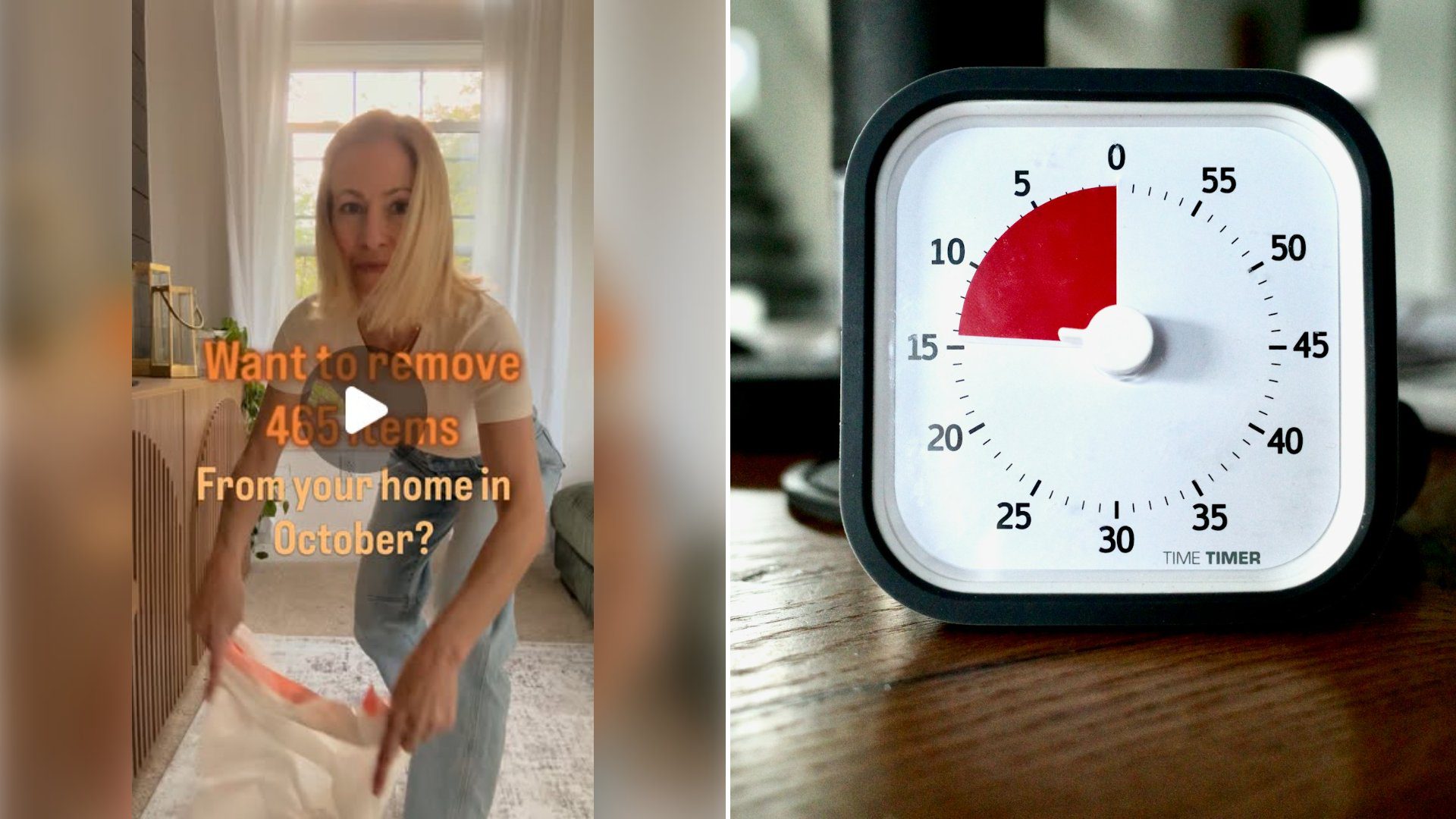
In her demonstration, she walks through exactly how the system works in practice, moving through a single area of her home for a short, timed burst rather than attempting a sweeping overhaul. She says that sticking to the fifteen-minute window consistently, day after day, can clear hundreds of items out of a home in as little as one month, a number that sounds almost too easy for how overwhelmed many viewers feel about their own clutter.
There is a real, well-documented connection between ADHD and household clutter. Clinicians and researchers who study ADHD consistently note that the condition’s core symptoms, difficulty with task initiation, trouble sustaining attention on tedious tasks, and challenges with executive function around sorting and prioritizing, map almost directly onto the skills a traditional decluttering project demands. Deciding what to keep, where it goes, and finishing the job all require exactly the kind of sustained planning and follow-through that ADHD makes genuinely harder, not because of laziness, but because of how the ADHD brain processes tasks that lack immediate structure or reward.
That is precisely why a method built around a short, fixed time limit tends to work so much better for this audience than open-ended advice like “clean out your closet this weekend.” A fifteen-minute timer gives the task a hard, visible boundary, which removes the most paralyzing part of decluttering for many people with ADHD: not knowing when it will end. Occupational therapists who work with ADHD clients frequently recommend exactly this kind of time-boxing, sometimes called the Pomodoro-style approach when applied to other tasks, because a defined stopping point makes starting feel far less threatening. The brain can commit to fifteen minutes in a way it often cannot commit to an undefined, possibly multi-hour project.
The math behind clearing hundreds of items in a month also holds up reasonably well once it’s broken down. Fifteen minutes of focused decluttering, even working at a modest pace, can easily account for ten to twenty items being sorted, donated, or tossed, depending on the category. Spread across thirty days, that adds up quickly without ever requiring a single exhausting, all-day purge. The method essentially trades intensity for consistency, which is a trade that tends to favor anyone whose energy and focus fluctuate day to day, not just people with a formal ADHD diagnosis.
Accessible organizing methods like this one have gained real traction in recent years precisely because so much mainstream organizing content has historically assumed a level of time, energy, and neurotypical executive function that plenty of people simply do not have on a given day, let alone every day. A single mom working full time, a person managing chronic fatigue, or someone with ADHD juggling a dozen half-finished projects all benefit from a system designed around their actual capacity rather than an idealized version of a productive weekend. The popularity of this particular method is part of a broader shift toward organizing advice that meets people where they are instead of asking them to first become a different, more organized person before they are allowed to start.
For anyone who has started and abandoned a dozen ambitious decluttering projects, the appeal here is obvious. Fifteen minutes is small enough that almost nobody can talk themselves out of it, and that is exactly the point. A task too small to dread is a task that actually gets repeated, and repetition, more than intensity, is what clears out a cluttered home over time.
More from Decluttering Mom
- Organizer Says Fifteen Minutes a Day Cleared Hundreds of Items From Her Home in One Month and Shows the Exact Routine Any Busy Mom Can Copy This Week
- Professional Organizer Tells Midlife Followers Decluttering Does Not Have to Be Hard and Offers a Free Thirty Day Checklist to Anyone Ready to Crawl Out From Under the Clutter
- Mom Says After Twenty Years in a Big Family Home She Chose To Downsize and Simplify Her Life and Explains What She Let Go Of and What She Kept