
Of all the projects a homeowner can put money into before selling, a new steel front door recoups the most value at resale, returning 100% of its cost. The second-best return on the list isn’t a kitchen or a bathroom. It’s a closet.
The number real estate data keeps confirming
According to the 2025 Remodeling Impact Report, jointly published by the National Association of Realtors and the National Association of the Remodeling Industry, closet renovation recovers 83% of its cost at resale — outperforming most kitchen and bathroom remodels, which typically land well below that in cost-recovery terms. Only a new steel front door, at 100%, ranks higher nationally, with a new fiberglass front door close behind at 80%.
That figure comes from a survey of real estate agents nationwide who were asked to estimate the value a given project adds relative to what it costs to install — meaning it reflects what buyers are actually willing to pay more for, not just what a contractor charges to do the work.
Why sellers routinely leave this off the listing
Search real estate listings in almost any market and kitchens get their own paragraph, bathrooms get called “spa-like,” and a primary suite gets top billing. A custom closet system, when it’s mentioned at all, gets a single bullet point buried under “additional features,” if it makes the listing description at all. That’s a real mismatch between what real estate agents’ own data says buyers respond to and what sellers assume is worth highlighting.
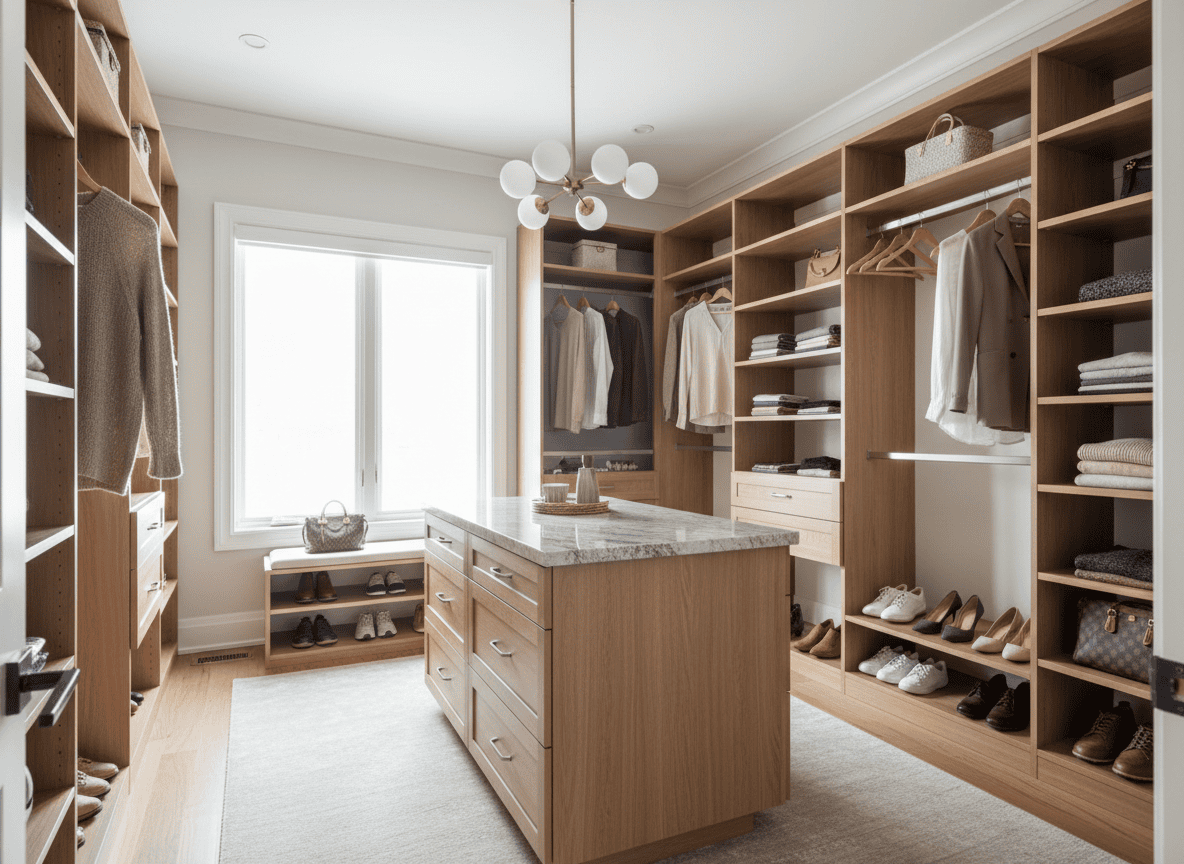
Part of the disconnect is cost. Closet systems are inexpensive and quick compared with the renovations sellers assume matter more. A basic upgraded shelving kit can run a few hundred dollars; a fully custom wood system with built-in drawers, shoe racks, and an island typically runs $2,000 to $8,000 depending on size and materials. Against an 83% cost-recovery rate, even the higher end of that range is a comparatively small bet next to a kitchen remodel that can run tens of thousands of dollars for a similar, or lower, percentage return.

What buyers are actually responding to
Storage keeps showing up near the top of what buyers say they want and can’t easily add themselves later. A closet system signals something a fresh coat of paint can’t: that the space was planned, not just used. A walk-in closet staged with matching bins, visible drawer space, and clothing organized by category reads as move-in-ready in a way a closet stuffed with a single rod and one shelf simply doesn’t.
Agents who stage homes for sale often point out that closets are among the few spaces buyers open every single door of during a showing. A pantry, a linen closet, a primary closet — buyers check them because storage is one of the hardest things to judge accurately from listing photos, and one of the most common regrets among people who bought a home without checking closely enough. A closet that already looks organized removes that uncertainty on the spot, during the walkthrough, before an offer is even on the table.
The gap between value and marketing
None of this requires a full remodel to capture. Even converting a standard reach-in closet — a single wire shelf and a rod — into a system with adjustable shelving, a double-hang section, and drawer storage tends to move it from “storage” to “feature” in a buyer’s mind. The Remodeling Impact Report’s 83% figure suggests agents already see this pattern reliably enough to rate it consistently, even if the sellers they represent rarely think to ask for it before listing, or to put it anywhere in the description where a buyer would actually see it first.
The projects with the best returns aren’t always the ones that photograph the most impressively. Sometimes they’re the ones that quietly answer the question every buyer is really asking while they open cabinet doors and closet doors alike: will my stuff actually fit here? A closet system is one of the few upgrades that answers that question before the buyer has to ask it out loud.
For sellers weighing where to spend limited renovation dollars before listing, the data points to an unglamorous but reliable move: a weekend spent on closet storage may do more for a sale price, dollar for dollar, than a much larger project elsewhere in the house.