


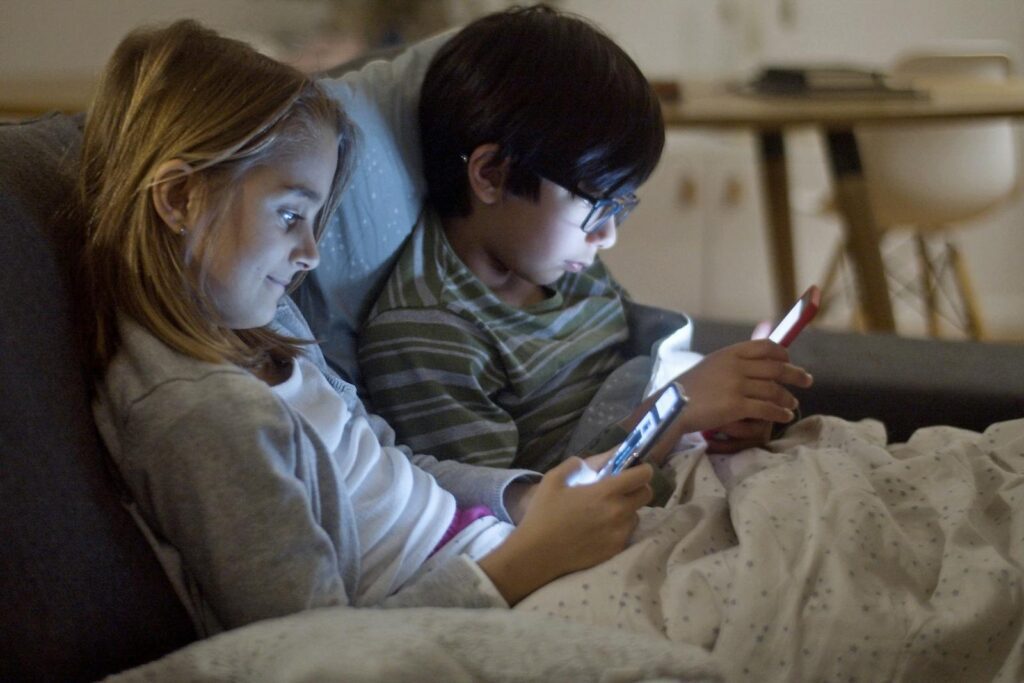
Few parenting topics spark debate as quickly as screen time. From tablets and smartphones to laptops and smart TVs, screens are now woven into everyday life. While many parents try to limit how much time kids spend on devices, others say the conversation has become more complicated as technology has also become a major tool for learning, communication, and work.
One parent recently raised this exact question, wondering whether the idea of eliminating screen time altogether even makes sense anymore.


Why This Dad Thinks “No Screen Time” Might Be Impossible
In a post shared Reddit, the father explained that he and his wife use screens throughout the day for practical reasons. His phone and computer are essential tools for work and daily tasks, and they’re constantly present in the household.
Because of that, he finds it difficult to imagine how parents could realistically prevent children from interacting with screens at all.
He said he understands the importance of balance—making sure kids spend time playing outside, building with toys like LEGO, doing arts and crafts, and engaging in real-world activities that help develop physical and social skills.
But completely removing screens from their lives feels unrealistic in a world where adults rely on them constantly.
The dad also raised another question that many parents have wondered about: whether all screen use should really be grouped together.
For example, he pointed out that reading a book on a tablet is often labeled the same way as endlessly scrolling through social media feeds. To him, those experiences feel fundamentally different.
He also gave an example from his own home. If kids are watching dance videos on a tablet and then jumping up to copy the moves and practice along, is that actually harmful screen time—or is it closer to physical activity?
Why Experts Have Started Looking Beyond Just “Screen Time”
In recent years, some child development experts have begun shifting the conversation away from strict time limits and toward the context of how screens are used.
Instead of focusing only on the number of minutes spent in front of a device, many now look at factors such as the type of content, whether the activity is active or passive, and whether parents are involved.
Educational tools, creative apps, and interactive activities can have a very different impact compared to endless scrolling or autoplay videos.
Because of that, many families now focus less on eliminating screens entirely and more on balancing digital activities with offline experiences.
Parents Say Content and Context Matter More Than the Screen Itself
In the comments, many parents agreed that the real issue isn’t the screen itself but how it’s being used.
One commenter pointed out that educational apps or puzzle-solving platforms offer a completely different experience from passive entertainment. They compared it to the difference between a piano lesson and a car alarm—both involve sound, but they serve very different purposes.
Others said they try to limit passive screen use while allowing technology to be used for learning, communication, and family activities.
Some shared examples from their own homes, like kids practicing a language-learning app, looking up answers to questions together as a family, emailing relatives, or using nature apps to identify plants outside.
At the same time, several parents acknowledged that unsupervised internet browsing can still create challenges. One commenter even shared that their child discovered a loophole in an educational app that allowed them to reach YouTube videos.
Even with those complications, many people in the discussion agreed on one key point: in a world filled with technology, the more realistic goal may not be eliminating screens entirely—but teaching kids how to use them thoughtfully.
More from Decluttering Mom: