


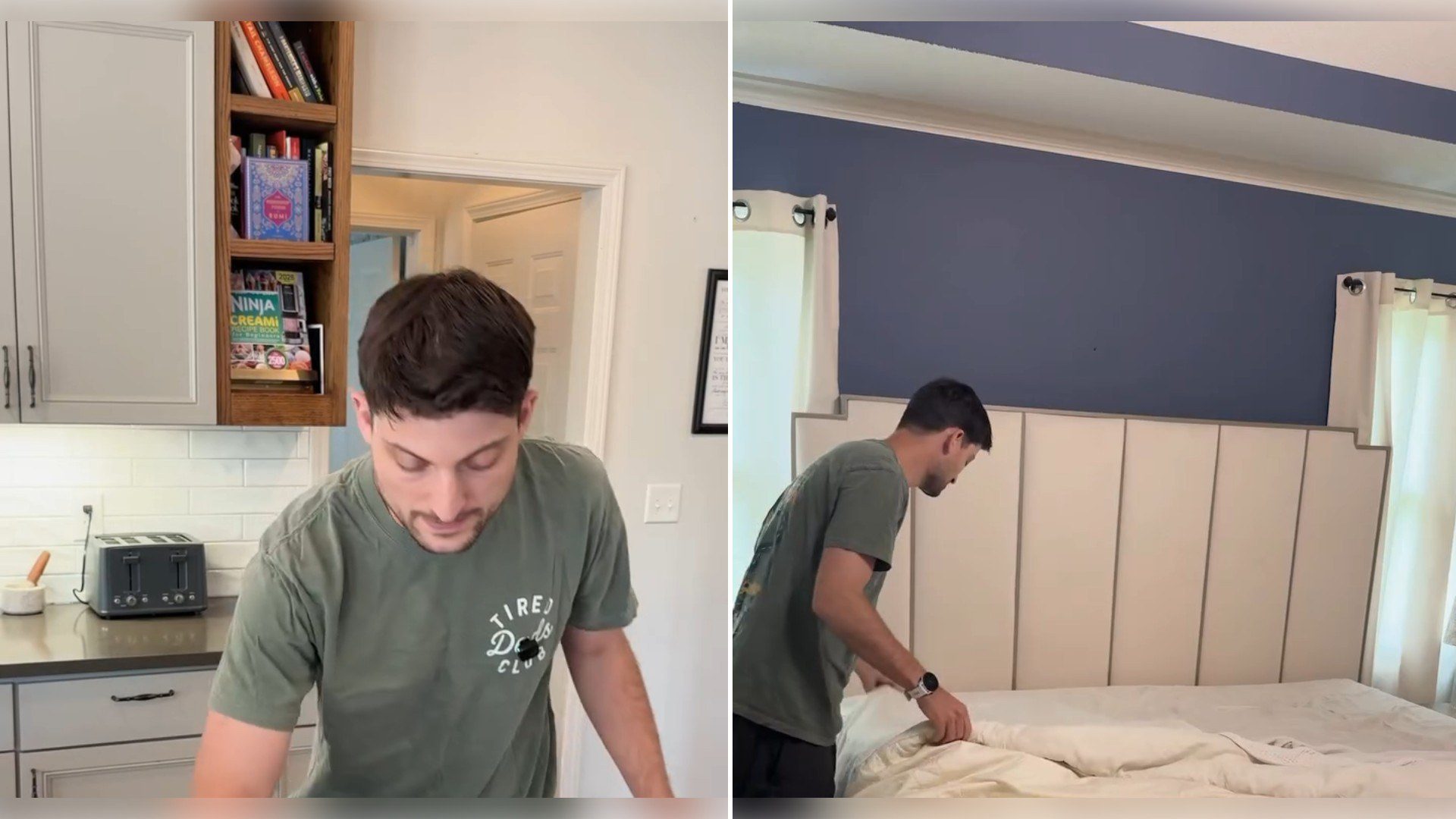
Keeping a house clean while raising kids can feel like an unwinnable fight, which is exactly why a video from a dad posting under the handle dobetterjonathan has struck such a chord. Rather than offering a single dramatic hack, he laid out four simple daily habits that, together, transformed his home from one that used to get messy constantly into one that stays consistently tidy — all while still very much raising children in it.
The video walks through each habit in turn, demonstrating exactly how small, repeatable actions taken throughout the day add up to a home that doesn’t require a marathon deep-clean every weekend just to feel livable again. His caption reinforces that same message directly, noting that these small habits transformed their home into one that rarely gets messy, and encouraging viewers to build the same habits for themselves.
The response suggests he tapped into something a lot of parents are quietly desperate for. The video pulled in roughly 4.9 million views from an account with about 113,000 followers, a significant jump in reach that points to just how many households are searching for exactly this kind of realistic, sustainable system.
Household organization content tends to fall into one of two categories: the aspirational, almost unattainable version featuring color-coded bins and picture-perfect pantries, or the more grounded, functional version built around habits an actual busy household can maintain. Videos like this one clearly belong to the second category, and that distinction matters enormously to parents who don’t have the time, budget, or bandwidth for a full home makeover but do have five minutes here and there throughout the day.
What makes a habit-based approach so much more sustainable than a one-time organizing overhaul is the compounding effect of small, consistent actions. A single five-minute reset before bed, a designated spot where incoming clutter gets sorted immediately, a quick daily surface wipe-down — none of these individually feels significant, but strung together day after day, they prevent the kind of overwhelming buildup that eventually requires a full weekend to undo. It’s the same principle behind compound interest, just applied to laundry piles and toy bins instead of a bank account.
For parents looking to build a similar system in their own homes, the starting point doesn’t need to be all four habits at once. Picking just one — whether it’s a nightly reset, a consistent landing zone for shoes and bags, or a rule about dishes never sitting in the sink overnight — and sticking with it consistently for a few weeks tends to be far more effective than attempting a total organizational overhaul that inevitably falls apart under the chaos of daily life with kids.
Ultimately, what resonates about a video like this one isn’t the specific habits themselves so much as the underlying promise: that a genuinely tidy home with kids in it isn’t a myth reserved for families with more time or money, but something achievable through small, boring, repeatable choices made consistently, day after day, long after the camera stops rolling.
Behavioral researchers who study habit formation consistently find that small, low-effort actions repeated daily are far more durable than large, high-effort changes attempted infrequently, which helps explain why a habit-based cleaning system tends to outperform even the most thorough weekend deep clean. The brain builds automaticity around small repeated actions in a way it simply can’t for infrequent, high-intensity bursts of effort.
There’s also a household dynamics angle worth noting: habits that get built into a shared daily rhythm, rather than assigned as a single person’s ongoing chore, tend to be far more sustainable in a family with multiple people contributing to the mess in the first place. A dad publicly modeling and sharing these habits also chips away at the outdated assumption that household organization is primarily a mother’s responsibility, a shift that’s become increasingly visible across parenting content in recent years.
For families feeling overwhelmed by the idea of overhauling their entire household system at once, the most sustainable starting point is usually the smallest possible version of a new habit — a single five-minute task done consistently for two weeks tends to stick far better than an ambitious ten-step system abandoned after the first exhausting attempt.
It’s also worth noting that habit-based systems tend to age well as families grow and change, unlike more rigid organizational setups that can fall apart the moment a family’s circumstances shift. A habit built around a five-minute nightly reset, for instance, still works whether a family has one child or four, whether they’re in a small apartment or a larger house, because the habit itself — not the specific space or number of kids — is what’s actually doing the work of keeping things under control over the long run.
It’s also worth pointing out that habit-based systems tend to be far more forgiving of the inevitable bad days every household has. Missing one nightly reset doesn’t unravel the whole system the way skipping a single deep-clean session can set a family back for weeks, which is part of what makes small, repeatable habits so much more resilient over the long haul than any single ambitious overhaul.