


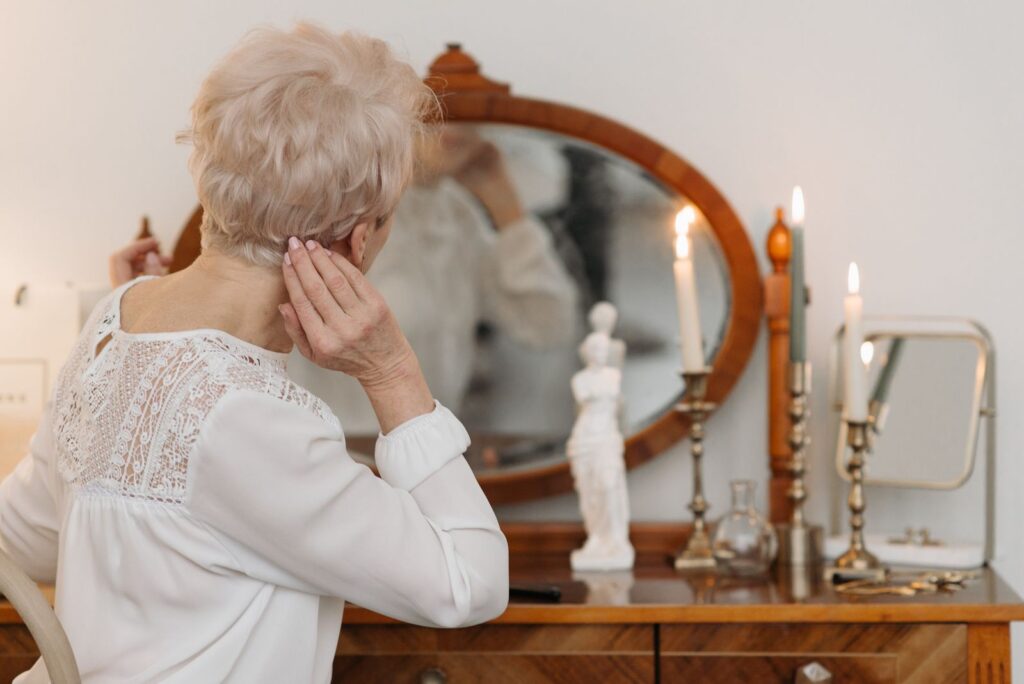
She was caught off guard one day when she glanced in the mirror and saw her mother staring back at her. At 38, signs of aging were creeping in, and the resemblance to the parent who had been a source of anxiety during her childhood was becoming harder to ignore. Hooded eyes, a family trait, seemed to shift her entire reflection into something unsettling—a reminder of the woman who had once been her greatest critic.
This moment prompted her to think about the emotional weight that often comes with aging. Many people expect to see a version of themselves, but for her, it was a reminder of her past. The realization that she could morph into someone she had long struggled to understand and accept sent her into a spiral of uncertainty. The mirror became a battleground, reflecting not just her physical changes, but also the complicated feelings tied to her mother.

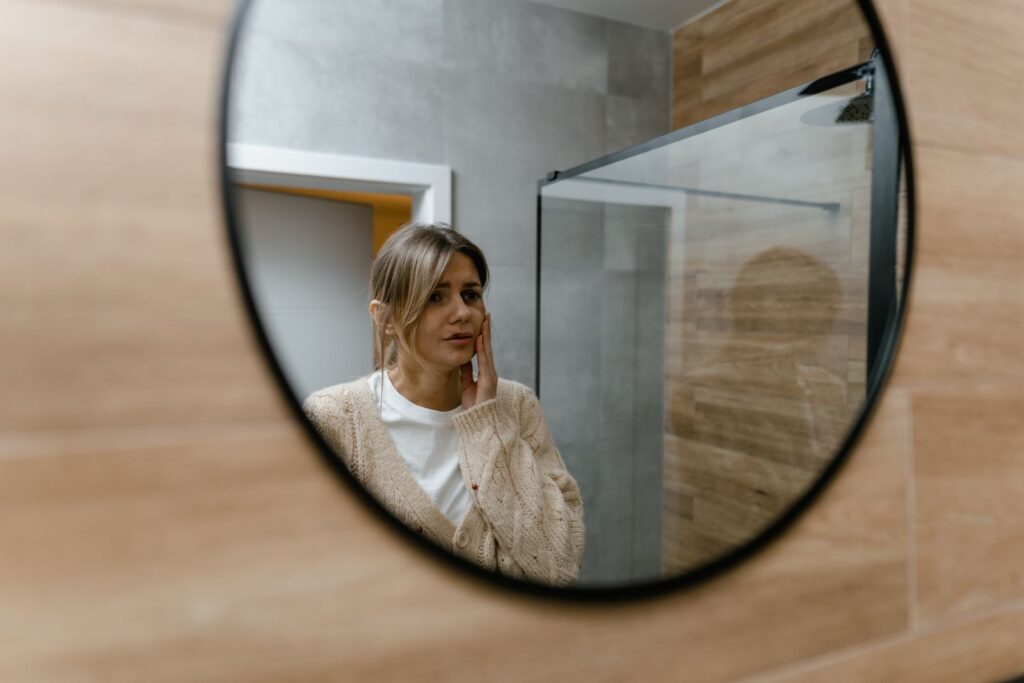
Concerned about her features resembling her parent’s, she started saving for blepharoplasty, a surgery intended to correct her hooded eyes. While it seemed like a practical solution, it also underscored a deeper issue: the desire to separate from a lineage that felt more like a burden than a blessing. Was it just about the looks, or was it an attempt to escape a past that felt too present?
Other Reddit users shared their own experiences with aging and family resemblances. People had very different reactions. Some shared similar struggles, noting that they, too, felt discomfort when looking like a parent who had not been kind. The physical resemblance turned into an emotional mirror, reflecting the complicated relationship they had with their own parents.
Others pointed out that while it can be difficult to face the similarities, there’s an element of acceptance that often comes with it. Some suggested that embracing these features could mean embracing a part of their identity, even if that part was clouded by negative experiences. They mentioned how their own aging had allowed them to reconcile with the past, seeing not just the flaws but also the strength that came from their backgrounds.
One user brought up the idea that aging could be seen as a form of transformation, rather than a descent into a past that feels painful. For some, it was about reconciling with the parts of themselves that they’d tried to deny. Instead of avoiding the resemblance, they found strength in acknowledging where they came from, even if it wasn’t easy to do so.
In contrast, a few commenters suggested that opting for surgery could be empowering. They emphasized personal autonomy and the notion that everyone should have the right to modify their appearance if it brings peace of mind. This perspective opened up a discussion about the pressures society places on beauty and the freedom that comes with making choices for oneself.
Throughout the comments, it became evident that the conversation was layered with emotions, opinions, and personal histories. Some felt that the struggle was not just about features but also about familial connections, generational trauma, and the quest for self-identity amidst inherited traits.
As the conversation unfolded, the complexity of aging and self-perception threaded through their exchanges. The idea of being haunted by a family resemblance brought up questions of heritage and individual autonomy, challenging them to think about what’s truly important. Was it about escaping the past or finding a way to integrate it into who they were becoming?
In the end, one mom’s story isn’t just about physical change; it’s about the intricate dance between acceptance and rejection of one’s lineage. The experience of seeing a parent in oneself raises a broader question: how does one navigate the fine line between honoring their roots and crafting their own identity? The discomfort of that reflection lingered. What do people do when the mirror shows more than just their face?
More from Decluttering Mom: