

Decluttering creator @timothy.dew3 posed a question that is hard to scroll past: if he had two hours inside a stranger’s house, what would he remove first? The video, part two of an ongoing series, is not a vague pep talk about minimalism. It is a specific, room-by-room rundown of the categories of stuff he says accumulate in almost every home and quietly make daily life harder, delivered with the kind of blunt confidence that makes viewers immediately start mentally walking through their own cabinets and junk drawers.

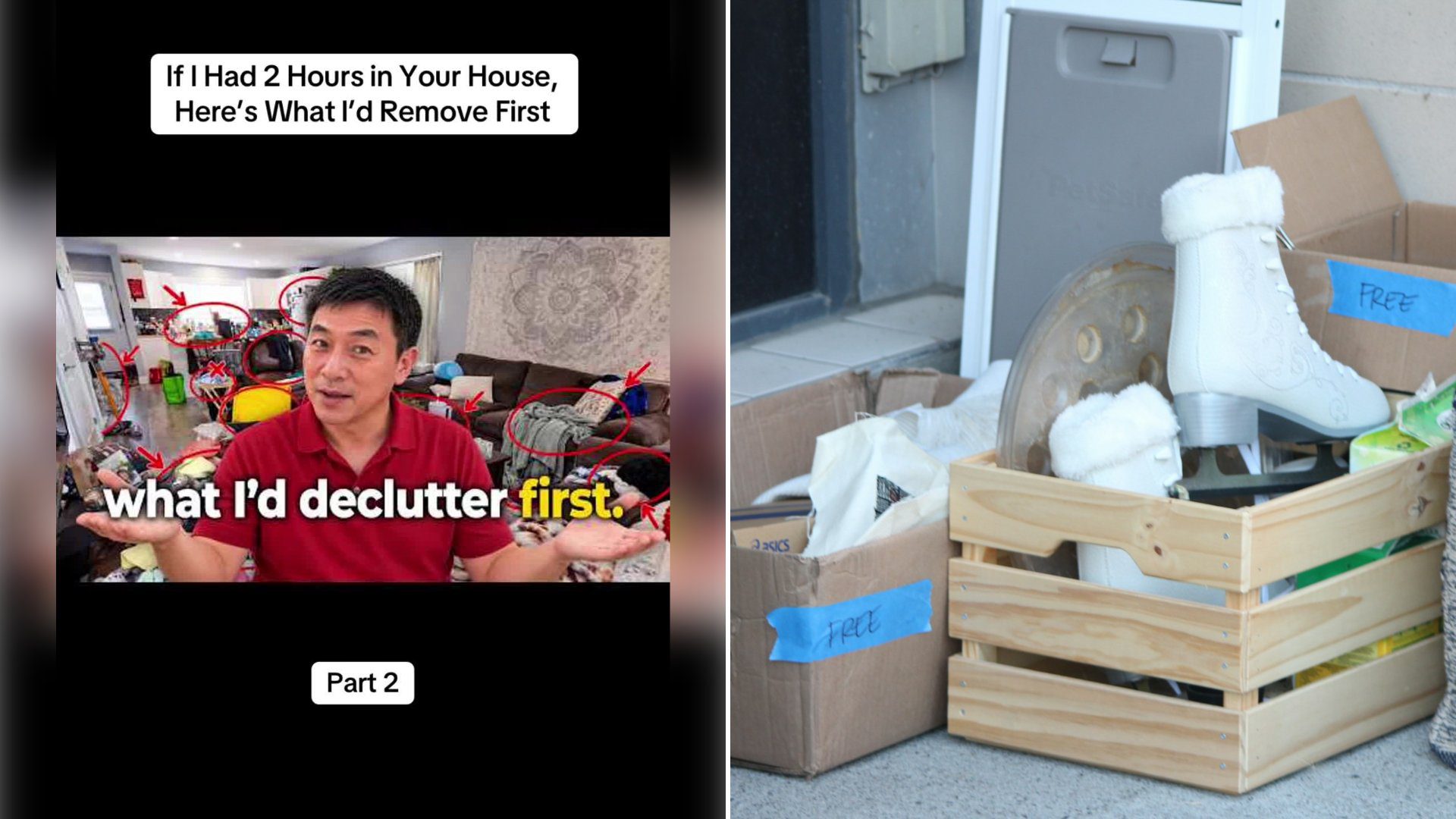
The appeal of the format is the hypothetical itself. Most decluttering advice asks people to evaluate their own belongings, which is notoriously difficult because of sentimental attachment and simple familiarity blindness. Framing it instead as what an outside expert would grab and toss removes the emotional buffer, which is exactly why the comment sections on these videos fill up with people naming the specific items in their own homes they already know would be first on the chopping block.
@timothy.dew3
There is genuine research behind why this kind of outside perspective works so well. Decision fatigue is a well-documented psychological effect in which the sheer number of small choices a person has to make, including whether to keep or discard each individual object, wears down their ability to decide anything at all. Professional organizers often point out that a cluttered home is not just a storage problem, it is thousands of unmade micro-decisions sitting in plain sight, each one quietly draining mental energy every time a person walks past it.
That is part of why duplicate and near-duplicate items are consistently named as early targets in advice like this. Most households accumulate multiples of the same basic tool, gadget, or container over years of gift-giving, impulse buys, and forgetting what is already owned, and keeping all of them means repeating the same storage decision over and over for items that serve one function. Clearing out the duplicates and keeping only the one or two versions that actually get used is one of the fastest ways to free up physical space without touching anything a person would genuinely miss.
Expired, broken, and “someday” items tend to be the other recurring category. Research on hoarding and clutter behavior consistently finds that people hold onto broken items they intend to fix and items they bought for a specific future plan that never happened far longer than they realize, and that simply setting a firm time limit, such as six months, is one of the most effective ways to force a decision instead of letting the item sit indefinitely in limbo.
The series format itself, building on a first video with a second installment, also matters for why this is spreading. It signals that there is a fuller system behind the single viral list, not just one clever soundbite, which tends to keep an audience coming back episode after episode rather than moving on after a single satisfying video.
Whether or not someone agrees with every item on his list, the underlying appeal is the same reason so much decluttering content performs well right now: people do not actually want more rules about tidiness, they want someone to give them permission, and a clear starting point, to finally get rid of what they already suspected was clutter.
More from Decluttering Mom
- Organizer Says Fifteen Minutes a Day Cleared Hundreds of Items From Her Home in One Month and Shows the Exact Routine Any Busy Mom Can Copy This Week
- Professional Organizer Tells Midlife Followers Decluttering Does Not Have to Be Hard and Offers a Free Thirty Day Checklist to Anyone Ready to Crawl Out From Under the Clutter
- Creator Says One Dave Ramsey Decluttering Rule Finally Got Her To Haul Boxes Out of Her House and Walks Through What Left First and What Stayed