

Dust settles fast, but small changes in how you dust make a big difference. Skip the rush-and-wipe routine that spreads particles, focus on the right order and tools, and you’ll stop seeing dust reclaim surfaces by dinnertime. Use clean, designated cloths, work top-to-bottom, and give disinfectants time to act to keep dust from resettling.
You’ll spot the common mistakes that undo your efforts and learn simple techniques that actually trap dust instead of moving it around. Expect clear fixes for tool choice, cleaning order, and quick daily habits that prevent backslide without adding hours to your chore list.

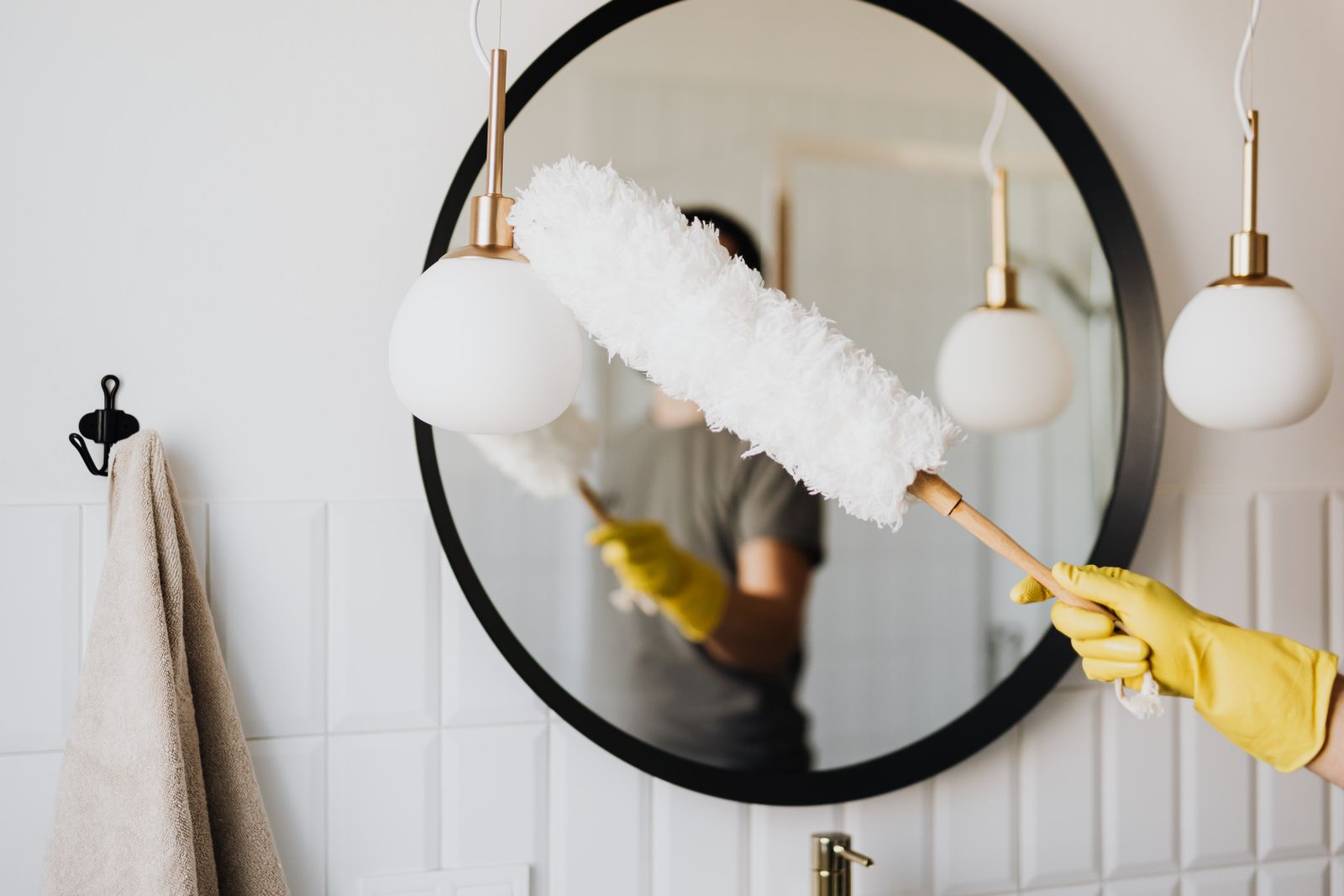
Common Dusting and Cleaning Mistakes
You can stop re-dusting the same surfaces by fixing a few predictable habits. Focus on the order you clean, the spots you skip, the tools you use, and how much product you apply.
Dusting in the Wrong Order
Start at the top and work down. Dust collects on ceiling fans, crown molding, and the tops of tall furniture; if you clean lower surfaces first, dust from higher spots will fall onto freshly cleaned areas. Move systematically across a room—left to right or clockwise—so you don’t miss sections or rework areas.
Use a damp microfiber cloth or an electrostatic duster on high surfaces to trap particles rather than push them into the air. Finish with vacuuming or mopping the floor so fallen dust gets removed instead of resettling on surfaces. Skipping this sequence is one of the most common dusting mistakes that makes rooms look dirty again quickly.
Skipping Hard-to-Reach and Small Areas
Small niches and high ledges hold surprising amounts of dust. You often miss door frames, window sills, light switches, baseboards, and the tops of picture frames. These spots seed new dust circulation if left untouched.
Carry a small paintbrush, crevice tool for your vacuum, and a lint roller for lampshades and fabric surfaces. Move furniture when practical to clean under sofas and appliances. Pay explicit attention to HVAC grilles and filter housings—dirty filters and vents are major contributors to recurring dust in the house.
Choosing Ineffective Tools
Using the wrong tools spreads dust instead of removing it. Feather dusters, old rags, and disposable dry wipes tend to push particles around or leave lint behind. A clean, slightly damp microfiber cloth or a quality electrostatic duster picks up and holds dust.
Match the tool to the surface: soft microfiber for screens and glossy finishes; a brush for carved wood and grooves; a dust mop for baseboards and wide floor areas. Keep cleaning tools clean—wash microfiber cloths and replace mop heads regularly—because dirty tools re-deposit grime and create the impression that your house gets dirty again by dinner.
Using Too Much Cleaning Product
More cleaner does not equal cleaner surfaces. Spraying polish or dusting spray directly onto surfaces creates buildup and sticky residue that attracts new dust. Overuse of product also leaves streaks and can damage finishes over time.
Spray product onto your cloth, not the surface, and use the smallest amount that achieves a pick-up. For frequent dusting, opt for plain water on microfiber or a diluted, pH-neutral cleaner. Reserve stronger products for periodic deep cleans to avoid accumulating layers that make cleaning less effective and quicker to look dirty again.
Effective Techniques and Solutions for a Dust-Free Home
Keep dust down by using tools that trap particles, follow order and technique, and care for your cleaning supplies so they keep working. Small routine changes—what you use, how you move, and how often you launder cloths—deliver the biggest, fastest results.
Best Tools and Products to Remove Dust
Choose tools that capture dust rather than push it around. Use damp microfiber cloths for flat surfaces; the dampness helps lift dust and dust mites without spreading particles into the air. For electronics, canned air plus a dry microfiber or a soft paint brush removes crevices’ dust safely.
Pick a vacuum with a HEPA filter for carpets and upholstery to trap fine particles. Extendable microfiber dusters work for ceiling fans and high shelves. Avoid paper towels and feather dusters that redistribute dust. Consider a dusting spray formulated for home surfaces when you need extra tack—spray it on the cloth, not directly on the item.
Keep a small kit of tools (microfiber cloths, a duster with extension, vacuum attachments, and canned air) in the area you clean most often so you can act fast when dust appears.
Mastering Smart Dusting Techniques
Dust top to bottom and left to right in each room to avoid re-cleaning. Start with ceiling fans and high shelves, then move to furniture and finally baseboards and floors. Work one section at a time so falling dust lands on areas you’ll clean next.
Use the damp-microfiber method on shelves, picture frames, and baseboards; rinse or wring the cloth when it becomes loaded. For electronics and delicate items, power off, brush loose dust, then finish with a microfiber wipe. Vacuum fabric upholstery using the upholstery or crevice attachment, and vacuum curtains or blinds with a dusting brush to remove clinging particles.
When tackling visible dust build-up, use short, overlapping strokes rather than long sweeping motions. This traps more particles and reduces airborne dust that can resettle by dinner.
Maintaining Cleaning Tools for Lasting Results
Clean your microfiber cloths after every heavy use. Wash them separately from lint-producing fabrics, use warm water and a mild detergent, and skip fabric softener because it coats fibers and reduces tack. Air-dry or tumble on low; high heat degrades the fibers.
Replace disposable microfiber duster heads when visibly full. Empty and clean vacuum canisters or replace bags often to keep suction strong and HEPA filters functioning; follow manufacturer replacement schedules. Wipe down handled dusters and store tools dry and flat to prevent mildew.
Label laundry bags or bins for used dusting cloths so you don’t reuse a dirty rag. Regular tool maintenance keeps tools working and prevents you from spreading more dust during cleaning.
Establishing Better Habits for a Cleaner Home
Set a realistic dusting schedule: once a week for most rooms, twice for pet areas and high-traffic surfaces. Keep windows and doors closed on high-pollen days and run HVAC filters rated MERV 8–13; change them per the manufacturer to cut airborne dust.
Adopt small daily actions: wipe kitchen counters after use with a damp microfiber cloth, shake out rugs outside weekly, and declutter horizontal surfaces to reduce dust-collecting space. If allergies are a concern, wash bedding weekly in hot water to reduce dust mites and use allergen-proof mattress and pillow covers.
Use targeted products like an all-purpose cleaner for sticky spots and a damp microfiber for general dusting. Consistent habits make visible dust less likely to reappear by dinner.