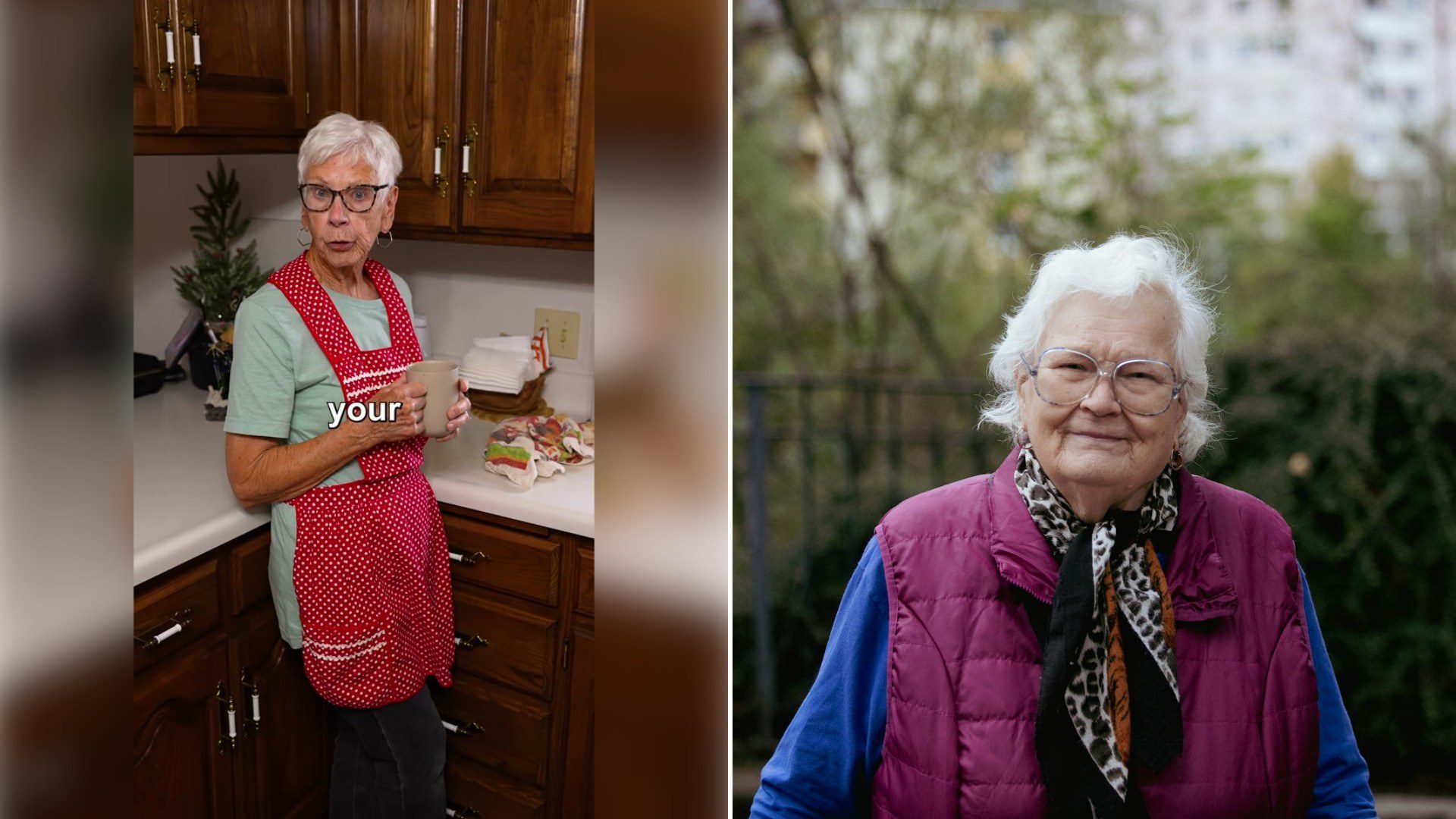
There’s a specific kind of wisdom that only seems to arrive with decades of hindsight, the kind that can’t be rushed or faked, and it’s exactly what one elderly woman offered when she looked back on her years raising children and shared a simple piece of advice: cherish the noise. Not the milestones, not the photographs, not even the big celebrations — just the noise. The slamming doors, the arguing over toys, the thundering footsteps down a hallway, the constant hum of a house full of kids who haven’t yet grown up and moved out.
It’s advice that sounds almost too simple to matter, until you sit with it. Anyone currently living through the chaos of raising young children knows exactly what she means by “noise” — it’s the soundtrack of a full house, often experienced as an assault on the senses rather than something to be grateful for. But coming from someone who has already lived through that chapter and come out the other side into quiet rooms and empty hallways, the message lands differently. It’s not a suggestion; it’s a memory, offered as a gift to anyone still in the thick of it.
@grannybibbins Enjoy the noise while you still have it ❤️
Her caption captured the sentiment in just a few words: “Enjoy the noise while you still have it ❤️.” Simple, heartfelt, and apparently exactly what millions of viewers needed to hear. The video reached roughly two million views on an account already boasting 2.3 million followers, and even against that scale, the reach was notably outsized compared to her typical posts — a sign that this particular message traveled well beyond her usual audience and into the feeds of people who had never seen her content before.
Part of what makes this kind of message so powerful is the perspective gap it bridges. Parents deep in the daily grind of raising kids rarely have the emotional distance to appreciate the noise in real time. When you’re the one hearing the fighting over whose turn it is on the swing, or the shrieking laughter that somehow always erupts at bedtime, “enjoy this” can feel like an impossible ask. As @grannybibbins explained in her post, though, that same chaos eventually fades into silence, and it’s a silence that, according to countless parents who have lived through the empty-nest transition, is far harder to sit with than anyone expects going in.
This is a theme that shows up again and again in conversations about parenting’s later stages. Parents whose children have grown and moved out often describe an unexpected grief that accompanies the quiet — not because they miss the mess or the exhaustion, but because the noise itself represented presence. A loud house is, in its own strange way, a full house. And a quiet one, however peaceful, is often a reminder of just how much has changed. Grandparents and older relatives are frequently the ones best positioned to communicate this, precisely because they’ve already crossed that threshold and can look back with clarity that active parents simply don’t have access to yet.
There’s also a broader cultural undercurrent driving the popularity of this kind of content. As more families navigate the pressures of modern parenting — packed schedules, constant multitasking, the low hum of guilt that comes from feeling like you’re never doing quite enough — messages that reframe the hard, noisy, exhausting moments as something worth treasuring offer a kind of emotional relief. They don’t ask parents to enjoy every single second, which would be an unrealistic standard. Instead, they gently suggest zooming out just enough to notice that even the frustrating parts are temporary, and that temporary things are worth paying attention to while they last.
It’s also worth pointing out why messages like this tend to land so much harder coming from an older generation rather than from other parents currently in the trenches. A grandmother sharing this sentiment isn’t offering theoretical advice; she’s reporting back from a vantage point most active parents haven’t reached yet, which gives her words a kind of credibility that a same-stage peer simply can’t replicate. It’s less “advice” in the traditional sense and more a dispatch from the future, letting today’s exhausted parents borrow a bit of hindsight before they’ve earned it themselves.
For parents currently buried under the daily noise — the sibling squabbles, the constant questions, the volume that never seems to have an off switch — this kind of reminder can function almost like a reset button. It doesn’t erase the exhaustion, and it shouldn’t be used to guilt anyone into pretending every loud moment feels precious in real time. But it can offer a small shift in framing: instead of counting down to bedtime purely for the silence, there’s value in occasionally pausing to register that this exact version of the noise, this specific chapter, won’t last forever. One day, seemingly out of nowhere, the house gets quiet for good, and the noise that once felt unbearable becomes something people would give almost anything to hear one more time. That’s the quiet power behind this elderly woman’s message, and it’s exactly why so many strangers online stopped scrolling long enough to listen.