


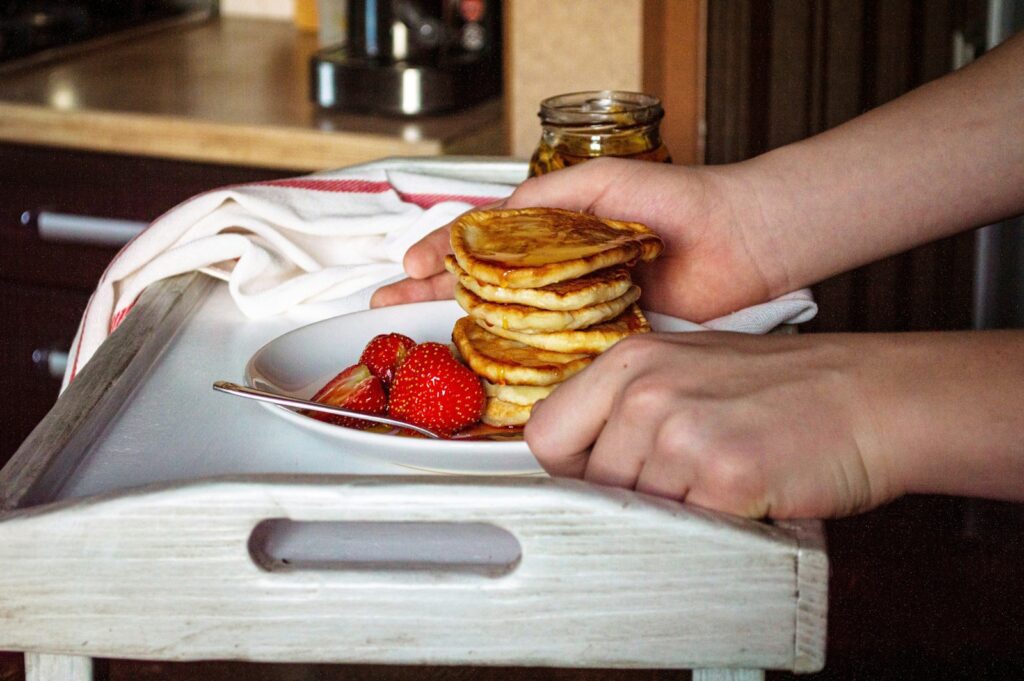
A family friend made pancakes for hungry kids after Sunday school, and chaos followed. One mom shared how her childhood hunger for food collided with her mother’s strict religious beliefs, leading to years without pancakes in her home. The incident, initially innocent in nature, spiraled out of control when the mother found out about the secret breakfast sessions, resulting in a public outcry that echoed within the four walls of their household.
The mother dedicated her life to ensuring her daughters had a strong relationship with God. In her eyes, every meal and every moment was steeped in religious significance. However, the children just wanted food. When they were treated to pancakes by a family friend, the mom felt betrayed. The smell of syrup wafting through the air became a trigger for her anger and dismay. It seemed like an innocent act of kindness, but for her, it felt like a direct attack on her values.

When the mother discovered what was happening, the drastic reaction was swift. She cried and yelled, describing the family friend—who the story calls Demeter—as if she was the embodiment of evil. The pancakes, meant to bring joy and nourishment, transformed into a symbol of temptation. The mother equated Demeter’s act of kindness to evil, declaring that the woman was trying to lead her children astray.
It’s easy to dismiss the incident as a misunderstanding, but for the children involved, it was anything but simple. The mom’s vigorous prayers and attempts at deliverance often felt more like torture than salvation. The children were caught in a strange tug-of-war between their hunger for food and their mother’s fierce dedication to her faith. The pancakes, easy and comforting, were replaced with rigid beliefs and an insatiable quest for righteousness.
People had very varied reactions to the story. Some expressed disbelief, questioning whether the mother truly thought pancakes could be seen as evil. Others pointed out the absurdity of associating a seemingly harmless breakfast with temptation from the devil. The general sentiment among commenters was confusion regarding the mother’s extreme reaction. How could something as simple as pancakes incite such rage?
As the years rolled on, the children grew up without pancakes. The mother’s strict rules meant they could not indulge in something that should have been a joyous treat. Some commenters speculated about the long-term effects this might have had on the kids. Would they grow up with a twisted relationship with food? Would they question their own beliefs because of the strange rules imposed by their mother? It raised a lot of questions about how far religious beliefs could go in shaping a family’s dynamics.
Eventually, the mom found herself in a different role. As an adult, she decided to make pancakes for her own children at least once a week. It was a conscious choice to break the cycle. She wanted her kids to enjoy simple pleasures and not associate food with guilt or shame. While the sweet aroma of pancakes would fill her home now, it was a distinct contrast to the memories of her childhood. One could wonder about the weight of those memories and how they shaped her parenting style.
Others reflected on the nature of childhood memories, noting how food often plays a significant role in shaping those experiences. Some shared their own stories about how small acts of kindness had a lasting impact on their childhood. It wasn’t just about the meals, but the connection and love that came with them. In a way, the act of making and sharing food became a universal language, one that transcended belief systems.
In the end, the story leaves lingering questions about how beliefs can shape experiences and relationships. It’s unsettling to think about how a simple pancake could ignite feelings of betrayal and punishment. For one mom, the journey from forbidden food to embracing joyful moments for her children represents a significant shift. Yet, it raises another question: can food ever just be food, or will the shadows of the past always linger in the background, reminding families of their battles?
More from Decluttering Mom: