


For a lot of families, dinner has become the meal that carries too much pressure.
It is supposed to be healthy, calm, screen-free, meaningful, and somehow timed perfectly between work, school, sports, homework, bath, and bedtime. So when dinner falls apart — or never really comes together in the first place — it can leave parents feeling like they are missing one of the big things that is supposed to matter.
But newer coverage of the research points to a much more encouraging reality: the family meals that help kids most do not have to be dinner at all. Shared meals at breakfast, weekend brunch, or even a simple Sunday picnic can still count, and researchers continue to connect family meals with better physical health, mental health, communication, and long-term habits for kids and teens.


The biggest shift is that “family meal” does not just mean dinner
That may be the part parents need to hear most.
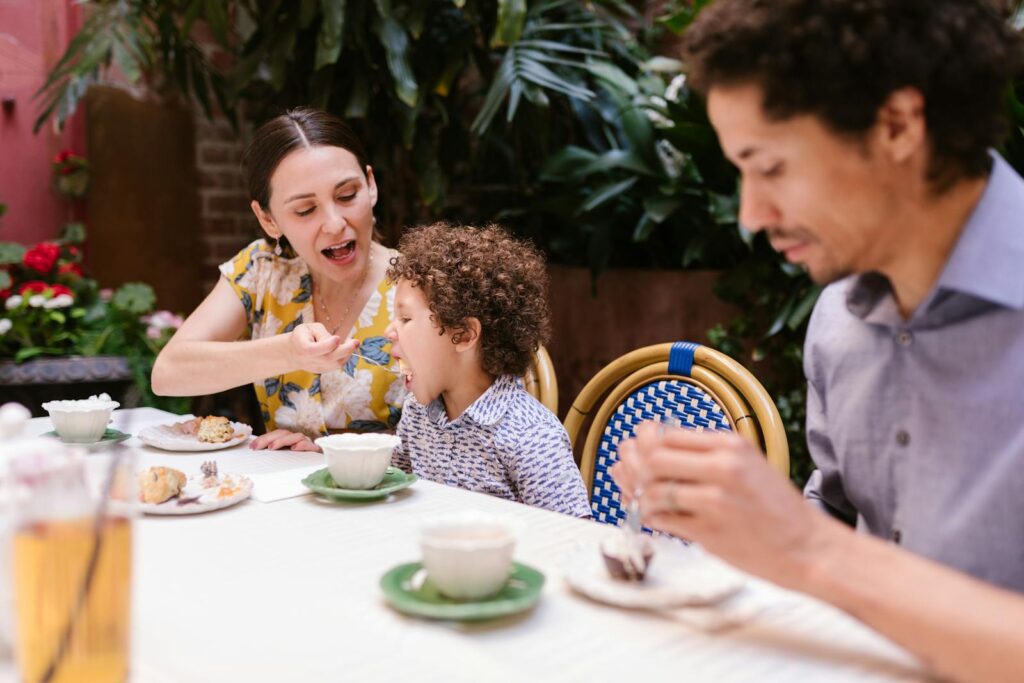
The source makes it clear that eating together as a family does not only refer to weeknight dinner. A weekend breakfast, a shared lunch, or another regular meal together can still offer the same kind of connection researchers have been studying for years. It also points to Harvard Graduate School’s summary of two decades of research showing that taking time to connect over food — with screens off and real interaction happening — can support both physical and mental health across the family.
That matters because dinner is often the hardest meal to protect. If parents think dinner is the only version that counts, it becomes much easier to give up altogether.
Why researchers keep coming back to family meals
Part of what makes this research so compelling is that the benefits are not all clustered in one area.
The source points to a 2018 study in JAMA Network Open that linked family meals with a better overall diet, especially for adolescents. Teens who ate with family were more likely to eat more fruits and vegetables and less fast food and sugary drinks. Just as importantly, the benefit seemed to hold even when families were not perfectly functional.
It also cites a 2015 Canadian review connecting frequent family dinners with lower risk of eating disorders, alcohol and substance use, violent behavior, depression, and suicidal thoughts in adolescents. A separate 2022 American Heart Association survey found that 91% of parents said their families were less stressed when they ate meals together regularly.
That is what makes the research feel so practical. This is not just about nutrition. It is about what repeated, low-pressure time together seems to do for kids over time.
The benefit may be bigger than the meal itself
What helps children most may not be the food on the table as much as the rhythm around it.
Shared meals create one of the few built-in moments where kids and parents can regularly see each other, hear each other, and notice how someone is doing without it feeling like a formal check-in. The source notes that regular family meals have been linked to stronger self-esteem, better communication skills, and more parental guidance, especially in adolescence. It also highlights research showing that teens who shared meals with family reported fewer problems related to bullying.
That makes sense in real life too. Kids do not always open up during the big serious talks parents imagine. Sometimes they talk while reaching for toast, packing up leftovers, or sitting at the table a little longer than usual.
The pressure on dinner may be making parents miss easier wins
This is where the message gets especially useful.
If weeknight dinner is chaotic in your house, that does not mean the whole idea is off the table. It may just mean another meal works better right now.
A breakfast together on Saturdays. Pancakes on Sunday. A simple after-church lunch. Sandwiches before afternoon activities. Even one or two shared meals a week may matter more than parents assume. The source cites research from the Journal of Pediatrics that found a link between more frequent family meals in adolescence and lower odds of obesity or weight issues ten years later, with the researchers concluding that families should try to gather for at least one or two meals each week.
That is a much more reachable standard than the all-or-nothing version many families quietly carry around.
What this can look like in real life
For some families, this might mean giving up on the fantasy of a perfect Monday-through-Friday dinner and choosing a meal that actually fits the season they are in.
That could mean:
- weekday breakfast together twice a week
- a standing Saturday morning bagel run
- Sunday lunch at home before the week starts
- a simple picnic after sports practice
- one home-cooked meal where everyone sits down, even if it is early and uncomplicated
The source also notes that children benefit when meals feel participatory, not just performative. Letting kids help set the table, serve food, or clean up can support communication and confidence too.
That is an important reminder. The value is not in staging a perfect family moment. It is in creating a repeatable one.
What researchers are really saying parents can stop worrying about
The research is not saying parents need elaborate dinners, spotless kitchens, or a magical nightly ritual to help their kids.
It is saying that shared meals still matter — and that the meal that works for your family may not be dinner.
That shift takes a lot of pressure off. It means parents who cannot pull off nightly dinners have not failed some invisible standard. It means breakfast can count. Lunch can count. A low-key meal on the weekend can count. The point is not perfection. The point is regular connection around food, conversation, and presence.
And honestly, that version may be much more helpful for families than another rule they are already struggling to meet.
More from Decluttering Mom:
- 10 Places You Should Donate To (That Aren’t Goodwill)
- 10 Dirty Spots You’re Forgetting To Clean (And Why They Matter!)
- 12 Grocery Store Secrets That Are Costing You Hundreds Every Month
- 14 Best Dollar Store Finds That Actually Save You Money