What if the whole house could be reset in 15 minutes a night, without nagging anyone? One mom says it takes five zones, a full week with each one, and a simple rotation.
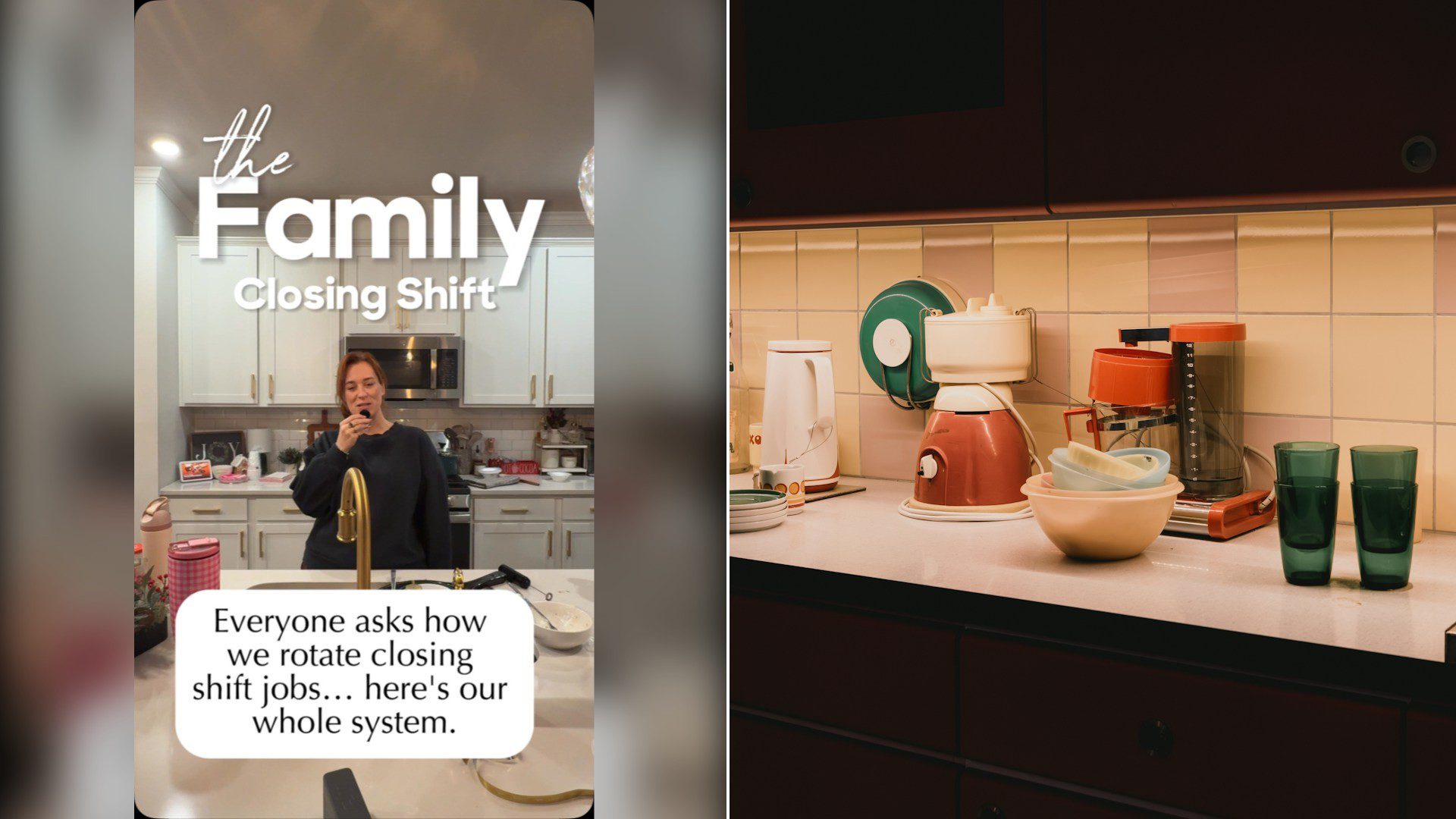
She calls it the family closing shift, and she shares the system on Instagram as @momoffmute. She says the question she gets asked most is how her family decides who does what.
Her answer is refreshingly plain.
View this post on Instagram
“If You Live Here, You Help Reset Here”
The family closing shift lasts 15 minutes, and everybody is up and moving. Her rule: “If you live here, you help reset here.”
The house is split into five zones. Everyone gets one zone, and they keep it for a full week, “not one night, the entire week.”
Why One Zone For A Whole Week Changes Everything
She says this part matters because when a zone is yours for a week, you start noticing it. If you own the kitchen, the dishes get done before bed, the dishwasher is emptied the next morning and the counters get wiped.
It also builds accountability. “Don’t leave that peanut butter out on the counter,” she says, “because I’m not cleaning it up. Close your loop.” Nobody has to remind you, because it is your zone for the entire week.
Everyone Works At The Same Time, Then The Zones Rotate
During the closing shift, everybody works their zone at the same time as much as possible. Fifteen minutes later, the whole house is reset.
At the end of the week, the family rotates down the list so everyone moves to a new zone. That way, she says, nobody gets stuck with the same job forever, and everybody learns how to reset every space in the house.
A “Done-Done” Definition Means No Reminders
Each space also comes with a “done-done” definition, so she does not have to come back and remind anybody to do anything. A done-done definition is simply a short list of what finished looks like in that room.
For the kitchen, it might be an empty sink, a clear counter and a wiped table. For the entryway, it might be shoes on the rack and bags on their hooks. When the standard is clear, there is nothing to argue about.
Little Kids Can Start With One Small Piece
Her kids are older, so each can own a whole zone. If yours are smaller, she suggests starting smaller. Give them one piece of a zone, like the couch pillows or the shoes by the door, and build up from there.
Her bottom line is encouraging: you do not need a fancy chart. Pick your zones, give everyone one, set a done-done definition, and rotate it every week. “15 minutes a night, one zone each, that’s it.”
How To Try The Five Zone System At Your House
You can set this up in one evening. Here is a simple way to start.
- Pick five zones that fit your home. If you do not have a dining room, a bedroom hallway or a laundry corner works.
- Write a done-done list for each zone, three or four items at most.
- Assign each person a zone for the week, and post the list on the fridge.
- Set a 15-minute timer and start together, ideally with music.
- On the same day each week, rotate everyone down the list.
If you have fewer than five people, a few people can double up, or the adults can take two zones. If you have more, pair up a younger child with an older one.
Why Shared Chores Beat A Parent Doing It All
Many parents end the day exhausted from cleaning up after everyone. A system that shares the load takes pressure off one person and gives each member of the family a stake in the result.
Kids who do real jobs tend to feel capable, and they often take better care of a space they are responsible for. Even a small child can feel proud of straightening pillows.
Adjusting The Zones To Fit Your Own Home
No two houses are alike. If you live in an apartment, your zones might be the kitchen, the main room, the bathroom, the bedroom and the entry. If you have a big family, you might add a mudroom or a laundry zone and use six or seven.
The idea is flexible. What matters is that every person has a clear space, a clear finish line and a short, steady window of time.
Making It Stick Past The First Week
The first week or two is the hardest. Expect some grumbling, and try to keep the mood light. A short playlist, a favorite snack afterward or a family game night can turn chores into a rhythm.
Stay consistent about the time. Doing the closing shift at the same point each evening, right after dinner for many families, makes it a habit instead of a negotiation.
Praise what you see. A kitchen counter that is clear, a made couch and a tidy entry are small victories. Saying thank you out loud tells everyone the effort matters.
The Payoff Of A House Everyone Helps Run
A reset every night means you wake up to a house that is ready for the day. Mornings feel calmer, and nobody is hunting for shoes at the last minute.
The bigger payoff is what kids learn. Rotating through every zone teaches them how a whole home runs, a skill that will serve them long after they leave the house. Fifteen minutes a night is a small price for that.
More Stories You May Like
- 12 Year Old’s Shopping Bag Rips At The Mall, So He Asks Balenciaga, Gucci And Louis Vuitton For A New One, Gets Three Nos, Then Walks Out Of Saint Laurent With A Bag As Big As He Is
- Mom Says Cleaning Up After Her Eight Year Old Is Like Pulling Teeth, So She Is Scrubbing The Whole House Herself Before Thanksgiving And Skipping Turkey For Tri Tip
- Couple Gets A Mastercard Alert, Then Finds Their Nine Year Old Spent $28,000 On Roblox Add Ons And The Company Still Refuses To Forgive $20,000 Of It