


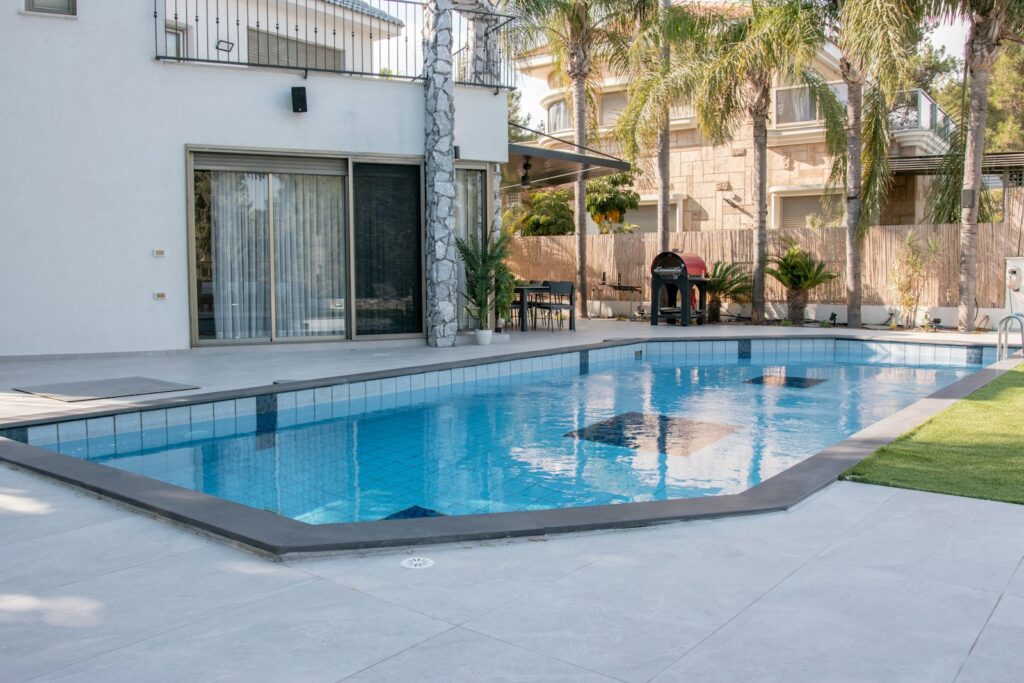
The Consumer Product Safety Commission’s newest drowning report puts a hard number on the fear that follows a lot of grandparents into the backyard every summer: 379 children under 15 drowned in pools and spas in 2023, a 6 percent jump from 359 the year before, according to the CPSC’s own report. Nearly 80 percent of those children were under age 5, which happens to be the exact age range most likely to be splashing around while grandma or grandpa is on duty for the afternoon. Drowning is still the leading cause of death for kids ages one to four in this country. For a grandparent who supervises a pool a few times a month instead of every day, that statistic isn’t abstract.


Most of These Drownings Happen at Somebody’s Own House
Over 70 percent of fatal drownings between 2021 and 2023 occurred in residential settings, not water parks or crowded public pools, per the CPSC’s data. That means a child’s own home, a family member’s house, or a neighbor’s backyard is where the actual risk sits. Fatal drownings also cluster tightly around June, July, and August, which is precisely when extended family tends to gather poolside for weekend cookouts and overnight visits. A grandchild who normally swims under a parent’s watchful eye at home may be in a completely different pool, with a different layout and different hazards, on the day a grandparent is the only adult present.
Why a Short Distraction Is Long Enough
The CPSC also tracked nonfatal incidents: an average of 5,900 pool and spa-related drowning injuries treated in emergency departments each year between 2023 and 2025. Most of those near-misses share a common thread, which is a brief lapse in direct supervision rather than a lack of concern. The agency’s recommended fix is a designated “Water Watcher,” one adult whose only job for that stretch of time is watching the water, with no phone, no book, and no side conversation. Passing that role explicitly to a grandparent, rather than assuming everyone is half-watching, closes a gap that shows up again and again in the data.
What makes those near-misses worth taking seriously is what a nonfatal drowning can leave behind. The CDC estimates roughly 8,000 nonfatal drowning incidents happen nationally every year, and outcomes range from a child walking away unaffected to permanent brain damage from oxygen deprivation, according to the agency’s drowning data. A child who’s pulled out coughing and seemingly fine can still have swallowed enough water, or gone without oxygen long enough, to need immediate medical evaluation. That’s part of why the one-adult, one-job supervision rule matters more than it sounds like it should.
Checking What’s Already in the Backyard
Grandparents inheriting pool duty should also know what’s actually installed in the yard they’re watching. In July 2025, roughly 5 million above-ground pools from Bestway, Intex, and Polygroup were recalled after a compression strap on the outside of the pool wall created a foothold that let young children climb in unsupervised, according to a CBS News report on the recall. Nine children between 22 months and 3 years old died in incidents linked to that design flaw between 2007 and 2024, with three more close calls recorded. The pools, sold at major retailers for $400 to over $1,000 since 2002, are eligible for a free repair kit from the manufacturers. If a family’s backyard pool predates 2025, it’s worth five minutes to check the model against the recall before anyone gets in.
The Barriers That Matter Most When You’re Not There Every Day
Beyond active supervision, the CPSC’s guidance leans hard on physical barriers: four-sided fencing that separates the pool from the house and yard, self-closing and self-latching gates, door alarms on any house door that opens toward the pool, compliant drain covers, and securing or removing ladders on above-ground pools when they’re not in use. A grandparent who visits occasionally is in a different position than a full-time parent, who might already know every quirk of that backyard. It’s reasonable, not paranoid, to ask a son or daughter directly whether the gate latches on its own or whether the pool alarm actually works before the grandkids are in the water.
A pool that looks calm can turn dangerous in less time than it takes to answer a phone call, and none of the barriers or recall checks matter if nobody’s eyes are actually on the water. The safest backyard this summer is the one where the adult watching has nothing else to do.