


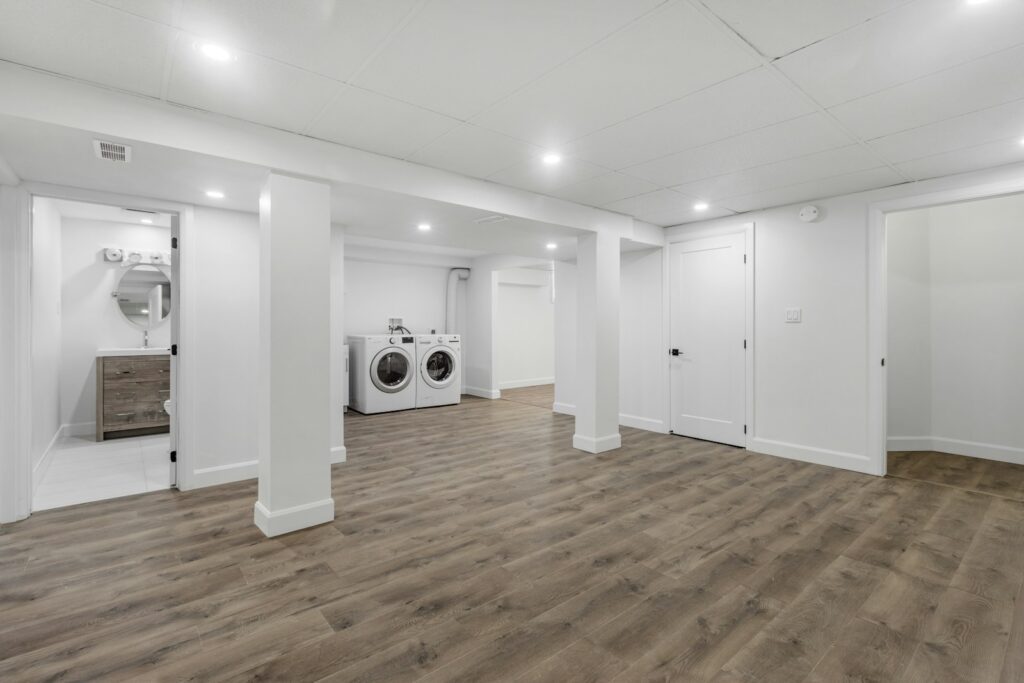
Thirty-two thousand dollars is the average price tag on finishing an unfinished basement, according to Angi’s 2026 cost data, with per-square-foot pricing landing between $7 and $23 depending on how far the project goes. A basic 1,000-square-foot basement runs $7,000 to $23,000; push to 2,000 square feet and the range roughly doubles to $14,000 to $46,000. Add a bathroom down there, and the bill can nearly double again on top of that. Plumbing is what separates a cheap basement project from an expensive one, and a basement bathroom means running new lines to a space that almost never had them.
What Drives the Price
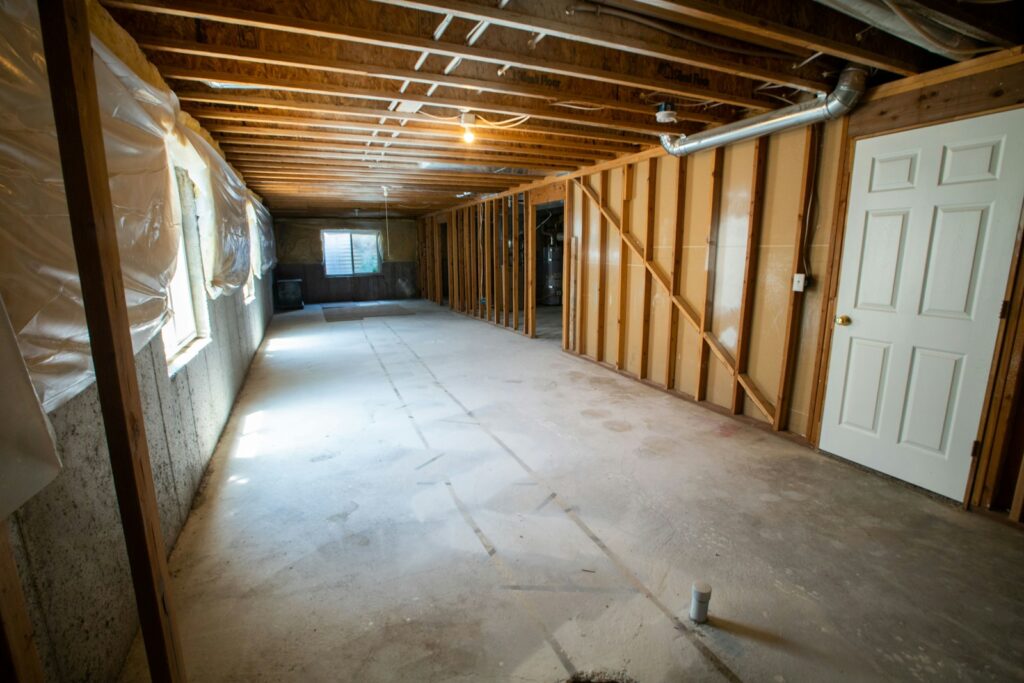
Moisture control comes first, before anything cosmetic even starts. Basements sit below grade, which means waterproofing, a functioning sump pump, and sometimes exterior drainage work are non-negotiable line items before drywall goes up. Skip them and the finished space risks mold within a year or two. Beyond that, framing, insulation, electrical (including code-required egress windows in any room marketed as a bedroom), flooring, and ceiling treatment make up the bulk of the per-square-foot cost. Ceiling height matters too: basements with ductwork and pipes hanging low sometimes need a dropped or specialty ceiling system that costs more than a standard drywall finish.

Cost by Bathroom Addition
Adding a full bathroom to a basement remodel is the single biggest budget swing in the entire project. Because basements are poured-concrete slabs, running new drain lines often means breaking through the slab to tie into the home’s main sewer line, sometimes requiring a specialized pump system if the basement sits below the sewer line’s grade. That work alone can add $10,000 to $20,000 on top of the base finishing cost, which is why Angi’s data shows basements with bathrooms landing close to double the price of a comparable basement finished without one. Homeowners weighing the addition should factor in that a basement bathroom adds resale value disproportionate to its cost, since it functionally turns the level into livable square footage rather than a glorified rec room.
The Real ROI
A finished basement recoups a solid share of its cost at resale: appraisers count it as additional finished square footage, which moves the needle on a home’s listed size in a way that, say, a finished attic often doesn’t. The return is strongest when the space reads as flexible: a family room, home office, or guest suite appeals to a wider pool of buyers than a highly specific build-out like a home theater or wine cellar that a future owner would have to gut. Homes in colder climates, where basements make up a larger share of total square footage, tend to see the strongest returns on finishing.
When to Call a Pro vs. DIY It
Framing, painting, and flooring installation are all reasonable DIY territory for a handy homeowner with time to spare. Waterproofing, electrical, and any plumbing work absolutely are not: a DIY waterproofing job that fails means redoing the entire finish above it, and unpermitted electrical work in a below-grade space is one of the more common reasons insurance claims get denied after a basement flood. Most contractors recommend hiring out the moisture control and rough-in work while saving DIY effort for the visible finish layer, which is both the safer split and usually the better use of a homeowner’s own labor.
Financing and Regional Variation
Because a full basement finish sits in that $30,000-plus range, most homeowners aren’t paying cash outright. Home equity loans and HELOCs are the most common financing route for basement projects specifically, since the improvement typically adds enough appraised value to justify borrowing against the home itself, and interest rates on secured home equity debt tend to run well below unsecured personal loans or credit cards. Regional labor costs shift the total meaningfully too: a basement finish that costs $18 per square foot in a lower-cost Midwest market can push past $23 per square foot in the Northeast or on the West Coast, where licensed trade labor commands a premium. Homeowners in older homes should also budget extra for the unknowns a basement tends to hide: outdated wiring, undersized electrical panels, or foundation cracks that only surface once contractors open up the walls, all of which can add thousands beyond the original estimate.
The pattern across basement projects is consistent: the parts nobody sees, drainage, sump pumps, slab work for plumbing, are what separate a $7,000 basement from a $40,000 one, while the visible finishes homeowners fixate on are almost an afterthought in the total bill.