


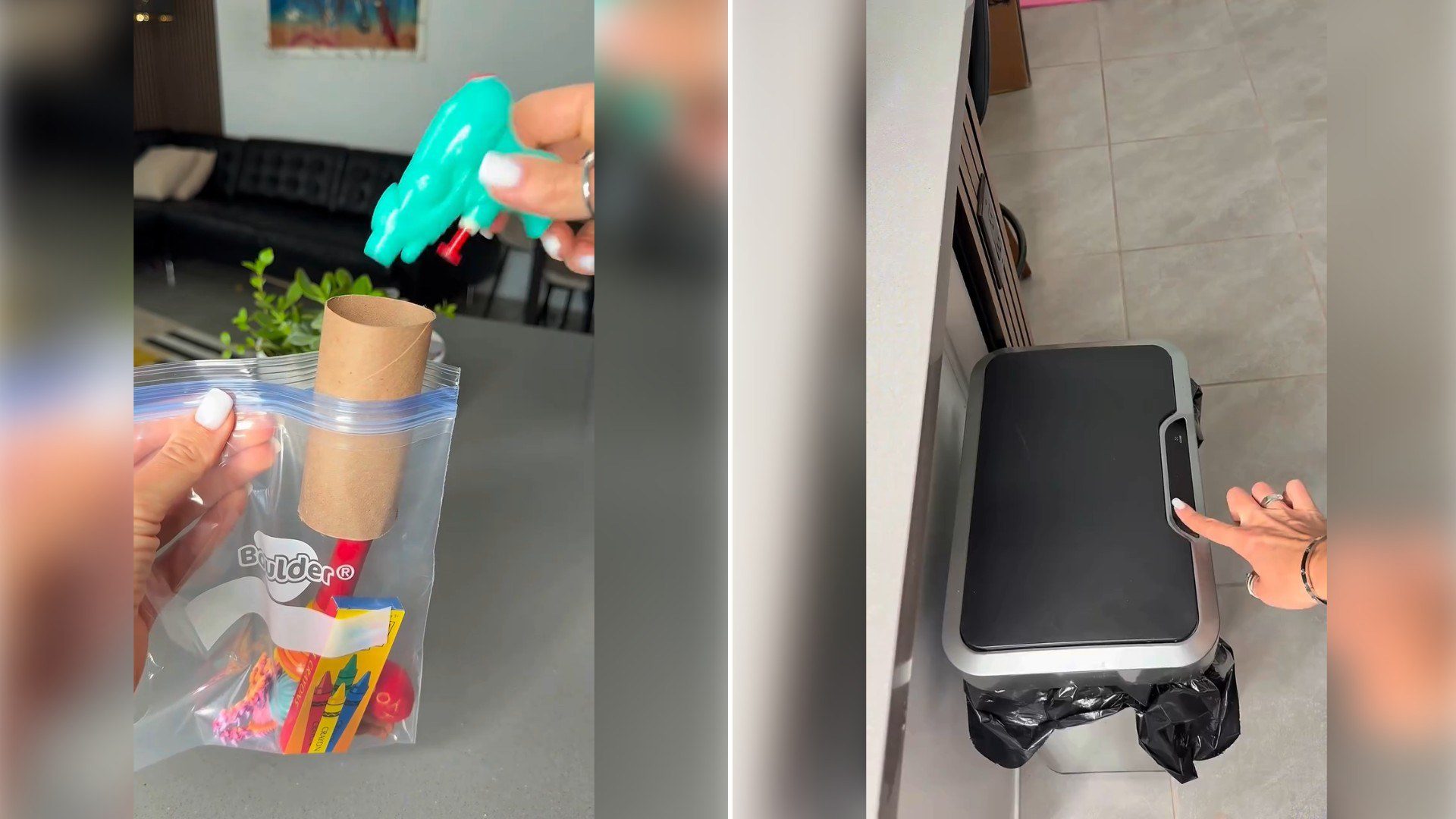
A creator posting under the handle viktoriia.lifehacks shared a genuinely useful choking-hazard check that takes seconds and requires nothing more than an empty toilet paper roll: hold each of your toddler’s toys up to the tube, and if it fits through, it’s small enough to be a real risk.
The video is faceless and demo-style, just hands working through a pile of toys one by one, pulling aside anything that slides through the cardboard opening. She frames it as something she wishes she’d known before becoming a mom — a quick sentiment that a lot of first-time parents will relate to after the fact.
The trick itself isn’t new to pediatric safety guidance, but it’s the kind of tip that tends to get buried under more elaborate baby-proofing advice, even though it’s one of the fastest, cheapest ways to catch a real hazard before it becomes a problem. A toilet paper roll’s diameter roughly approximates a toddler’s airway, which is exactly why the test works as a rough, practical guide.
For parents with toys scattered across multiple rooms, running this check periodically — especially after a birthday or holiday haul of new gifts — costs almost nothing in time and catches exactly the kind of small, overlooked piece that’s easy to miss during a normal cleanup.
What makes this particular safety tip so shareable is how little it asks of a busy parent. There’s no product to buy, no app to download, no elaborate system to maintain. It’s a cardboard tube most households already have sitting in the recycling bin, repurposed into a legitimate safety tool that takes less time than sorting a load of laundry. That low barrier to entry is exactly why it’s the kind of hack that actually gets used, rather than saved and forgotten in a bookmarks folder.
Choking remains one of the more common causes of childhood injury in the toddler age range, and small toy parts — the eyes on a stuffed animal, a building-block accessory, a puzzle piece, the tiny wheel off a toy car — are exactly the kind of household object that ends up in an emergency room visit far more often than parents expect. Most of these incidents happen with everyday toys already sitting in a playroom, not with anything exotic or clearly labeled as dangerous, which is part of why a quick, repeatable check like this one matters so much.
It’s also worth noting how quickly a toy collection changes over time, especially around birthdays and holidays, when a flood of new gifts from grandparents, aunts, uncles, and family friends can undo weeks of careful baby-proofing in a single afternoon. A toy safe for an older sibling can be a genuine hazard for a crawling baby in the same house, and running a fresh check after any big influx of new toys is a simple habit that closes that gap quickly.
There’s a reason this kind of straightforward, low-effort safety content performs so well among parents: it doesn’t require guilt, elaborate research, or a trip to the store. It just requires two minutes and an object most people already have within arm’s reach. That accessibility is part of what turns a piece of advice into something people actually put into practice instead of just nodding along and scrolling past.
It’s also a good reminder that safety checks like this one are never really “one and done.” As a toddler grows, crawls further, and starts reaching new shelves and toy bins, the check is worth repeating every few months, not just once at the start of parenthood. What’s out of reach for a six-month-old is well within reach for a fourteen-month-old exploring every drawer and basket in the house.
For a first-time parent especially, tips like this one land with a particular kind of relief — proof that not every safety measure requires an expensive gadget or a complicated system, and that sometimes the most useful advice is also the simplest, sitting quietly in a kitchen recycling bin the whole time.
There’s also something reassuring about a piece of advice that doesn’t rely on memorizing a list of banned products or reading through pages of manufacturer warnings. Toy packaging does carry small-parts warnings for exactly this reason, but those labels are easy to miss once a toy has been unboxed, separated from its packaging, and mixed into a bin with dozens of others. A quick physical test that works on anything, labeled or not, fills in the gap those warnings leave behind.
Plenty of parents in the comments on videos like this one mention running the check for the first time and being surprised by exactly how many toys failed it — including some marketed for toddlers, and some that had been in regular rotation for months without incident. That combination of surprise and relief, catching something before it became a real problem rather than after, is exactly the reaction content like this is designed to produce, and exactly why it tends to get saved and shared so widely.
It’s worth remembering, too, that a near miss doesn’t always announce itself. Plenty of small objects get mouthed, gummed, or handled by a toddler without ever actually causing a choking incident, which can create a false sense of security that a particular toy or object is fine simply because nothing has gone wrong yet. A physical test like the toilet paper roll trick takes that guesswork out of the equation entirely, replacing gut feeling with an actual measurement anyone can perform in seconds.